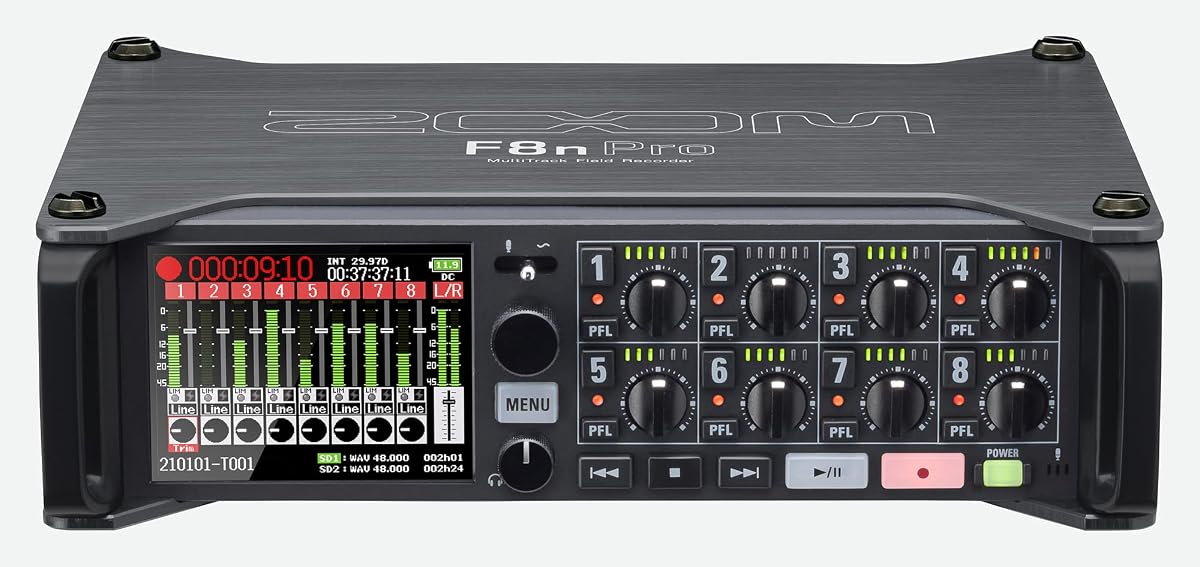
Zoom F8n Pro Field Recorder
4.6Editor score
8-channel 10-track
Dual SD slots
High gain preamps
This guide compares the top audio field recorders for film including Zoom and TASCAM models with 32-bit float recording, timecode sync, and multi-track
Capturing pristine audio on set is essential for any filmmaker who wants their visual story to resonate with audiences. A reliable field recorder ensures dialogue stays clear even in noisy environments while allowing for creative sound design choices later in post production. Whether you are shooting a narrative feature or a documentary, the right device makes all the difference in achieving broadcast quality sound.
We evaluated ten leading recorders based on their input flexibility, recording quality, timecode synchronization, and overall reliability under demanding conditions. Each model was analyzed for its ability to handle dynamic ranges without clipping, ease of use during fast paced shoots, and compatibility with professional microphone setups. This list helps you find the perfect tool for your specific budget and production scale.
Each selection below highlights key strengths and ideal use cases to help you decide which recorder fits your workflow best. Note that product availability and pricing can fluctuate over time so always verify current details before making a purchase decision. With the right equipment you can focus on capturing the perfect take without worrying about audio issues ruining your hard work.
4.6Editor score

4.7Editor score

4.5Editor score
This side-by-side comparison highlights the key specifications and capabilities of each recorder to help you quickly identify which model meets your production needs.



The Zoom F6 stands out as a top choice for filmmakers who need professional quality without sacrificing portability. With a rating reflecting its reliability it excels at capturing everything from quiet whispers to explosive sounds without clipping. Its 32-bit float recording ensures that audio remains clean even if levels fluctuate unexpectedly during a take.
We may earn a commission when you buy through this link, at no additional cost to you.
Key strengths include its six XLR inputs which allow simultaneous recording of multiple microphones for rich scene audio. The built-in timecode I/O keeps audio perfectly synced with video files making post-production workflows significantly smoother. Whether you use it as a standalone unit or connect it via USB the flexibility supports various production scales.
Trade-offs involve a steeper learning curve compared to simpler handheld units due to its extensive feature set. However these complexities are acceptable given the professional results it delivers on set. The ability to record up to fourteen tracks provides ample room for future sound design enhancements.
Filmmakers seeking a versatile recorder that balances power with mobility should prioritize this model. It is particularly well-suited for independent productions where budget constraints exist but quality cannot be compromised. With this device you gain confidence that your audio will meet industry standards.
The 32-bit float technology allows you to ignore gain settings entirely during recording so you never lose critical dialogue to distortion.
Timecode I/O ensures your audio tracks align perfectly with video frames which is crucial for multi-camera setups and complex edits.
We may earn a commission when you buy through this link, at no additional cost to you.
The Zoom F8n Pro represents the pinnacle of field recording technology for those who demand absolute precision and reliability. Its rating underscores its reputation among professionals who work on large scale productions where audio errors are not an option. The eight inputs support complex microphone arrays typical of feature film sets.
We may earn a commission when you buy through this link, at no additional cost to you.
Standout features include dual SD card slots that allow redundant recording so you never lose a take due to card failure. The timecode accuracy down to 0.2ppm ensures flawless synchronization with camera feeds even in long shoots. High gain preamps capture subtle details from ambient microphones without introducing noise.
The device can be heavy for solo operators and the menu system requires time to master fully. These trade-offs are justified by the workflow security it provides during critical recording sessions. You gain peace of mind knowing your audio is protected and synced perfectly.
Investors in this recorder will find it invaluable for broadcast and high end film projects. It supports workflows where audio quality is paramount and where multiple sound sources must be managed simultaneously. Choose this if you need the most robust tool available for professional field work.
Dual SD slots record the same audio twice simultaneously so a single card failure cannot ruin an entire day of shooting.
Timecode accuracy ensures audio and video stay locked together even after extensive post production processing and editing.
We may earn a commission when you buy through this link, at no additional cost to you.
The Zoom H1 XLR brings professional grade recording capabilities to entry level filmmakers and content creators at an accessible price. Its strong rating reflects user satisfaction with its ability to deliver high quality audio without complex setup requirements. Two XLR inputs suffice for most interview and dialogue scenarios.
We may earn a commission when you buy through this link, at no additional cost to you.
Key advantages include 32-bit float recording which eliminates the need to worry about audio levels during takes. The OLED display provides clear visual feedback so you can monitor levels quickly and accurately. Support for high capacity SD cards means you can record for hours without changing media.
Limitations involve having only two inputs which restricts use for multi microphone setups. Battery life may require spare packs for extended shoots. However these constraints are acceptable for its price range and intended use cases.
This recorder is ideal for independents who need reliable audio without breaking the bank. It works well for documentaries interviews and small productions where simplicity is valued. Choose it when you need a compact tool that delivers professional results.
32-bit float technology means you can forget about adjusting levels because the audio captures everything without distortion.
The OLED waveform display lets you see audio levels at a glance which helps ensure clean recordings during fast setups.
We may earn a commission when you buy through this link, at no additional cost to you.
The Zoom F3 offers a compact solution for run-and-gun filmmakers who need reliable audio capture in unpredictable environments. Its rating highlights its effectiveness in maintaining clean audio even when conditions are less than ideal. Dual locking XLR inputs ensure connections stay secure during movement.
We may earn a commission when you buy through this link, at no additional cost to you.
Strengths include ultra-low-noise preamps that preserve audio quality when recording quiet dialogue. Flexible power options allow continuous recording without interruption during long days on set. The 32-bit float capability ensures dynamic range is handled without manual gain adjustments.
Trade-offs involve lack of timecode I/O which requires alternative sync methods. Limited track count restricts multi-mic setups compared to larger units. These are acceptable for its targeted use case as a portable recorder.
Filmmakers needing a lightweight device for quick setups will find this recorder invaluable. It suits scenes where agility is more important than extensive channel counts. Choose it for its balance of size and professional audio features.
Dual locking XLR inputs keep your microphones connected securely even when the recorder is mounted in tight or moving spaces.
Multiple power options ensure you can keep recording during long shoots without worrying about running out of battery.
We may earn a commission when you buy through this link, at no additional cost to you.
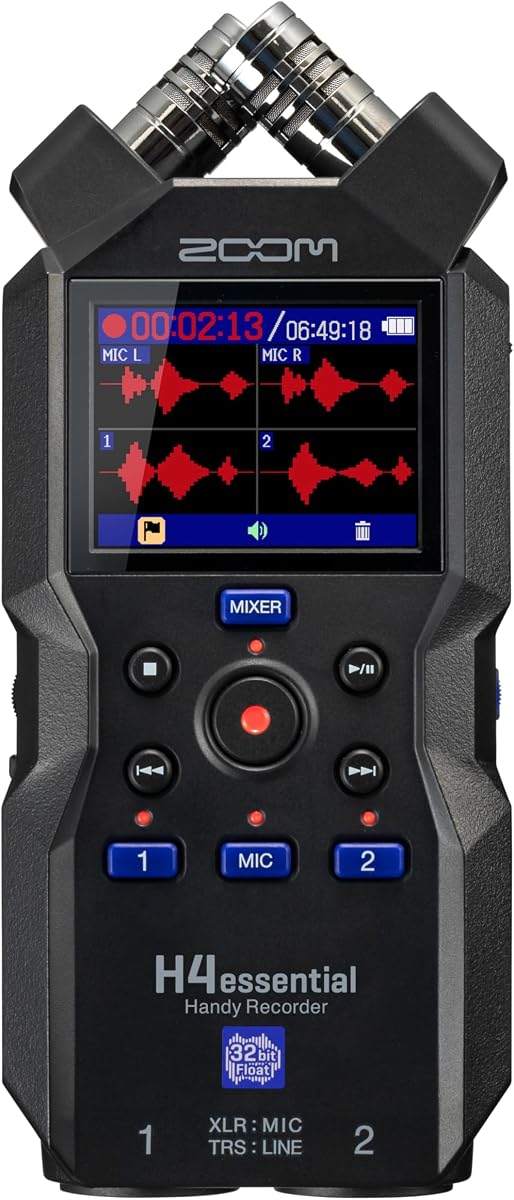
The Zoom H4 Essential provides a balance between ease of use and professional capabilities for diverse recording needs. Its rating reflects satisfaction with its ability to handle interviews podcasts and video audio effectively. Two XLR inputs allow connection of external microphones for higher quality sound.
We may earn a commission when you buy through this link, at no additional cost to you.
Key features include USB-C connectivity for direct streaming to devices and spoken menu guidance that helps visually impaired users. Built-in stereo microphones work well for ambient sounds and quick captures. This versatility makes it suitable for creators working on multiple project types.
Trade-offs include lack of advanced timecode features found in higher-end models. Capacity and channel count are moderate compared to dedicated field recorders. These are acceptable for its intended multi-purpose use.
Content creators needing one device for various scenarios will appreciate this flexibility. It works well for interviews documentaries and casual video production. Choose it for its user-friendly design and broad functionality.
Spoken menu guidance makes the device easier to navigate for all users including those with visual impairments.
USB-C connection allows direct recording to devices or streaming which simplifies your on set or remote setup.
We may earn a commission when you buy through this link, at no additional cost to you.
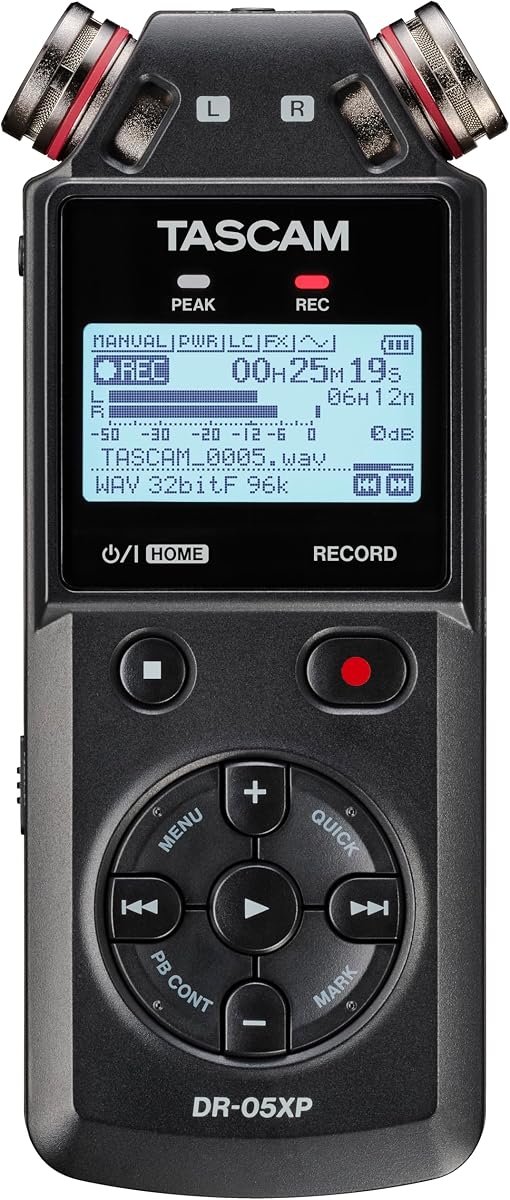
The TASCAM DR-05XP is a portable solution for capturing pro-quality recordings in various environments including video audio. Its rating indicates reliability for music voice and sound capture tasks. Omnidirectional microphones handle loud environments well without distortion.
We may earn a commission when you buy through this link, at no additional cost to you.
Strengths include flexible recording modes ranging from MP3 to high resolution 96kHz files. USB-C audio interface enables direct connection to computers for easy file transfer and monitoring. Long battery life supports extended recording sessions without frequent changes.
Limitations involve fewer external inputs compared to dedicated field recorders. Timecode capabilities are basic which may not suit complex post-production. These are acceptable for its compact and versatile design.
Users needing a small device for quick captures will find this recorder practical. It suits meetings interviews and on-location sound. Choose it for its portability and solid audio performance.
Omnidirectional microphones can handle loud environments up to 125dB SPL without distortion or clipping.
Up to 17.5 hours of operation ensures you can record for long periods without needing to swap batteries.
We may earn a commission when you buy through this link, at no additional cost to you.
The Zoom H5 offers an adaptable design with interchangeable capsules that suit various recording scenarios for filmmakers. Its rating reflects user satisfaction with its versatility and audio quality. The included X-Y stereo mic provides excellent sound for general purposes.
We may earn a commission when you buy through this link, at no additional cost to you.
Key features include four-track simultaneous recording and two mic inputs with phantom power for condenser microphones. Loop back function and USB interface support make it useful for streaming and content creation. This flexibility allows users to tailor the device to their needs.
Trade-offs include reliance on AA batteries which require replacements. SD card support is limited to 32GB which may be insufficient for long sessions. These are acceptable given the modularity and performance.
Filmmakers needing adaptable audio tools will appreciate this recorder. It suits scenarios where different mic setups are required. Choose it for its customizable design and robust feature set.
Interchangeable capsules let you swap microphones as easily as camera lenses to match different recording needs.
Four-track simultaneous recording allows you to capture multiple sources at once for richer audio production.
We may earn a commission when you buy through this link, at no additional cost to you.
The TASCAM DR-10L Pro is designed for capturing personal audio with stealth and clarity for interviews and events. Its rating highlights effectiveness in handling dynamic ranges without clipping due to 32-bit float technology. Included lavalier mic ensures clear lifelike audio in busy settings.
We may earn a commission when you buy through this link, at no additional cost to you.
Strengths include support for high capacity microSDXC cards providing practically limitless storage. LTC Jam Sync allows seamless timecode synchronization with multiple devices for streamlined workflows. App control enables management of up to five simultaneous recordings.
Limitations involve single channel focus which restricts multi-mic setups. Wireless adapter must be purchased separately for full Atomos integration. These are acceptable for its targeted personal recording use.
Filmmakers needing discreet personal audio solutions will find this recorder practical. It suits interviews events and one-on-one recordings. Choose it for its ease of use and professional sound quality.
The compact design and included lavalier mic allow you to capture personal audio without disrupting the scene.
LTC Jam Sync ensures your audio stays perfectly synchronized with video across multiple devices and shoots.
We may earn a commission when you buy through this link, at no additional cost to you.
The Zoom H1 Essential provides clear stereo audio for content creators needing better sound than camera built-in mics. Its rating reflects satisfaction among users seeking simplicity and portability. It works well for tutorials voiceovers and behind-the-scenes clips.
We may earn a commission when you buy through this link, at no additional cost to you.
Key features include USB-C connectivity for use as a microphone during livestreams and remote meetings. Compact size ensures it is ready when inspiration hits for quick captures. This accessibility makes it ideal for those new to audio recording.
Trade-offs involve limited inputs and fewer advanced features compared to professional units. These are acceptable for its price and intended casual use. It serves well for basic video and music projects.
Beginners needing an entry point into audio recording will find this recorder helpful. It suits casual creators prioritizing ease of use. Choose it for its affordability and straightforward operation.
Simple setup and portable design mean you can start recording immediately without complex configuration.
USB-C connectivity allows you to use the device as a mic for livestreams and remote calls easily.
We may earn a commission when you buy through this link, at no additional cost to you.
The Zoom F2 is the smallest 32-bit float recorder you can wear making it ideal for discreet interviews and vlogs. Its rating indicates reliability for capturing clip-free audio at any volume. Included lavalier mic is ready to go with screw-lock connector and windscreen.
We may earn a commission when you buy through this link, at no additional cost to you.
Strengths include long battery life up to 15 hours on two AAA batteries for extended use. High storage capacity supports up to 512GB for long-form recordings. Precision clock ensures perfect audio and video sync for professional productions.
Limitations involve very small form factor which can be tricky to operate quickly. Interface is minimal with fewer controls for monitoring. These are acceptable for its targeted discreet use.
Users needing a wearable solution for long interviews will appreciate this recorder. It suits wedding and documentary scenarios. Choose it for its portability and robust recording capabilities.
The compact design allows you to wear the recorder discreetly while capturing high quality audio throughout long shoots.
Precision clock ensures your audio stays perfectly synchronized with video for professional results without extra effort.
We may earn a commission when you buy through this link, at no additional cost to you.
Choosing the right field recorder requires balancing your production needs with budget constraints and workflow preferences.
Input flexibility determines how many microphones you can connect simultaneously. For solo interviews two inputs are sufficient but complex scenes may need four or more. Consider whether your setups involve boom mics lav mics and ambient mics requiring multiple channels at once.
Prioritize recorders with enough XLR inputs for your typical projects to avoid needing mixers on set.
Recording format impacts the clarity and dynamic range of your audio. 32-bit float allows recording without worrying about gain settings which is ideal for unpredictable environments. WAV files offer lossless quality while MP3 may suffice for drafts or less critical content.
Select recorders that support 32-bit float to ensure you never lose critical dialogue to clipping.
Timecode synchronization keeps audio perfectly aligned with video which is essential for professional post-production. Look for devices with built-in timecode I/O or jam sync features. This ensures your audio stays synced even if cameras and recorders drift apart during long shoots.
Choose models with strong timecode capabilities if you work on multi-camera or complex productions.
Portability affects how easy it is to carry your recorder to locations. Compact handheld units are great for run-and-gun shoots while larger units offer more features. Consider weight and battery access when planning long days on location.
Pick a size that balances mobility with the features you need for your projects.
Power options determine how long you can record without interruption. Look for models with multiple power sources including USB and external battery packs. Battery life varies significantly so check specs if you expect long sessions.
Ensure your recorder supports flexible power to avoid missing critical moments due to dead batteries.
Storage capacity impacts how much footage you can capture between media changes. SD cards vary in price and capacity so consider supporting sizes up to 1TB for extended use. Faster write speeds are crucial for high resolution formats.
Choose recorders with large storage support to minimize interruptions during long shoots.
Build durability ensures your device survives the demands of fieldwork. Look for rugged construction and reliable connectors that won't fail during movement. Weather resistance may be necessary depending on shooting conditions.
Invest in durable models to protect your investment and ensure reliability on set.
Budget considerations help narrow choices to what fits your financial constraints without sacrificing essential features. Entry-level models offer basic functionality while higher-end units provide advanced capabilities. Determine which features you truly need versus nice-to-have.
Balance your budget with required features to get the best value for your production needs.
Begin by charging your recorder and formatting SD cards before each shoot to prevent data loss. Set up microphones securely using provided clips and ensure all connections are locked properly to avoid disconnection during movement.
During recording monitor levels visually using the display or headphones to ensure audio remains clear. Avoid excessive gain if your unit lacks float technology but trust the float capability if available to maintain clean sound.
After shooting transfer files promptly to backup drives and store the recorder in a padded case to protect it from damage. Clean connectors and inputs regularly to maintain reliable performance over time.
32-bit float recording captures audio with a dynamic range so wide that you never need to adjust gain manually. This ensures that soft whispers and loud sounds are recorded without distortion or clipping which is crucial for unpredictable filming environments.
For basic projects timecode may not be essential but it becomes critical for multi-camera or complex productions. It ensures your audio aligns perfectly with video without manual syncing which saves significant post-production time and effort.
Two inputs suffice for solo interviews and simple setups while four or more are needed for scenes with multiple mics. Consider your typical project complexity to decide whether a compact or multi-channel recorder best fits your needs.
Many modern recorders function as USB audio interfaces allowing direct connection to computers for streaming or file transfers. Check specific models for this feature if you plan to use the device beyond field recording tasks.
Use recorders with dual card slots to record redundant copies simultaneously. This ensures that if one card fails you still have a complete backup of all critical audio captured during the session.
Rechargeable AA or AAA batteries are cost-effective for long use but always carry spares for extended shoots. Check your recorder's power requirements to ensure compatibility with your preferred battery type for reliable operation.
This guide highlights ten top field recorders balancing professional quality with affordability to suit various filmmaking needs. Whether you prioritize input counts or portability there is a model in this list to support your creative goals.
Focus on key features like 32-bit float recording and timecode sync to ensure your audio meets professional standards. These elements provide peace of mind that your sound will complement visuals effectively.
Always check current pricing and availability as product details can change over time. Investing in the right recorder ensures your audio quality enhances your storytelling without technical setbacks.