
Donner Amp Attenuator Pedal
4.3Editor score
True bypass signal path
Mute footswitch included
Affordable entry price
This guide compares the top 10 attenuators for tube amps in 2026, evaluating passive and reactive options for tone retention and volume control.
Tube amplifiers deliver unmatched warmth and dynamics but often require excessive volume to reach their sweet spot. An attenuator for tube amp solves this by allowing players to crank their amps while keeping sound levels manageable for home or studio use.
We evaluated ten leading products based on impedance matching, tone preservation, build quality, and feature sets. Our analysis covers passive resistive units, reactive load boxes, and advanced digital solutions designed to maintain the natural feel of tube distortion at lower volumes.
Each selection highlights unique strengths for different budgets and playing environments. Prices and availability fluctuate regularly, so verify current details before purchasing to ensure you get the best value for your specific amplifier setup and recording needs.
4.3Editor score

4.5Editor score

4.4Editor score
The following table provides a side-by-side overview of all ten products, highlighting their core specifications and key features to help you compare options quickly.




The Two Notes Torpedo Captor stands out as a top contender for players seeking professional results. With a rating of 4.5 stars, it delivers a reactive load that preserves the dynamic feel of tube amps while attenuating volume. Its direct box output makes it ideal for silent recording or live stage use.
We may earn a commission when you buy through this link, at no additional cost to you.
Key strengths include its ability to maintain amp tone across different volumes. The speaker simulation adds realism without needing a physical cabinet. High-grade components ensure signal purity. Its compact design fits easily into most pedalboards or rack setups.
Trade-offs involve the higher price point compared to passive units. It lacks some advanced features like onboard effects. However, these are acceptable given its core purpose of tone preservation and volume control. The build quality justifies the investment for serious musicians.
This unit is best for home recordists and gigging musicians needing flexibility. It bridges the gap between tube warmth and modern convenience. If you value sound quality and reliability, the Torpedo Captor is a strong recommendation for your rig.
The reactive load mimics speaker impedance to keep your amp feeling natural even when turned down. This prevents tone suck common in cheaper resistive attenuators.
With both attenuator and direct box outputs, you can send signals to a mixer or interface directly. This eliminates the need for microphones in many recording scenarios.
We may earn a commission when you buy through this link, at no additional cost to you.
The Donner Amp Attenuator Pedal offers an entry-level solution for volume control. Rated 4.3 stars, it runs through the effects loop to manage signal sent to the power section. This allows you to push the front end without excessive noise.
We may earn a commission when you buy through this link, at no additional cost to you.
Its primary strength is value. High-quality electronic components keep tone clear and pure. The true bypass ensures no signal loss when off. The mute footswitch lets you set output to minimum instantly. It fits easily into budget-conscious setups.
However, being passive means it lacks the nuanced response of reactive units. There are no tone shaping controls beyond level. These limitations are acceptable for the price. It serves well for casual players needing basic volume reduction.
Recommended for beginners or those testing attenuation concepts. It provides a low-risk way to experience tube amp sweet spots at low volumes. If you need simplicity and affordability, this pedal is a solid starting point.
True bypass ensures your signal remains untouched when the pedal is off. This prevents coloration and maintains the raw character of your tube amp's output.
The mute switch allows immediate silent operation. This is essential for quick changes between performance and silent tuning or communication on stage.
We may earn a commission when you buy through this link, at no additional cost to you.
The Universal Audio Ox Amp Top Box represents the pinnacle of tube amp attenuation. With a 4.4 rating, it combines a reactive load with advanced modeling to deliver album-quality sounds instantly. It removes the need for microphones and cabinet placement.
We may earn a commission when you buy through this link, at no additional cost to you.
Key strengths include dynamic speaker modeling and front-panel control. You get virtual mics and cabs placed expertly. Five attenuation levels offer precise volume management. The no-compromise analog design ensures the tone remains authentic regardless of volume.
The trade-off is the steep price tag. Setup requires some learning to maximize features. However, for professionals, the time saved and sound quality justify the cost. It is a complete recording solution in one box.
Best for high-end studios and touring pros. If you need top-tier sound without noise issues, this is the ultimate choice. It transforms any tube amp into a silent recording powerhouse.
This feature emulates speaker drive, breakup, and cone cry accurately. It adds realism that static simulations often miss, keeping your tone alive at low volumes.
Expertly placed virtual mics let you dial in sounds quickly. You can adjust positions without moving microphones, saving time during recording sessions.
We may earn a commission when you buy through this link, at no additional cost to you.
The Bugera POWER SOAK PS1 is built for power and versatility. Rated 4.3 stars, it handles 100 watts passively with multi-impedance inputs. This matches virtually any amplifier, making it a versatile choice for guitar and bass players.
We may earn a commission when you buy through this link, at no additional cost to you.
Its standout feature is the emulated mic output. You can get overdriven tone at any volume via this output. The line output with level control offers direct connectivity. It ensures the ultimate tone without maxing out volume.
Limitations include a resistive load which may affect dynamics slightly. Tone shaping options are minimal. Yet, for high-wattage amps needing reduction, it excels. The 3-Year Warranty adds significant value.
Ideal for gigging musicians needing reliable power handling. It bridges the gap between power and control. If you need a durable option for loud amps, the POWER SOAK PS1 is a practical pick.
Inputs for 4, 8, and 16 Ohms ensure compatibility. This flexibility means you can use one unit across different rigs without purchasing adapters.
This output mimics a mic in front of a cabinet. It allows direct recording or PA connection without needing a physical speaker cabinet setup.
We may earn a commission when you buy through this link, at no additional cost to you.
The JHS Little Black Amp Box is a compact signal converter designed for simplicity. With a 4.6 rating, it tames loud amps by running through the effects loop. This allows you to push the front end for natural feel at lower levels.
We may earn a commission when you buy through this link, at no additional cost to you.
Its key strength is retaining amp response. High-grade components keep the tone clear and pure. The passive design requires no power, making it plug-and-play. Its compact nature allows easy mounting under pedalboards.
Trade-offs include limited control over tone. It focuses on attenuation rather than modification. For those wanting straightforward volume reduction, these limits are acceptable. It keeps the rig simple and effective.
Recommended for pedalboard-centric users. It fits seamlessly into existing setups. If you value simplicity and tone integrity without extra power, the Little Black Amp Box is a trusted choice.
Running through the effects loop ensures optimal signal handling. This placement allows precise control over signal sent to the power section.
Designed to fit under boards, it saves space. The sturdy build ensures it can handle the rigors of touring or frequent transport.
We may earn a commission when you buy through this link, at no additional cost to you.
The Tone King Ironman II Mini delivers reactive attenuation for lower wattage amps. Rated 4.6 stars, it offers a passive 30W solution with line output. This ensures tube amps retain feel and distortion even at reduced volumes.
We may earn a commission when you buy through this link, at no additional cost to you.
Strengths include the footswitchable boost feature. It provides flexibility for solos or dynamic needs. The reactive design preserves speaker dynamics better than resistive options. It suits home players needing a compact solution.
Limitations arise with higher wattage amps. It is not designed for big stacks. However, for 15-30W setups, it performs well. The price point balances quality and performance effectively.
Best for bedroom guitarists. It lets you enjoy overdrive without waking neighbors. If you have a smaller tube amp, the Ironman II Mini is a solid companion.
Reactive loads maintain the reactive component of speaker impedance. This ensures the amp sees a consistent load, preserving tone and feel regardless of volume.
The footswitch adds a boost function for solos. This allows dynamic control without needing to adjust amp knobs during performance.
We may earn a commission when you buy through this link, at no additional cost to you.
The Tone King Ironman II 100-Watt is built for power. Rated 4.2 stars, it handles precision-compensated reactive attenuation for high-wattage setups. It maintains tone with analog cabinet simulation and dual impedance controls.
We may earn a commission when you buy through this link, at no additional cost to you.
Strengths include the presence switch and bypass mode. These features provide tonal control and flexibility. The 100-watt rating ensures compatibility with larger amps. It keeps natural tone and dynamic feel intact.
Trade-offs include the higher price and bulk. It is not pedalboard-friendly. However, for serious rigs, the control is worth it. It is ideal for recording or large stages.
Recommended for high-power users. It handles big amps with ease. If you need power attenuation with controls, the Ironman II 100-Watt is a robust choice.
This feature adds cabinet characteristics to the signal. It helps match recorded sounds to live tones without needing a speaker cabinet.
Impedance controls allow fine-tuning the load. This ensures the amp receives the exact load it expects for optimal performance.
We may earn a commission when you buy through this link, at no additional cost to you.
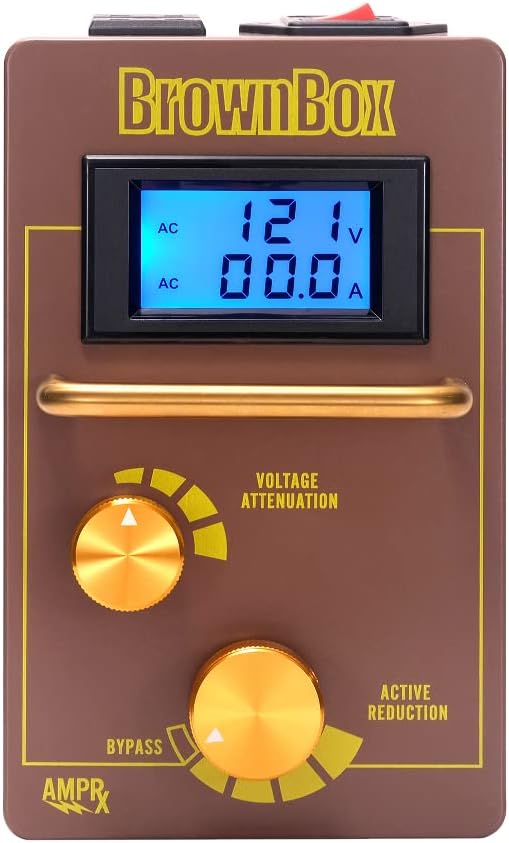
The BrownBox Tube Amplifier Input offers a unique voltage attenuation approach. With a perfect 5.0 rating, it manages input AC voltage to tube amps. This provides control over power delivery while maintaining tube operation.
We may earn a commission when you buy through this link, at no additional cost to you.
Key strengths include selectable output voltages and an LCD voltmeter. It allows precise monitoring. The 5A input handles full-sized amps. This ensures safe and controlled power reduction.
Limitations involve AC power control instead of speaker attenuation. It suits players wanting power regulation. For specialized needs, it is unmatched. It ensures amps run cool without distortion.
Best for power management enthusiasts. It keeps tube amps in check. If you want to control input voltage, the BrownBox is a premium specialized option.
This method reduces AC input voltage to the amp. This lowers power output and heat without affecting the signal path directly.
The voltmeter displays input voltage clearly. It ensures you know exactly how much voltage reaches the amp at all times.
We may earn a commission when you buy through this link, at no additional cost to you.
The Boss WAZA Tube Amp Expander combines attenuation with a command center. Rated 4.3 stars, it supports tube amps up to 150 watts. Its variable reactive load circuit retains tone and distortion characteristics.
We may earn a commission when you buy through this link, at no additional cost to you.
Key strengths include MIDI I/O and 10 recallable rig settings. This offers deep performance control. The built-in power amplifier allows seamless volume control. It is a comprehensive solution for complex setups.
Trade-offs involve high cost and weight. It is a major investment. However, for pros needing total control, it delivers. It merges attenuation with expansion seamlessly.
Best for high-end rigs. If you need a command center with power, this is the ultimate choice. It expands possibilities for tube amps significantly.
This feature matches the reactive load to your amp precisely. It ensures the tone and dynamic feel are retained exactly as intended.
MIDI I/O enables deep control via footswitches. You can automate and store settings for different songs or venues instantly.
We may earn a commission when you buy through this link, at no additional cost to you.
The Warm Audio Reamper Routing Hub serves as a studio routing center. It provides a silent 50W soak for power reduction. Variable impedance control ensures accurate tube amp handling. Independent preamp re-amp paths offer flexibility.
We may earn a commission when you buy through this link, at no additional cost to you.
Strengths include its analog design and routing capabilities. It allows parallel processing without signal loss. This is useful for complex studio workflows. It ensures clean signal paths for re-amping.
Limitations involve its focus on studio routing. It lacks standard attenuation levels. However, for re-amping, it is excellent. It keeps your studio organized and silent.
Best for studio engineers. If you need routing with attenuation, this fits. It ensures signal paths remain clean and controlled for production.
Independent paths allow separate signal processing. This ensures no interference between re-amp signals or other studio gear.
Control impedance to match any load. This ensures your tube amp operates safely and sounds natural regardless of the setup.
We may earn a commission when you buy through this link, at no additional cost to you.
Selecting the right attenuator involves considering your amp's power, impedance, and your volume needs. This guide outlines key factors to help you make an informed decision.
Ensure the attenuator can handle your amp's maximum wattage. Choosing a unit with a lower rating than your amp can lead to overheating and potential damage.
Always choose an attenuator rated for or higher than your amp's output power to ensure safe and reliable operation over time.
Matching the output impedance of your attenuator to your amp and speaker cabinet is vital. Incorrect matching can cause tone loss or damage to components.
Look for multi-impedance inputs to ensure compatibility across different rig setups and avoid mismatched signals.
Reactive loads mimic speaker impedance to preserve tone and feel better than passive resistive units. Passive units are simpler but may color the sound.
Choose reactive for studio tone preservation and passive for simplicity and budget friendliness.
High-quality components ensure that the signal remains pure and uncolored. Look for reviews confirming tone retention at low volumes.
Prioritize models with proven track records for maintaining natural tone to avoid sound degradation.
Features like line outputs, footswitches, and direct boxes add versatility for recording and live use. Ensure the unit matches your specific workflow needs.
Additional features can significantly improve usability for recording, touring, or home practice scenarios.
Durable construction is essential for units that may face regular transport or heavy use. Metal enclosures and solid connectors indicate reliability.
Check material quality to ensure longevity and protection against wear and tear.
Attenuators range from affordable pedals to expensive units. Determine your budget early and find a unit that balances cost with required performance.
Set a realistic budget that allows for necessary features without overspending on unnecessary extras.
Established brands often offer better warranties and support. Research user reviews to gauge reliability and customer satisfaction.
Choose well-known manufacturers to ensure you have access to support and replacement parts if needed.
Connect the attenuator between your amp's speaker output and your cabinet using high-quality speaker cables. Ensure all connections are tight to prevent signal loss or interference.
Start with the attenuator set to full volume and gradually turn it down to find your sweet spot. This helps preserve tone and avoids sudden changes that could stress your amp.
Keep the unit ventilated and avoid stacking heavy gear on top to prevent overheating. Regularly inspect cables for wear and clean connectors to maintain signal quality over time.
An attenuator is a device placed between your tube amplifier and speaker cabinet to reduce volume while maintaining tone. It allows you to crank the amp without producing excessive noise.
Not all, but high-wattage amps often benefit. If you need to achieve distortion at lower volumes for home recording, an attenuator is a key solution.
Generally no. Attenuators are designed for tube amps that rely on speaker impedance. Solid state amps may be damaged by improper impedance loads.
Yes, but quality units minimize this. Reactive loads are best for preserving tone compared to simpler resistive options.
Choose one matching your amp's output. Most units offer 4, 8, and 16 Ohm options for universal compatibility.
Passive units do not. Some active or digital units require power supplies. Check the product specifications before buying.
Yes. Many units feature line or direct outputs for recording. This allows silent recording directly into interfaces.
Yes, if properly rated. Always match wattage ratings to ensure the amp and attenuator operate safely together.
Our top picks include the Two Notes Torpedo Captor, Donner Amp Attenuator Pedal, and Universal Audio Ox Amp Top Box. These offer the best balance of features, build, and tone preservation.
Prioritize power rating and impedance matching to protect your gear. If recording is key, consider reactive loads or direct outputs for the best workflow.
Remember to verify current pricing and availability as these factors change often. Check our links for the latest details before purchasing.