
RC Cellmeter 7
4.7Editor score
Supports LiPo Li-ion NiMH
Displays cell voltage gaps
Compact lightweight design
This guide compares the top lithium ion battery testers for 2026 to help you find the best device for accurate vehicle and cell diagnostics.
Finding the right lithium ion battery tester ensures you can diagnose vehicle power systems and small cell health with confidence. These tools provide critical data on state of health, charge levels, and internal resistance to prevent unexpected failures.
We evaluated ten top-rated models based on accuracy, compatibility with different battery chemistries, ease of use, and build quality. Our analysis covers automotive load testers, portable cell checkers, and multi-function diagnostic tools designed for various applications.
Each pick highlights specific strengths such as dual voltage support, detailed reporting features, or compact portability for home use. Keep in mind that availability and pricing may change over time, so verify current details before making your final purchase decision.
4.7Editor score

4.5Editor score

4.5Editor score
The following table presents a side-by-side comparison of all ten selected testers highlighting their core capabilities and target use cases.


The ANCEL BT410 stands out as a top choice for diagnosing vehicle batteries including lithium-ion types. It receives high marks for its ability to handle both 12V and 24V systems across various vehicle categories.
We may earn a commission when you buy through this link, at no additional cost to you.
Its advanced smart chip delivers over 99.9% accuracy ensuring reliable readings for state of health and internal resistance. The color TFT screen provides excellent visibility in different lighting conditions.
Users must note that it draws power from the battery being tested which could limit use on completely dead batteries. The interface focuses on clear pass fail results rather than deep technical graphs.
Ideal for fleet managers and car owners who need quick reliable diagnostics without complex setup. It balances professional features with straightforward operation for daily maintenance checks.
Supports both 12V and 24V systems allowing one tool to service cars trucks and commercial vehicles.
Generates shareable QR reports making it easy to document battery health for service records or expert review.
We may earn a commission when you buy through this link, at no additional cost to you.
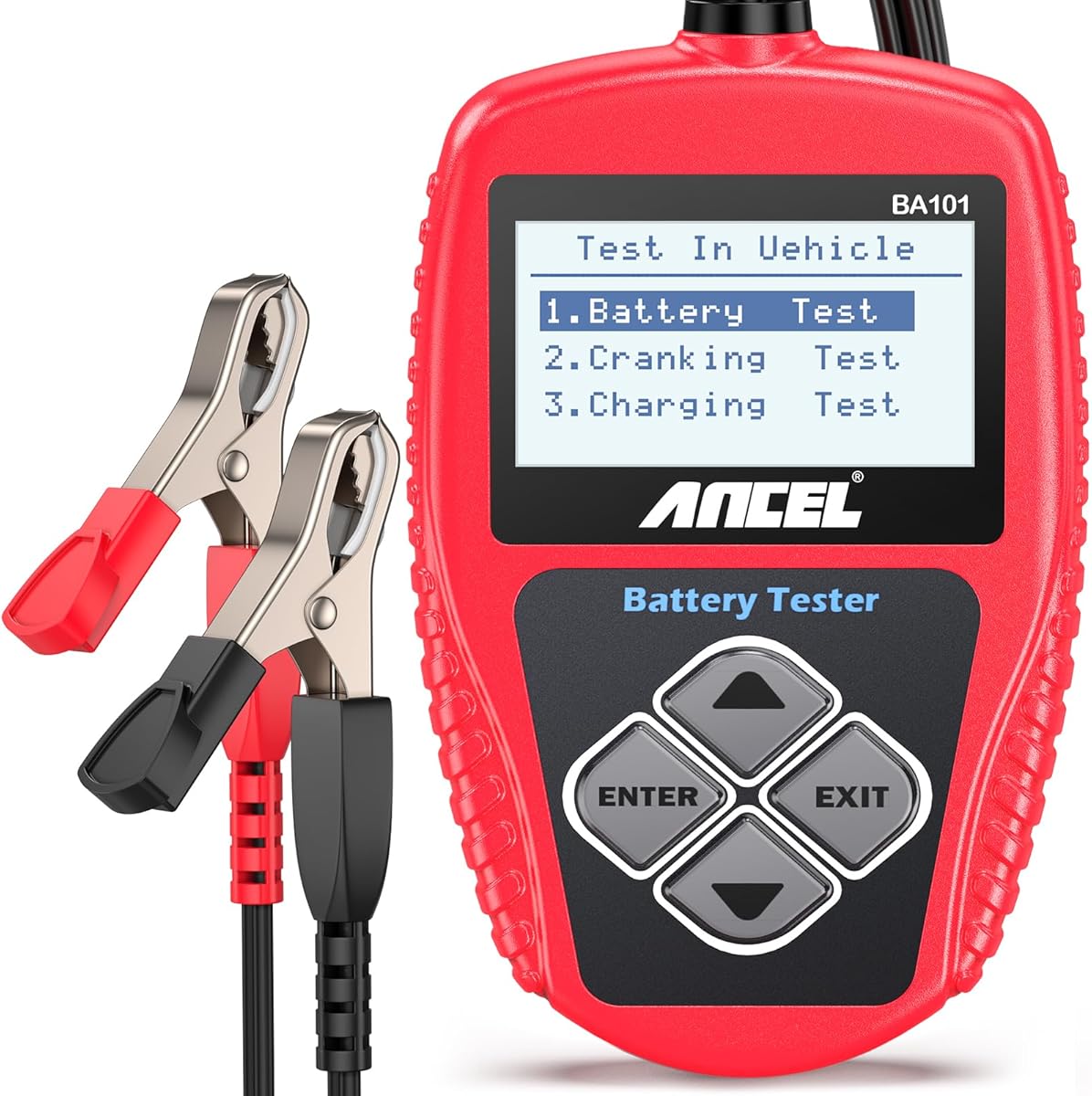
The ANCEL BA101 is a solid option for standard 12V automotive batteries found in most cars and trucks. It focuses on delivering essential health and charging system data efficiently.
We may earn a commission when you buy through this link, at no additional cost to you.
High quality copper clips ensure secure connections which improves accuracy during cranking tests. The backlight helps visibility in dark garages or night time emergencies.
It lacks support for lithium batteries which limits use in modern vehicles with start stop systems or specific EV modules. The black and white screen is functional but less vivid than color options.
Best for mechanics or DIYers working primarily on traditional lead-acid systems who want a simple durable tool without extra features.
Provides quick state of health and charge readings to minimize time spent troubleshooting under the hood.
Reinforced ABS housing protects the unit from drops and bumps during regular garage use.
We may earn a commission when you buy through this link, at no additional cost to you.
This module offers specialized testing for 18650 lithium cells which are common in portable electronics and power banks. It measures actual capacity and internal resistance for precise cell health assessment.
We may earn a commission when you buy through this link, at no additional cost to you.
The 4 channel design allows testing multiple cells simultaneously speeding up the process for battery pack builders. Type-C input simplifies power needs for the tester itself.
Users should expect a 10% error margin which is typical for budget modules but may not suffice for critical industrial applications. Installation requires some basic knowledge of electronics modules.
Excellent for hobbyists building custom battery packs or repairing devices that use 18650 cells requiring detailed capacity verification.
Supports four channels allowing simultaneous capacity checks to streamline workflow for multiple battery units.
Displays voltage current and power data instantly so users can observe discharge trends during testing.
We may earn a commission when you buy through this link, at no additional cost to you.
The ANCEL BT310 brings valuable data tracking to the mid-range category allowing users to review past test results. This helps in monitoring battery degradation over time effectively.
We may earn a commission when you buy through this link, at no additional cost to you.
Its 5-way result system simplifies decision making by clearly stating whether a battery is good or needs replacement. The silicone case adds durability against drops and impacts.
While accurate it lacks the visual flair of color screens found on premium models. Data storage is internal which limits long term analysis across multiple devices or platforms.
Suited for vehicle owners who want to track battery health over years without needing advanced cloud features or connectivity.
Built-in review function stores previous tests to help users spot performance trends before failures occur.
Handles both 12V and 24V systems covering a wide range of automotive and marine applications.
We may earn a commission when you buy through this link, at no additional cost to you.
TOPDON BT100 is designed for simplicity using colored LEDs to convey battery health at a glance. This makes it ideal for users who want quick answers without reading numbers.
We may earn a commission when you buy through this link, at no additional cost to you.
The ergonomic design fits easily in a glove box for emergency roadside checks. Passive testing ensures safety by powering on only when properly connected.
It does not support 24V systems or lithium batteries which may limit compatibility with newer vehicle types. The interface is functional but lacks detailed reporting options.
Perfect for casual users or fleets using standard 12V systems who prioritize speed and ease of use over deep diagnostics.
Three color LEDs instantly indicate good weak or poor status simplifying the reading process.
Small form factor allows convenient storage in vehicles for immediate access during travel.
We may earn a commission when you buy through this link, at no additional cost to you.
The RC Cellmeter 7 is a highly affordable option specifically built for checking individual cell voltages in RC vehicles and small packs. It delivers excellent value for basic health checks.
We may earn a commission when you buy through this link, at no additional cost to you.
Its lightweight design makes it easy to carry on the go. The display shows cell voltage gaps which helps identify weak cells that could cause pack imbalance.
It does not support charging functions so users need a separate charger for balancing. The remaining capacity percentage is an estimate rather than a precise measurement.
Recommended for drone pilots and RC hobbyists who need a reliable inexpensive tool to monitor cell health before flying.
Displays voltage gaps between cells to help users identify and replace weak ones in multi-cell packs.
Weighs only 45 grams ensuring minimal burden during transport to hobby fields or tracks.
We may earn a commission when you buy through this link, at no additional cost to you.
FOXWELL BT705 provides professional-grade guidance with step-by-step prompts that simplify testing for first-time users. The 2.8-inch screen offers clear visibility for detailed results.
We may earn a commission when you buy through this link, at no additional cost to you.
The extra-long cable allows users to start vehicles and view results simultaneously from the driver seat. A hard case keeps accessories organized for repeated use.
It is heavier than handheld tools which might reduce portability for quick checks. The price is higher than basic models but justified by the durability and guided interface.
Ideal for repair shops or serious DIYers who value durability and clear instructions during complex troubleshooting scenarios.
Step-by-step screen prompts reduce confusion and ensure correct testing procedures for accurate results.
Included hard case protects the unit and cables from damage during storage or transport to job sites.
We may earn a commission when you buy through this link, at no additional cost to you.
The FOXWELL BT705Plus delivers premium performance with faster processing and a vivid color LCD for enhanced readability. It supports 32 tests in one tool covering battery cranking and charging systems.
We may earn a commission when you buy through this link, at no additional cost to you.
High-conductivity clamps ensure precise connections reducing errors during measurement. The ripple test feature helps identify alternator issues early before they damage other components.
It does not support lithium-ion batteries which limits use for EV maintenance. The higher price reflects professional features that may be excessive for casual home users.
Best for automotive professionals or fleets needing rapid accurate diagnostics for lead-acid systems in commercial vehicles.
Up to 30% faster testing speeds allow more tests per day in busy shop environments.
Detects ripple voltage and charging performance to diagnose alternator faults without additional tools.
We may earn a commission when you buy through this link, at no additional cost to you.
This tester is designed for household batteries ranging from AA to 9V and button cells making it highly versatile for home use. The magnetic slot ensures secure placement during testing.
We may earn a commission when you buy through this link, at no additional cost to you.
USB-C rechargeability eliminates the need for disposable batteries. One-touch operation makes it accessible for users of all ages.
It is not suitable for automotive load testing and focuses on simple voltage health checks. Accuracy is sufficient for general use but not for critical technical applications.
Perfect for checking remote controls toys and flashlights to prevent waste by identifying truly depleted batteries.
Magnetically secures batteries to prevent slipping during testing ensuring safe easy operation.
Rechargeable via USB-C reduces long-term costs and environmental impact from disposable batteries.
We may earn a commission when you buy through this link, at no additional cost to you.
The La Crosse 911 uses a simple tray mechanism for testing standard alkaline lithium and button cell batteries. The 3-step process is easy to follow for quick results.
We may earn a commission when you buy through this link, at no additional cost to you.
LED indicators provide immediate feedback on battery strength levels. The touch contacts for 9V batteries simplify testing for that specific form factor.
Users must manually slide the tray which might be slower than magnetic slots. It is limited to common household sizes and does not support rechargeable 1.2V cells well.
Great for general households needing a reliable tool to sort spare batteries without complex settings.
Select voltage range insert battery slide tray for immediate LED results simplifying the workflow.
Dedicated touch contacts for 9V batteries ensure accurate readings for common flat batteries.
We may earn a commission when you buy through this link, at no additional cost to you.
Selecting the right tester depends on your specific battery types and testing needs.
Ensure the tester supports the specific battery types you use such as Lithium Ion Lead-Acid or NiMH. Some automotive testers focus only on 12V systems while others handle 24V or diverse chemistries.
Check the product specs for lithium support if you own EVs or modern start-stop vehicles.
Look for testers that advertise high accuracy percentages often above 99 percent for reliable diagnostics. Higher accuracy prevents false positives that lead to unnecessary battery replacements.
Prioritize models with precision smart chips and quality clamps for consistent results.
A clear display is essential for reading results in various lighting conditions. Color LCDs offer better visibility than basic monochrome screens especially in bright sunlight.
Adjustable contrast and backlights ensure readability during night time checks.
Advanced features like QR report sharing or internal data tracking help document battery health over time. Charging system tests add value for diagnosing alternator issues alongside battery health.
Select features based on whether you need quick checks or detailed maintenance records.
Durable housing and reinforced clamps protect the device from drops and wear. Silicone cases or hard carrying cases are beneficial for users working in active garage environments.
Invest in robust construction to ensure the tester lasts through repeated daily use.
User-friendly interfaces with guided prompts reduce the learning curve for complex tests. Simple operation with minimal steps is ideal for users who want quick answers.
Check for multi-language support if you or your team require localized settings.
Many automotive testers draw power from the battery being tested which requires the battery to have some charge. For portable cell testers consider USB-C rechargeable options to avoid battery dependency.
Ensure the power source aligns with your testing workflow to prevent interruptions.
Safety features like reverse polarity protection prevent accidental damage to your vehicle or the tester. Short circuit protection adds another layer of security during connection.
Always verify safety certifications before using testers on high voltage systems.
Before testing ensure the battery terminals are clean and free of corrosion to guarantee secure connections. Properly set the battery type and rating on the tester to match the label on your battery.
Connect the clamps correctly matching positive and negative terminals to avoid reverse polarity errors. Most automotive testers power on automatically once connected so keep your vehicle accessories off during the test.
Store the tester in a dry environment away from extreme temperatures to maintain accuracy. Clean the clamps regularly and check cables for any signs of wear before storage.
No standard automotive battery testers are designed for 12V systems and will not work for individual 18650 cells. You need a dedicated cell tester that supports low voltage lithium-ion batteries to get accurate capacity and resistance readings.
State of Health indicates the current condition of the battery compared to its original capacity. It shows how much of the battery's initial power remains helping you decide if a replacement is necessary soon.
Most automotive testers draw power from the battery under test to run internal circuits and displays. If the battery is completely dead the tester may not power on or show accurate diagnostic results.
Color screens provide more detailed data visibility and better readability in varying light. However LEDs are simpler and faster for basic pass fail checks making them suitable for quick roadside verification.
It is recommended to test your vehicle battery at least twice a year especially before extreme weather seasons. Regular checks help prevent unexpected failures and extend the lifespan of your battery.
Most automotive testers draw power directly from the battery being tested so no external source is needed. Portable cell testers often use USB-C or internal batteries so check specific model requirements before use.
CCA measures cold cranking amps indicating starting power in cold weather while Ah measures amp hours indicating energy capacity over time. Choose a tester that supports both ratings to match your battery type.
Yes many advanced models include dedicated charging system tests to check alternator output and ripple. This feature helps distinguish between a weak battery and a failing charging system before buying new parts.
We reviewed ten top options ranging from budget cell checkers to professional automotive testers. Each model offers distinct strengths depending on whether you need simple household checks or detailed vehicle diagnostics.
Prioritize compatibility and accuracy when selecting a device to ensure reliable long-term performance. Features like data tracking and safety protections add significant value for frequent users.
Always verify current availability and specifications before purchasing as models may update over time. Regular testing helps maintain battery health and prevents unexpected breakdowns on the road.