
End Fed Antenna 1-30MHz 150W
4.8Editor score
Wide 1-30MHz frequency range
Compact portable design
Supports multiple power modes
This guide compares the top ten end fed half wave antenna options for amateur radio operators seeking reliable multiband HF communication in diverse environment
Selecting the right antenna is crucial for any ham radio operator looking to maximize their signal reach and clarity. An end fed half wave antenna offers a versatile solution that simplifies setup without sacrificing performance across multiple bands.
We evaluated ten leading models based on their construction quality, impedance matching, and ease of installation in various field conditions. Our analysis focuses on real-world usability for both portable and fixed station applications.
Each pick highlights specific strengths such as durability, tuning requirements, and power handling capabilities for different transmission modes. Please note that pricing and availability may fluctuate over time on retail platforms.
4.8Editor score

4.7Editor score
5.0Editor score
The following table provides a side-by-side comparison of all ten selected models to help you quickly identify key specifications and features that match your operating needs.

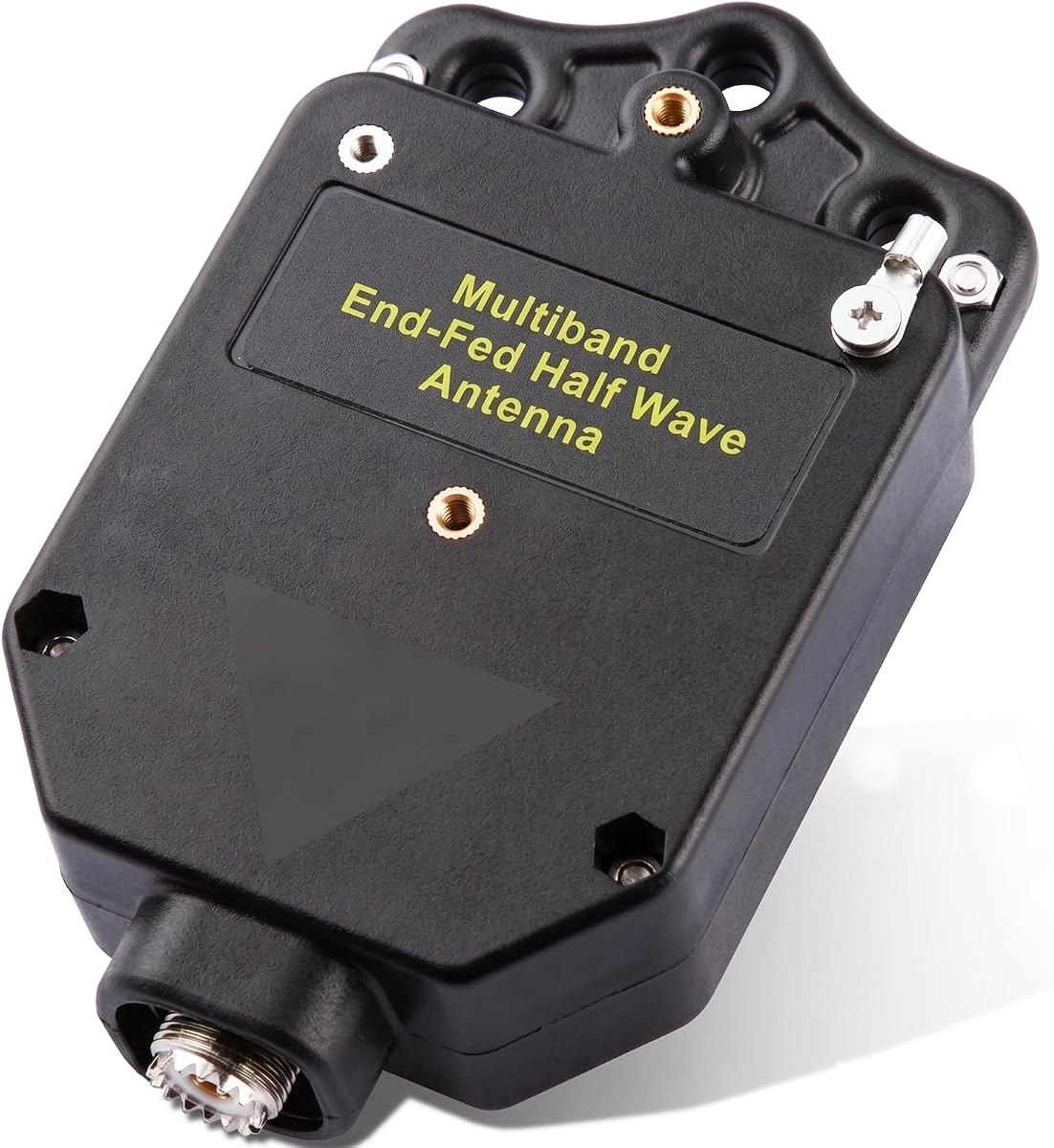


This JYR model stands out with its robust construction and reliable multiband performance. It holds a strong rating among users who value durability and ease of use in field conditions.
We may earn a commission when you buy through this link, at no additional cost to you.
The integrated 1:64 Balun allows for efficient impedance matching across 10m, 15m, 20m, and 40m bands. Its natural cooling design helps maintain stable operation during extended transmission sessions.
While the price is higher than budget options, the build quality justifies the investment for serious operators. The larger balun size might require more careful placement during portable setups.
This antenna is ideal for operators who want a set-and-forget solution for both home and field operations. It delivers consistent results without the need for constant adjustments.
The antenna resonates naturally on four major HF bands, ensuring low SWR without external tuning devices.
Constructed with an ABS shell and sealed housing, it withstands harsh weather conditions for long-term outdoor use.
We may earn a commission when you buy through this link, at no additional cost to you.
This model offers incredible value for those entering the hobby or needing a secondary antenna. Its high rating reflects user satisfaction with its performance relative to cost.
We may earn a commission when you buy through this link, at no additional cost to you.
It covers a broad 1-30MHz range supporting multiple bands like 80m, 60m, 40m, and others. The compact design makes it perfect for rapid deployment in emergency scenarios.
Users must prepare their own wire which requires some fine-tuning for optimal resonance. The housing is functional but lacks the ruggedness of premium models.
Choose this if you need a reliable entry-level solution that delivers strong results without breaking the bank. It meets the needs of most casual and portable operators.
Provides multiband HF capabilities at a fraction of the cost of more complex commercial units.
Supports a wide array of bands from 1MHz to 30MHz ensuring flexibility for various communication modes.
We may earn a commission when you buy through this link, at no additional cost to you.
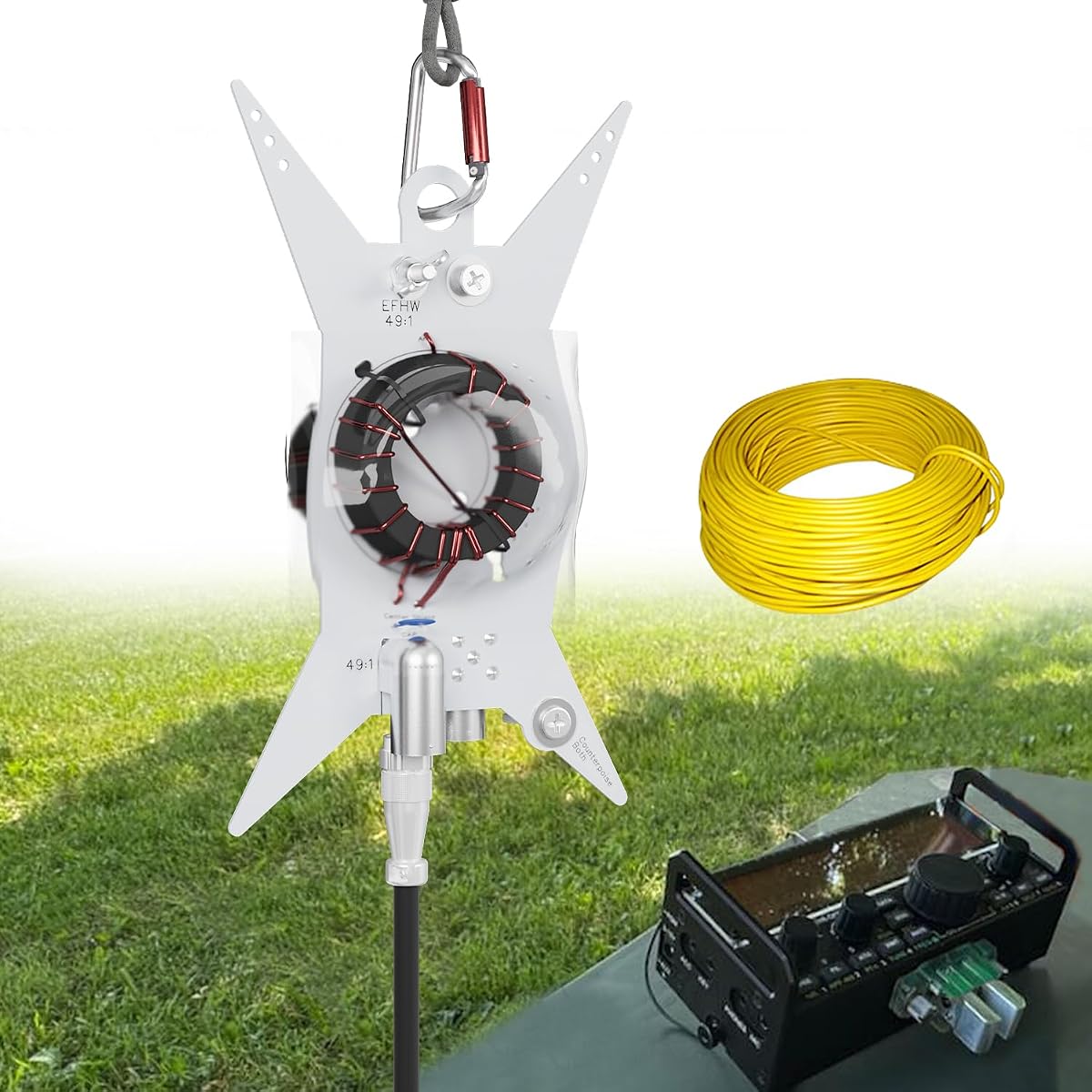
This unique antenna combines a 49:1 and 9:1 transformer in a single unit for versatile operating modes. It appeals to users who want flexibility between resonant and random wire setups.
We may earn a commission when you buy through this link, at no additional cost to you.
The 49:1 side works well for end-fed resonant antennas while the 9:1 side pairs with a tuner for random wires. This flexibility allows it to perform well across various HF bands.
Installation is straightforward with horizontal, vertical, or diagonal mounting options. However, the 9:1 mode requires an external tuner which adds complexity to the setup.
It is a great choice for hams who experiment with different antenna configurations. The durable build ensures it can handle field operations in varied terrain.
Offers two distinct impedance ratios for matching different wire lengths and antenna types.
Built to withstand wind and rain making it suitable for temporary outdoor deployment.
We may earn a commission when you buy through this link, at no additional cost to you.
This model features a longer wire specifically tuned for 8-band natural resonance. It is designed to deliver stable performance across a wide range of HF frequencies without additional tuning.
We may earn a commission when you buy through this link, at no additional cost to you.
The cold drawn multi-strand copper wire ensures efficient signal transmission. The 64:1 winding ratio in the balun is robust enough to handle standard transmission power levels.
The wire length of 39.6 meters means you need adequate space for vertical or horizontal deployment. However, this length is key to achieving low SWR on lower bands.
For operators with space for a longer wire, this antenna provides reliable access to 80m through 10m bands. It balances performance and cost effectively for many users.
A longer wire element improves resonance on lower frequency bands like 80m.
The heavy-duty winding in the balun ensures durability and consistent impedance matching.
We may earn a commission when you buy through this link, at no additional cost to you.
This balun offers flexible configuration with specific power handling for different modes. It includes a dedicated grounding terminal to help suppress interference without deep earth burial.
We may earn a commission when you buy through this link, at no additional cost to you.
The omnidirectional radiation pattern ensures reliable signal reception regardless of the antenna orientation. This makes it suitable for both portable field operations and home stations.
Users must trim the wire to length for optimal resonance which adds a step to installation. However, the design supports both 4-band and 8-band architectures easily.
Choose this model if you need a balun that accommodates specific grounding needs. It balances robust construction with the flexibility needed for modern digital modes.
Includes a terminal for attaching a ground wire to reduce noise without full earth burial.
Supports both 4 and 8 band setups by changing the wire length to your needs.
We may earn a commission when you buy through this link, at no additional cost to you.
This antenna emphasizes portability with a waterproof ABS shell that protects internal components. It supports a wide frequency range compatible with various communication modes effectively.
We may earn a commission when you buy through this link, at no additional cost to you.
The optimized matching ratio helps improve reception efficiency and signal quality over distance. Its small size makes it easy to carry for emergency or outdoor operations.
Users need to prepare and trim the wire to suit their specific operating frequencies. The construction is functional but focuses more on utility than premium durability.
This model is ideal for users who need a reliable waterproof option for temporary setups. It delivers good performance for a competitive market price.
Designed to withstand bad weather conditions ensuring stable use indoors or outdoors.
The 1:64 ratio reduces loss and enhances stability for long distance communication.
We may earn a commission when you buy through this link, at no additional cost to you.
This is a specialized antenna designed specifically for the 40-meter band. It offers high power handling and a durable copper clad steel radiator for stable performance.
We may earn a commission when you buy through this link, at no additional cost to you.
It allows for flexible suspension horizontally or vertically depending on your needs. The connector is standard making it compatible with most transceivers without adapters.
Since it is designed for a single band, it is not recommended for multi band use without a tuner. This limits its utility for operators seeking broad coverage.
It suits operators who primarily operate on 40m and want a dedicated antenna. However, general users might find more value in multiband options.
Designed for operation on the intended band to provide focused efficiency and stability.
Capable of handling up to 200W ensuring robust transmission for CW and SSB modes.
We may earn a commission when you buy through this link, at no additional cost to you.
This model is a straightforward option for those focusing on the 20-meter band. It follows a classic end fed half wave design that is known for reliability.
We may earn a commission when you buy through this link, at no additional cost to you.
The compact footprint makes it suitable for areas with limited space. It connects via standard interfaces that fit most HF transceiver setups effectively.
Lacking extensive multiband features, it is best used for operators dedicated to 20m. However, its simplicity can be a benefit for easy installation and maintenance.
Consider this if you have a specific need for 20m operations. It provides a focused solution without the complexity of multiband tuning.
Optimized for a single band to ensure stable and predictable performance.
Standardized components make it easy to integrate into existing stations.
We may earn a commission when you buy through this link, at no additional cost to you.
This variant focuses on a shorter wire length suitable for limited spaces. It covers four bands effectively using a sturdy balun with a 64:1 winding ratio.
We may earn a commission when you buy through this link, at no additional cost to you.
The 19.8m wire length reduces space requirements compared to longer multiband models. This makes it easier to hang on trees or poles in typical residential areas.
Users should note that slight adjustments might be needed for optimal SWR in certain environments. However, it generally delivers good performance without external tuners.
Ideal for operators with space constraints who still need 4-band access. It balances size and performance effectively for portable or home setups.
A shorter wire reduces the footprint while maintaining strong band coverage.
Delivers reliable performance across 40m, 20m, 15m, and 10m bands.
We may earn a commission when you buy through this link, at no additional cost to you.
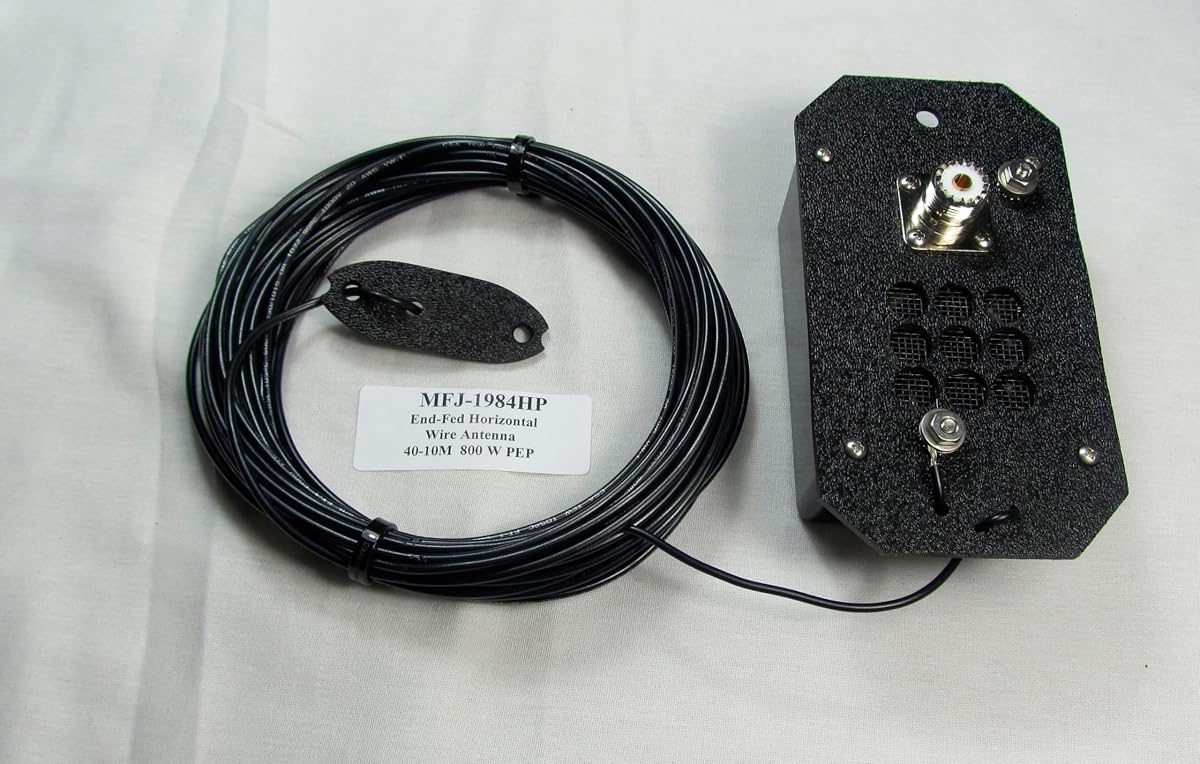
This premium model offers outstanding power handling and durability for serious operators. It features a weather resistant matching network that requires no traps or stubs.
We may earn a commission when you buy through this link, at no additional cost to you.
The design resonates on 40 through 10m bands with such low SWR that a tuner is rarely needed. It includes stainless hardware for longevity in harsh environments.
While expensive, the build quality and power rating make it a top choice for high power stations. The no counterpoise need simplifies setup significantly compared to other models.
Select this if you need a reliable antenna for high power HF operations. It delivers professional grade performance that stands up to demanding conditions.
Supports 800W PEP allowing robust signal transmission without overheating or damage.
Weather resistant materials ensure the antenna operates effectively in all conditions.
We may earn a commission when you buy through this link, at no additional cost to you.
Choosing the right antenna involves considering your operating environment, power needs, and frequency preferences. This guide outlines key factors to help you make an informed decision.
Determine which bands you operate on most frequently. Some antennas cover a broad range like 1-30MHz while others focus on specific bands like 40m only. Multiband options are generally more versatile for varied operations.
Select an antenna that covers your primary operating bands to ensure optimal performance.
Check the power rating to match your transmitter's output. Common ratings include 150W, 200W, and higher. Higher power handling ensures the antenna can manage continuous transmission without failure.
Always choose a model that exceeds your transceiver's maximum power output for safety.
The balun ratio affects how well the antenna matches your radio. Common ratios are 1:49 and 1:64. This component ensures efficient signal transfer and reduces SWR issues.
Look for integrated baluns that match your system's requirements for minimal tuning.
Consider the wire length and mounting options. Some antennas require long wires while others are shorter. Also check if you need to provide your own wire or if it is included.
Choose a model that fits your available space and mounting capabilities.
If you plan to leave the antenna outdoors, look for waterproof or weather-resistant housings. Sealed baluns protect internal components from moisture and corrosion over time.
Prioritize models with durable housings for long-term outdoor reliability.
For field operations, weight and size are critical. Compact models with lightweight materials are easier to transport and set up quickly. This is vital for emergency or camping scenarios.
Select a lightweight design if you frequently move your station.
Prices vary significantly based on build quality and features. Entry-level models offer good value while premium options provide higher power and durability. Balance cost with your specific needs.
Invest in quality that matches your usage frequency and budget.
Ensure the connector matches your transceiver's feed line. SO-239 is common for these antennas but verify compatibility to avoid needing extra adapters.
Check connectors before buying to ensure a direct fit.
Begin by inspecting the wire for any damage or wear before installation. Ensure the wire is connected securely to the balun end and the other end is free to hang without obstruction.
When setting up, try to keep the wire at least three meters away from ground and metal structures to reduce interference. Secure the balun to a tree or mast using non-metallic rope.
Regularly check the connections and housing for signs of weather damage or corrosion. Clean the exterior if needed and store the antenna indoors during extreme storms to prolong its life.
Many modern end fed half wave antennas include a built-in balun that allows them to operate without an external tuner. However, models with a 9:1 impedance ratio typically require a tuner for optimal performance.
Both ratios serve to match the impedance of the antenna to the radio. A 1:64 balun is often used for half-wave antennas to provide better efficiency on higher frequency bands.
Use a tree, pole, or mast as support. Secure the balun to the support and run the wire away from metal objects. You can hang it horizontally or vertically depending on space.
Yes, these antennas are popular for portable use because they are lightweight and require minimal setup. You can use trees or hiking poles to suspend the wire quickly in the field.
Most end fed half wave antennas do not require a counterpoise because the balun handles the ground return internally. However, adding a short ground wire can improve noise performance in some setups.
Adjust the length of the wire slightly or move the antenna away from metal objects. Checking connections and ensuring the antenna is high enough above ground can also improve SWR readings.
Always stay away from power lines when putting up an antenna. Use insulated ropes and wear gloves to avoid burns or cuts. Ensure the wire is securely fastened to prevent falling.
Lower bands require longer wire lengths to resonate properly. If your wire is too short for the band you are using, you may need to extend it or use a tuner to adjust the impedance.
We have reviewed ten top models ranging from budget-friendly options to premium high-power solutions. Each offers distinct advantages depending on your specific operating needs and environment.
When making your choice, prioritize factors like power handling and band coverage that align with your station setup. Durability and weather resistance are also key for long-term satisfaction.
Always verify current availability and pricing before purchasing as market conditions can change. We hope this guide helps you find the perfect antenna for your radio operations.