
Urban Worm Soil Thermometer
4.6Editor score
5 Inch Stainless Steel Stem
Color Coded Tick Marks
Ideal for Worm Bins
Simple Analog Reading
This guide compares ten top-rated digital soil thermometers for accurate plant care. We review features, accuracy, and ease of use to help you find the best
Choosing the right digital soil thermometer ensures your plants get the precise care they need for optimal growth. These tools measure temperature accurately, helping you avoid stress caused by extreme conditions.
We compared ten leading models based on accuracy, durability, and ease of use. Our analysis covers essential features like display clarity, probe quality, and additional metrics such as pH or moisture levels.
Each pick highlights unique strengths for different gardening styles. Prices and availability change frequently, so verify current details before purchasing to ensure you get the best value for your specific garden setup.
4.6Editor score

4.7Editor score

4.2Editor score
This table provides a side-by-side comparison of the top ten digital soil thermometers available today. Review key specifications to find the model that best fits your specific gardening requirements.




The YAMRON 4-in-1 is a versatile tool designed for gardeners seeking comprehensive data without multiple devices. It measures soil moisture, pH, temperature, and sunlight levels effectively. With a solid 4.2 rating, users appreciate its ability to provide a full picture of plant conditions.
We may earn a commission when you buy through this link, at no additional cost to you.
Its standout feature is the 4-in-1 functionality combined with a rotating head design. The large LCD screen with backlight ensures readability in low light. The probe detects temperature quickly, helping you gauge soil readiness for planting or transplanting without complex setup.
While effective, the device requires care when inserting into dry soil. Users must moisten the area slightly to prevent damage. This trade-off is acceptable given the rich data provided. The visual design makes it intuitive for beginners to interpret values correctly.
This model is ideal for home gardeners managing both indoor and outdoor plants. If you want to monitor soil health alongside temperature, this unit offers excellent value. It simplifies plant care by consolidating essential metrics into a single, portable unit.
It measures four key factors simultaneously, reducing the need for separate tools and streamlining your daily gardening routine significantly.
The rotating head and backlight ensure you can read data comfortably even in dark corners or when bending over is difficult.
We may earn a commission when you buy through this link, at no additional cost to you.
The Reotemp K83B1 stands out as the Editor's Choice due to its exceptional build quality and high user satisfaction. It is specifically designed for composting and deep soil monitoring. With a 4.7 rating, it proves reliable for serious gardeners and compost enthusiasts.
We may earn a commission when you buy through this link, at no additional cost to you.
Its 12-inch stainless steel stem allows for deep penetration into compost piles or soil layers. The included digital composting guide adds significant value for beginners. The analog display is easy to read and eliminates battery dependency issues common with digital units.
However, it lacks a digital screen, which some may prefer for precision. The manual reading is straightforward but requires you to hold the device steady. This trade-off ensures longevity and simplicity, making it robust against harsh outdoor conditions.
Choose this if you prioritize durability and deep soil accuracy. It is perfect for compost management and garden beds requiring extended reach. The professional construction ensures it lasts through multiple seasons of heavy use.
The extended 12-inch stem allows you to measure temperature at root depths where standard meters cannot reach effectively.
The included digital guide helps you understand optimal temperatures for decomposition, making it a valuable tool for waste management.
We may earn a commission when you buy through this link, at no additional cost to you.
This 7-in-1 kit offers an extensive range of features for detailed plant care. It goes beyond temperature to include pH, moisture, light, and even fertility indicators. With a 4.4 rating, it is favored by those needing specific nutrient data for optimal growth.
We may earn a commission when you buy through this link, at no additional cost to you.
The inclusion of EC and TDS functions is a key strength. These metrics help assess water quality and soil salinity. The large backlight screen ensures all data is visible in any lighting condition, enhancing usability for indoor and outdoor settings.
Users should note that the device needs moist soil for accurate readings. Dry conditions can damage the probe. This limitation is standard for electrical meters but requires a bit of prep before testing. The benefits of detailed data often outweigh this minor inconvenience.
It is ideal for gardeners managing succulents or specific crops needing precise nutrient monitoring. The versatility makes it a central tool for a scientific approach to gardening. You get a complete environment analysis in one handheld device.
EC and TDS functions allow you to monitor dissolved solids and conductivity, ensuring your plants receive proper nutrition.
Integrated light sensors help you determine if plants are receiving enough sunlight for photosynthesis without extra tools.
We may earn a commission when you buy through this link, at no additional cost to you.
The Urban Worm Soil Thermometer is the Best Budget choice for vermicomposters and small gardeners. It focuses specifically on the temperature range optimal for worms. With a 4.6 rating, users appreciate its simplicity and effectiveness for maintaining a healthy worm bin.
We may earn a commission when you buy through this link, at no additional cost to you.
Its analog design with green, yellow, and red marks makes monitoring effortless. You see at a glance if conditions are too cold or hot. The stainless steel stem is robust enough to penetrate compost piles without bending, ensuring consistent depth.
The lack of digital features keeps the cost low and reliability high. There are no electronics to fail or batteries to replace. However, you must interpret the analog scale manually. For targeted worm bin care, this is sufficient and highly efficient.
Choose this if you need a dedicated tool for worm composting. It offers a cost-effective way to ensure your bin stays active. The specialized design makes it a must-have for sustainable gardening and waste reduction efforts.
Designed specifically for the 55F to 90F range where worms thrive, ensuring your compost remains active and healthy.
As an analog device, it never needs batteries, making it always ready for use without power maintenance.
We may earn a commission when you buy through this link, at no additional cost to you.
The ECOWITT WN34BS offers a high-tech solution for monitoring soil temperature remotely. It connects to a Wi-Fi gateway for app integration. With a 4.2 rating, it is favored by tech-savvy gardeners who want data access from anywhere without stepping outside.
We may earn a commission when you buy through this link, at no additional cost to you.
Its IP65 waterproof rating ensures durability in harsh weather. The system supports up to eight channels, allowing extensive coverage across large gardens or farms. Email alerts notify you of critical temperature changes, helping you act quickly to protect crops.
The main trade-off is the need for a separate gateway to unlock smart features. Without it, it functions as a basic sensor. Setup can be complex compared to standalone meters. However, the value of remote data makes it worth the effort for serious growers.
This sensor is perfect for large estates or greenhouses. It eliminates the need for physical checks at every plot. If you value connectivity and alerts, this device provides a robust network for tracking soil health over time.
Email alerts and app notifications keep you informed of temperature spikes or drops immediately, protecting your plants from sudden changes.
Supporting up to eight sensors allows you to create a comprehensive network of monitoring points across your entire property.
We may earn a commission when you buy through this link, at no additional cost to you.
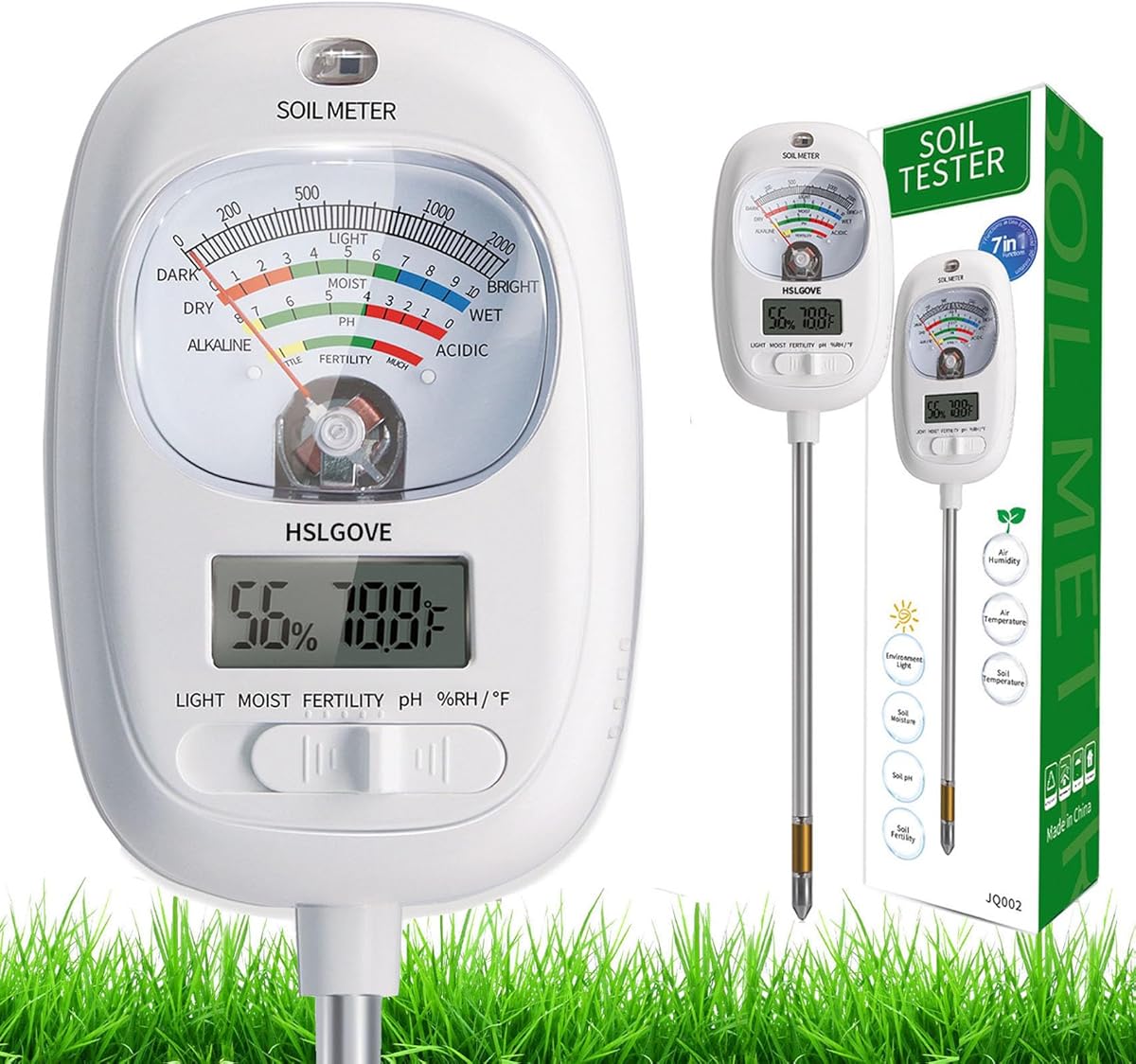
The HSLGOVE 7-in-One kit is unique for its dual screen display. It shows soil data on one screen and air temperature on another. With a 4.4 rating, it appeals to those who need both indoor climate and soil conditions simultaneously for precise plant care.
We may earn a commission when you buy through this link, at no additional cost to you.
Its 3-metal probe system ensures accurate soil measurements without bending. Switching modes is done via a single button, simplifying operation. The digital readout provides precise values for moisture, pH, and temperature, reducing guesswork for the user.
The main trade-off is the battery dependency for both screens. You must ensure they are active for readings. However, the convenience of having air humidity data makes it a comprehensive tool for indoor environments and greenhouses.
This kit suits houseplant enthusiasts and farmers alike. It offers a broad view of your growing environment. If you care about both soil and air quality, this dual-screen design delivers unmatched utility in one device.
Seeing soil and air metrics side by side helps you correlate humidity levels with soil conditions effectively.
The three-metal probe resists bending and corrosion, ensuring longevity even with frequent use in tough soil.
We may earn a commission when you buy through this link, at no additional cost to you.
The Digital Soil EC Meter focuses on electrical conductivity and temperature. It helps you manage nutrient levels in soil. With a 4.1 rating, it is useful for agricultural use where nutrient balance is critical. The corded probe design is unique for stability.
We may earn a commission when you buy through this link, at no additional cost to you.
Its temperature compensation feature ensures accurate EC readings regardless of soil temperature. The IP67 rating makes it highly waterproof and resilient. Backlight LCD display allows clear viewing even in bright sunlight. This precision supports optimized fertilization strategies.
The device requires calibration with a specific solution for best results. This adds a step but ensures reliability. For advanced users, this is a minor hurdle. The detailed data provided justifies the effort for professional gardeners.
Choose this if you need to manage salinity or nutrients. It prevents over-fertilization by giving real-time conductivity data. The combination of EC and temperature makes it a specialized tool for high-performance crops and gardens.
EC readings allow you to detect salt buildup early, preventing root damage and ensuring optimal nutrient uptake.
Manual calibration ensures that your readings remain accurate over time, supporting long-term reliability for critical measurements.
We may earn a commission when you buy through this link, at no additional cost to you.
This 4-in-1 model is designed for convenience with wireless capabilities. It monitors soil temperature, moisture, light, and time remotely. With a 4.5 rating, it is praised for allowing you to check plants from inside without visiting every pot.
We may earn a commission when you buy through this link, at no additional cost to you.
The triple-probe TDR sensor offers stable and consistent readings. You can monitor up to 12 plants with one display. Alerts flash when moisture is low, reducing the risk of underwatering. The large screen makes data accessible without straining your eyes.
A trade-off is the need for batteries in each sensor unit. However, the convenience of remote checking is significant. This saves time and effort, especially for large gardens. The system balances accuracy with user-friendly design.
Ideal for busy gardeners or those with large plant collections. It brings smart technology to everyday plant care. If you want to track many plants without constant physical visits, this wireless system is an excellent solution.
The 328-foot range lets you check on your garden from your home or office, making plant care much more manageable.
Supporting up to 12 sensors allows for a holistic view of your entire garden's needs from a single central display.
We may earn a commission when you buy through this link, at no additional cost to you.
The 7 in 1 Soil Meter is a premium choice offering advanced features for serious growers. It includes pH, sunlight, fertility, temperature, and humidity tracking. With a 3.9 rating, it provides high-end specs but may have a learning curve for new users.
We may earn a commission when you buy through this link, at no additional cost to you.
Its 5-probe system ensures superior data precision compared to standard meters. The split HD display allows simultaneous monitoring of moisture and pH without bending. The probes are corrosion-resistant, designed to withstand tough outdoor conditions over time.
Users must be careful with dry soil to prevent damage. While robust, the probes need gentle handling. This trade-off ensures durability but requires attention. For commercial or large-scale users, the precision offered is a strong benefit.
This kit suits farms or greenhouses requiring detailed environmental tracking. If you need a comprehensive tool for diverse growing mediums, it is a solid investment. The hydroponic support adds extra versatility for modern growers.
The 5-probe configuration ensures highly accurate readings, reducing errors and helping you make better decisions for your crops.
The split screen allows you to view moisture and pH separately, reducing visual clutter and improving reading speed.
We may earn a commission when you buy through this link, at no additional cost to you.
The Luster Leaf 1625 is a focused tool for determining soil temperature. It is essential for planting in early seasons when ground heat matters. With a 4.2 rating, it is trusted by gardeners for its consistent performance and straightforward design.
We may earn a commission when you buy through this link, at no additional cost to you.
Its digital display provides precise temperature readings without guessing. The compact probe is easy to insert into soil or small beds. This simplicity is its main strength, offering reliability without unnecessary features that complicate use.
While it only measures temperature, this focus ensures accuracy for its intended purpose. Other tools offer more metrics but may be overkill for simple planting needs. This unit serves a specific, critical role effectively and efficiently.
Choose this for straightforward temperature checks during planting. It is reliable and affordable for home gardeners. If your main concern is ensuring the ground is warm enough for seeds, this tool delivers consistent, actionable data.
Accurate early-season temperature checks help you avoid planting too early, ensuring seeds germinate successfully without rot.
The digital display is easy to read at a glance, making it accessible for gardeners of all experience levels.
We may earn a commission when you buy through this link, at no additional cost to you.
Selecting the right digital soil thermometer involves understanding your specific gardening needs and the environment where you work.
Ensure the thermometer covers the temperature range relevant to your climate and plants. Some models offer Celsius and Fahrenheit while others focus on specific ranges for compost or seedlings.
Check the minimum and maximum limits to guarantee the device works for your specific seasonal conditions.
A longer stem allows for deeper soil readings which are crucial for root zone monitoring. Stainless steel probes resist rust and withstand tough conditions better than plastic alternatives.
Look for at least a 6-inch stem for standard gardening and 12 inches for deep soil or compost piles.
Digital displays offer precise numbers while analog dials are durable and battery-free. Consider if you need backlight for night use or a large screen for easier reading.
A clear, backlit LCD improves visibility and reduces reading errors in low light or bright sun.
Many digital thermometers include moisture or pH sensors for comprehensive care. Evaluate if you need these features or prefer a single-purpose temperature tool.
Extra sensors add value but may increase complexity and maintenance requirements for the device.
Outdoor use requires a waterproof rating like IP65 or IP67 to protect against rain and humidity. This ensures the unit survives harsh weather conditions.
Prioritize waterproof models for garden beds to prevent water damage and extend the device lifespan.
Digital models require batteries which must be replaced regularly. Analog options avoid this need but lack digital precision or connectivity features.
Choose a model with long battery life or easy replacement options to maintain consistent performance.
Smart thermometers connect to apps for remote monitoring. This is useful for large gardens where physical checks are difficult.
If you prefer real-time alerts, choose a wireless model with a compatible gateway for remote access.
Robust construction ensures the device withstands drops and pressure during use. Metal casings offer better protection than plastic ones.
Invest in durable materials to ensure the thermometer remains functional through multiple growing seasons.
To use a digital soil thermometer, insert the probe into the soil to the recommended depth. For most devices, this is around 4 to 6 inches. Wait for the reading to stabilize before recording the temperature.
For accurate results, test multiple spots in your garden and average the values. This accounts for variations in soil density and moisture. Always ensure the soil is moist enough for electronic probes to function correctly.
Clean the probe after each use to remove dirt and plant residue. Store the device in a dry place to protect electronics. Remove batteries if storing for long periods to prevent leakage and damage.
Soil temperature affects seed germination rates and root development. Planting in cold soil can cause seeds to rot. Using a thermometer ensures the ground is warm enough for healthy growth.
Insert the probe at least 4 to 6 inches deep. This depth reflects the root zone temperature rather than surface heat. Deeper readings are better for compost and perennial plants.
Most digital thermometers do not require manual calibration. However, checking accuracy occasionally by comparing with a known reference is wise. Some professional models may need calibration for nutrient testing.
Some probes are designed for continuous monitoring. Others should be removed after use to prevent corrosion. Check your specific model instructions before leaving it buried for long periods.
Most vegetables grow best between 60°F and 75°F. Tropical plants prefer higher temperatures. Knowing these ranges helps you schedule planting for optimal results and healthy crops.
Check it weekly during planting season or when making decisions about watering. Frequent monitoring helps you track trends. For compost, check more often to ensure active decomposition.
Digital units provide precise numbers and often include extra sensors. Analog ones are durable and battery-free. The best choice depends on whether you need exact data or rugged simplicity.
Yes, some models support hydroponic solutions. Ensure the probe is waterproof and designed for liquids. Check manufacturer guidelines to avoid damaging the sensor in water.
We reviewed ten top-rated digital soil thermometers to help you make an informed decision. Whether you need a simple tool or a smart sensor, there is a model for every garden.
Prioritize accuracy and durability based on your specific needs. Consider additional features like moisture or pH if you want comprehensive data without extra devices.
Remember that prices and availability may change. Always check the current status and reviews before purchasing to ensure the best value for your investment.