
AMD Ryzen 9 9900X
4.8Editor score
12 Cores and 24 Threads
Zen 5 Architecture Support
DDR5-5600 Compatibility
Compare the top Cpus for Machine Learning for 2026. This guide reviews performance, core counts, and AI acceleration features to help you choose the right
Choosing the right CPU for machine learning tasks is crucial for developers and professionals. Modern workloads require high core counts, efficient architectures, and robust multitasking capabilities to handle data preprocessing and model training effectively.
We evaluated ten top processors based on architectural efficiency, core counts, and integration with AI software stacks. Each product was analyzed for its ability to support intensive workloads while maintaining stability during extended computation sessions.
Each pick highlights specific strengths and ideal use cases for various user needs. Prices and availability can change rapidly, so verify current listings before making a final decision to ensure you get the best value today.
4.8Editor score

4.7Editor score

5.0Editor score
This side-by-side comparison highlights the core specifications and architectural advantages of each processor to help you identify the best fit for your specific machine learning and development requirements.


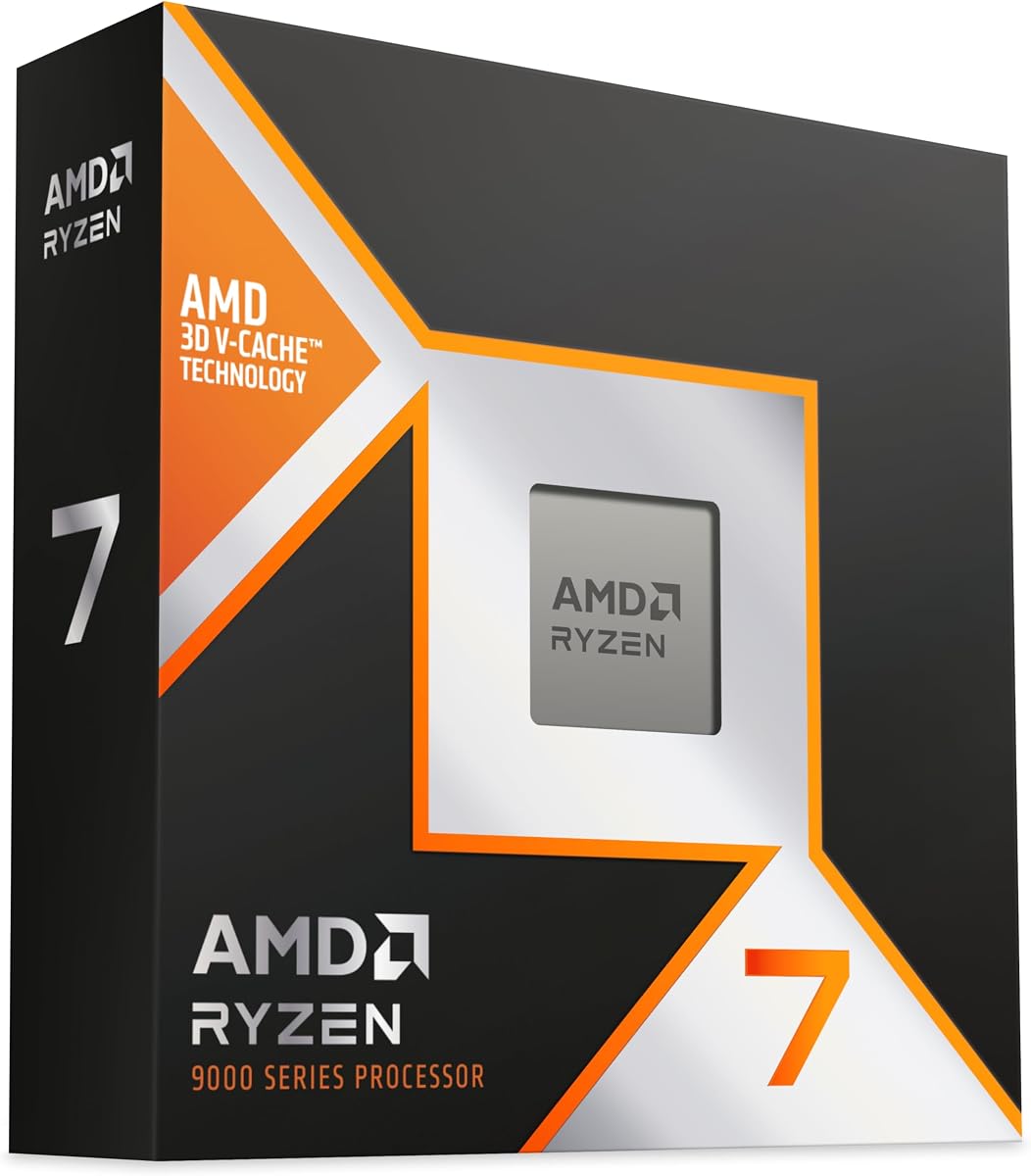

The AMD Ryzen 9 9950X3D stands out as a powerhouse for intensive computing tasks. With a 4.7 rating, it delivers exceptional multitasking capabilities ideal for complex data processing and model training workflows.
We may earn a commission when you buy through this link, at no additional cost to you.
Its 16 cores and support for speeds up to 5.7 GHz ensure that large datasets are handled efficiently. The Zen 5 architecture provides significant improvements in instructions per cycle, translating to faster completion times.
While the performance is outstanding, the premium price point may be a barrier for hobbyists. Additionally, the lack of an included cooler means extra investment is needed for optimal thermal management.
Developers working with large scale models will find this processor an excellent investment. It balances raw power with efficiency, making it a top choice for professional machine learning environments.
The high core count allows for simultaneous handling of multiple processes without slowing down system performance.
Despite its power, the architecture ensures energy efficiency is maintained during extended computational work.
We may earn a commission when you buy through this link, at no additional cost to you.
The AMD Ryzen 9 9900X offers an impressive balance of performance and cost. Boasting a 4.8 rating, it is an ideal choice for those seeking strong processing power without breaking the bank.
We may earn a commission when you buy through this link, at no additional cost to you.
With 12 cores and 24 threads, this processor handles parallel tasks effectively. The unlocked multiplier allows for customization, while the high clock speeds ensure responsive performance across various applications.
While it requires a compatible motherboard and separate cooler, the value proposition is strong. Users should be aware of the platform requirements when planning their build for compatibility.
This processor is perfect for developers on a budget who still need robust capabilities. It serves as a reliable foundation for building a high-performance workstation for machine learning tasks.
The unlocked design allows enthusiasts to tweak clock speeds for even better performance if cooling permits.
Support for PCIe 5.0 ensures compatibility with the latest peripherals and storage devices for years to come.
We may earn a commission when you buy through this link, at no additional cost to you.
The NVIDIA DGX Spark 2 Pack represents the pinnacle of desktop AI computing. With a perfect 5.0 rating, it brings enterprise scale capabilities to a personal workspace for serious developers.
We may earn a commission when you buy through this link, at no additional cost to you.
Featuring the Grace Blackwell architecture, this unit delivers up to 1 petaFLOP of AI performance. The 128GB of unified memory per unit enables running massive models locally without cloud reliance.
The cost is significant and suited only for professionals needing top tier power. However, the speed and integration with the full NVIDIA stack justify the investment for critical work.
Organizations or researchers needing rapid prototyping will find this device invaluable. It eliminates the latency of cloud resources and provides a secure environment for sensitive data processing.
The Grace Blackwell architecture ensures that the latest AI models run with unprecedented speed and efficiency.
Large shared memory pools allow for handling datasets that would typically require distributed systems.
We may earn a commission when you buy through this link, at no additional cost to you.
Intel Core Ultra 9 285K offers a unique hybrid approach to processing. With a 4.6 rating, it efficiently handles complex tasks by distributing them across performance and efficiency cores.
We may earn a commission when you buy through this link, at no additional cost to you.
The 24 cores provide ample headroom for heavy multitasking and virtual machine usage. Integrated graphics add versatility for systems where dedicated GPUs might not be immediately available.
Users should note the requirement for a compatible chipset and separate cooling solution. These factors are manageable but must be considered during the build phase.
This processor is ideal for users who need a balance of power and efficiency. Its ability to run cooler and quieter makes it a strong contender for workstation setups.
Workloads are prioritized and distributed to optimize performance for different types of computing tasks.
Integrated graphics ensure basic display and rendering tasks are handled without needing a separate card.
We may earn a commission when you buy through this link, at no additional cost to you.
The AMD Ryzen 7 9800X3D is optimized for high throughput tasks with its massive cache. Rated 4.8, it delivers significant IPC uplift and power efficiency for demanding workflows.
We may earn a commission when you buy through this link, at no additional cost to you.
The 96MB L3 cache allows for quick data retrieval which is beneficial for certain compute tasks. This reduces latency significantly compared to models with less cache available.
While it has fewer cores than some competitors, the cache compensates in specific scenarios. Users should verify if their workload benefits from cache over core count.
This is a great pick for those prioritizing speed and efficiency. It serves well in environments where consistent high clock speeds are more valuable than raw parallelism.
The large L3 cache ensures that frequently accessed data is available instantly for faster processing.
Improved thermal performance allows for sustained clock speeds without excessive heat generation.
We may earn a commission when you buy through this link, at no additional cost to you.
AMD Ryzen 7 7800X3D provides dependable and fast execution of tasks. With a 4.8 rating, it remains a reliable choice for users needing consistent performance.
We may earn a commission when you buy through this link, at no additional cost to you.
The 8 cores and 96MB L3 cache allow for multitasking with great reliability. This architecture ensures that system performance remains steady even under load.
While it may not have the newest clock speeds, its stability is a major plus. It is a cost effective solution for those who value consistency over bleeding edge specs.
This processor is recommended for stable workstation environments. It handles general computing and light AI workloads effectively without requiring excessive cooling.
Octa-core design allows for running multiple applications simultaneously without significant slowdown.
5nm process technology ensures that performance is delivered with maximum productivity and efficiency.
We may earn a commission when you buy through this link, at no additional cost to you.
AMD Ryzen AI Halo is designed specifically for local AI development and inference. A perfect 5.0 rating highlights its effectiveness for Linux based AI workflows.
We may earn a commission when you buy through this link, at no additional cost to you.
The unified memory pool supports running large parameter models directly on device. Combined with the NPU, this enables intensive workloads without cloud dependency.
The specialized platform may require adaptation for those used to general systems. It is purpose built for specific AI development needs rather than general use.
Developers looking for a dedicated AI workstation will find this ideal. It streamlines the development process with preloaded tools and optimized software support.
The dedicated NPU provides significant speedup for AI inference tasks compared to standard CPU loads.
Linux OS and preloaded tools save setup time for developers focusing on local model training.
We may earn a commission when you buy through this link, at no additional cost to you.
Intel Core i9-14900K offers leading clock speeds for rapid responsiveness. With a 4.2 rating, it delivers high frame rates and faster compute times.
We may earn a commission when you buy through this link, at no additional cost to you.
The 24 cores and 32 threads provide strong parallel processing. The ability to use DDR4 or DDR5 adds flexibility for system upgrades.
Compatibility may require BIOS updates and thermal management is crucial for high clocks. It remains a viable option for those prioritizing frequency over efficiency.
This is a strong contender for high frequency tasks. It balances core count with speed to ensure smooth performance for heavy workloads.
Max clock speeds of 6.0 GHz ensure tasks are completed in the shortest possible time.
Support for both DDR4 and DDR5 allows users to utilize existing memory investments.
We may earn a commission when you buy through this link, at no additional cost to you.
AMD Ryzen 7 9850X3D brings compact power to the desktop environment. With a 4.8 rating, it stands out for its efficiency and performance balance.
We may earn a commission when you buy through this link, at no additional cost to you.
The design focuses on optimized efficiency to deliver strong single core speed. This is beneficial for tasks that rely heavily on individual thread performance.
Data is limited but the ratings suggest strong user satisfaction. Users should verify specific thermal requirements when planning their cooling setup.
This is a great choice for compact systems needing power. It delivers high performance without requiring massive chassis space or complex airflow.
The architecture optimizes efficiency to deliver more performance per watt than previous generations.
Designed for desktop use, it fits into various form factors without sacrificing output.
We may earn a commission when you buy through this link, at no additional cost to you.
NVIDIA DGX Spark brings personal AI supercomputer power to your desk. With a 4.4 rating, it is a compelling option for local AI development.
We may earn a commission when you buy through this link, at no additional cost to you.
The unified memory allows for running large models without cloud costs. It is designed from the ground up to support seamless AI development workflows.
While the cost is high for the power it delivers. It offers a secure and high-performance setting for testing and validation.
This processor is ideal for teams needing robust local resources. It accelerates time-to-solution and supports rapid prototyping effectively.
Accelerate your time-to-solution by running experiments directly on your desktop.
128GB unified memory allows for larger parameter models to be handled locally.
We may earn a commission when you buy through this link, at no additional cost to you.
Selecting the right CPU for machine learning involves evaluating core counts, memory support, and architectural features that accelerate data processing.
More cores and threads allow for better parallel processing of data sets and model training. Look for processors with at least 12 cores for efficient multitasking and heavy workloads.
Aim for higher core counts to ensure your system can handle multiple tasks simultaneously without bottlenecks.
Large L3 cache helps reduce latency when accessing frequently used data. This is particularly important for machine learning tasks that require quick data retrieval during training.
Prioritize CPUs with larger cache sizes to improve overall system responsiveness.
Unified memory allows for CPU GPU and NPU to share a common memory pool. This reduces data transfer bottlenecks and enables handling of larger models locally.
Select models that support high unified memory capacity for running bigger models efficiently.
Modern architectures like Zen 5 or Grace Blackwell offer improved instructions per cycle and power efficiency. These features translate to faster processing speeds and lower heat output.
Choose CPUs with the latest architecture to get the best performance per watt.
Ensure the CPU supports the necessary motherboard chipset and memory type. AM5 or Intel 800 series chipsets provide modern connectivity and future proofing for upgrades.
Check motherboard compatibility before purchasing to avoid setup issues.
High performance CPUs generate significant heat during sustained workloads. Verify if a cooler is included or plan for an aftermarket cooling solution to maintain stable performance.
Invest in robust cooling to prevent thermal throttling during long training sessions.
PCIe 5.0 support allows for faster data transfer with GPUs and storage. This is critical when offloading tasks to external accelerators or using fast NVMe drives.
Ensure the CPU supports PCIe 5.0 for maximum peripheral speed.
CPUs with integrated NPUs or AI accelerators like the AMD XDNA 2 NPU enhance local inference. These dedicated blocks offload AI specific tasks from the main cores.
Look for integrated AI features if you plan to run inference locally.
Install the CPU carefully into the motherboard socket ensuring no pins are bent. Apply thermal paste correctly and secure the cooling solution to ensure efficient heat transfer.
Update the motherboard BIOS to the latest version for optimal stability. Configure memory timings and XMP profiles to take full advantage of supported DDR5 speeds.
Monitor temperatures during initial stress tests using tools like HWMonitor. Clean dust from fans and vents regularly to prevent overheating during long training sessions.
Generally yes because model training benefits from parallelism. However, cache size and clock speeds also matter depending on your specific framework.
It depends on your workload. These CPUs handle preprocessing well but GPUs are often needed for heavy training. Some models have integrated AI accelerators for inference.
Unified memory eliminates data transfer bottlenecks between components. This allows larger models to run efficiently without needing cloud resources.
Yes many of these can run models up to 200 billion parameters. Local memory and architecture efficiency are key factors for success.
Most modern CPUs use efficient architectures to balance performance and power. However, high performance tasks will naturally increase power consumption.
AMD and Intel both offer strong options. AMD Ryzen often leads in core count while Intel provides hybrid architectures. NVIDIA offers specialized solutions for pure AI.
We have reviewed ten top processors ranging from budget friendly to premium supercomputers. Each offers unique strengths tailored to different scale and efficiency needs.
Prioritize core counts and unified memory based on your project requirements. Ensure you have adequate cooling and motherboard compatibility for a smooth setup.
Prices and availability are subject to change quickly. Always verify current specifications and costs before making a final purchase decision today.