
Omada AX3000 Wireless Access Point
4.5Editor score
Free Cloud Management
Wi-Fi 6 Speeds
5 Year Warranty
This guide compares the top 10 commercial wireless router options for businesses in 2026, focusing on speed, security, management, and scalability to help you
In today's connected business environment, a reliable network is essential for productivity and customer satisfaction. A commercial wireless router provides the backbone for seamless connectivity across offices, retail spaces, and hospitality venues. Choosing the right model ensures stable performance under heavy loads and robust security for sensitive data.
We evaluated the top ten models available in November 2026 based on technical specifications, real-world performance potential, and management features. Our analysis focuses on Wi-Fi 6 and Wi-Fi 7 capabilities, port configurations, security protocols, and ease of deployment. Each product was selected for its ability to meet diverse commercial networking requirements.
Each pick in this list highlights specific strengths, from budget-friendly access points to high-end mesh systems. We detail key features, pros, and cons to help you match a device to your operational needs. Please note that pricing and availability can change frequently, so verify current details before purchasing.
4.5Editor score
4.2Editor score

4.6Editor score
The following comparison table outlines the core specifications of each top contender. Use this side-by-side view to quickly assess bandwidth capabilities, port types, and unique features that define each router's commercial suitability.




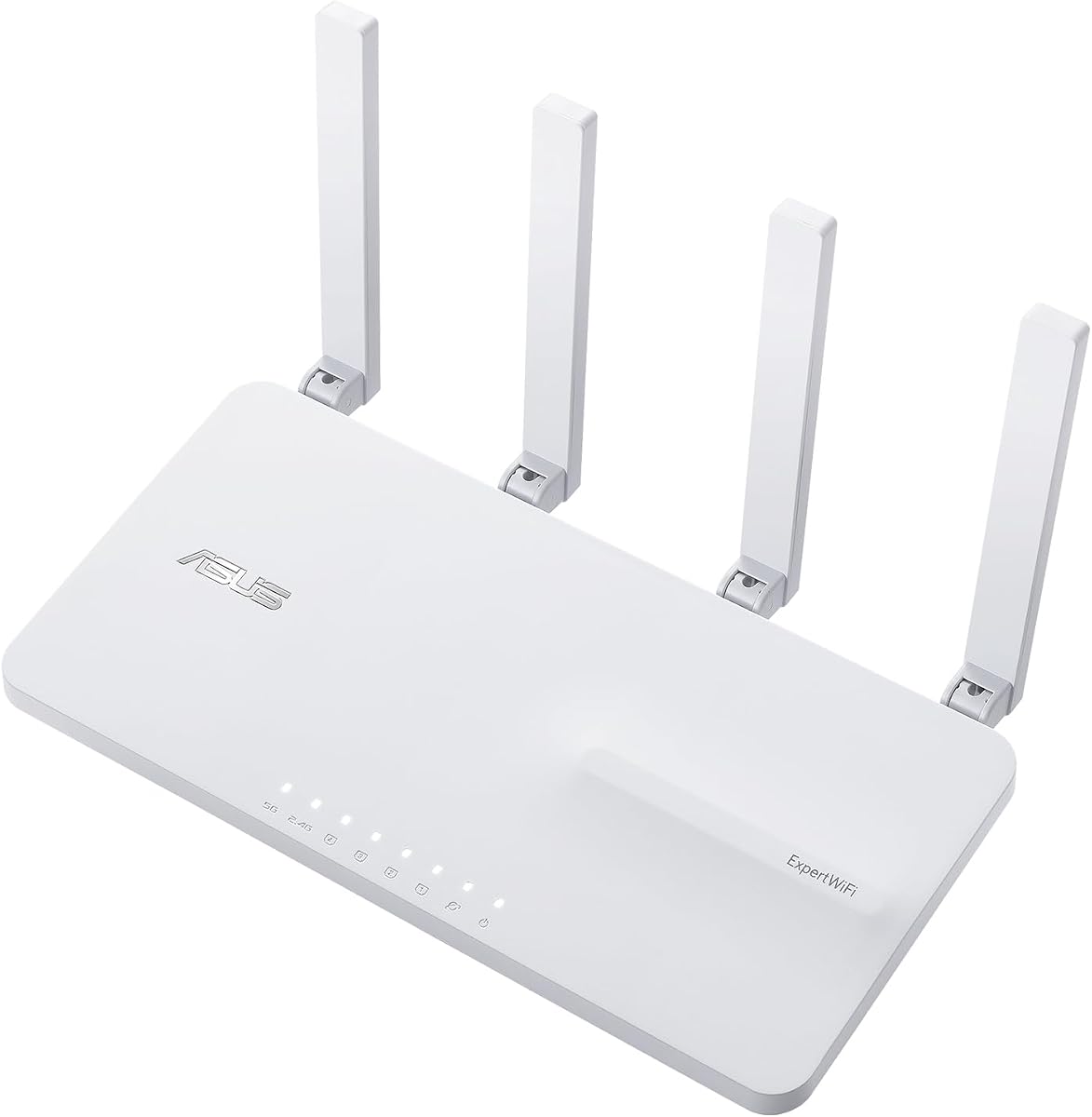
The ASUS ExpertWiFi EBR63 stands out as a top-tier commercial router designed for businesses needing robust Wi-Fi 6 performance. With a rating of 4.2 stars, it delivers a reliable network experience featuring custom guest portals and enterprise-grade security. Its standout qualities include seamless remote management and support for multiple SSIDs to segregate traffic effectively.
We may earn a commission when you buy through this link, at no additional cost to you.
Key strengths lie in its security and management features. The included AiProtection Pro subscription provides advanced threat protection, while the all-in-one app simplifies setup and monitoring. The ability to create up to five SSIDs allows business owners to separate guest and private networks easily, ensuring device prioritization and enhanced safety across different business scenarios.
While highly capable, the router has some trade-offs. The limited number of physical ports might require an additional switch for larger setups, and the cost could be higher than consumer-grade options. However, these are acceptable for businesses prioritizing security and control over raw port count or lowest price point.
Small to medium businesses seeking a secure, manageable network should buy this router. It is ideal for retail or office spaces needing guest access control. Ultimately, the EBR63 offers a strong balance of performance and enterprise features, making it a highly recommended choice for professional environments.
Business-grade protection is built-in with Trend Micro power, safeguarding connected devices from external threats without extra costs.
Customizable portals allow for brand consistency while keeping visitor traffic isolated from sensitive internal operations.
We may earn a commission when you buy through this link, at no additional cost to you.
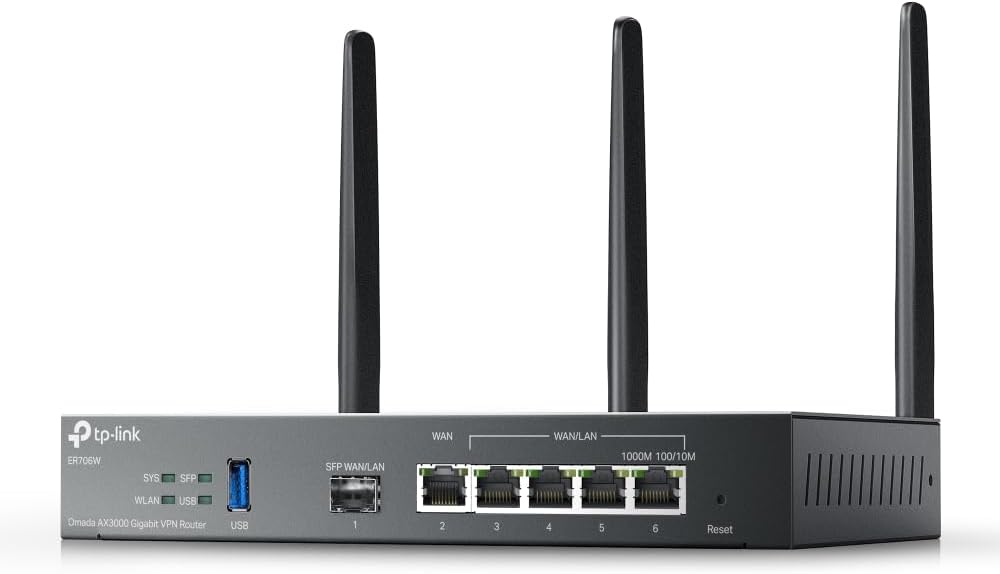
The Omada ER706W is a powerful VPN router offering AX3000 speeds and extensive WAN capabilities. Rated 4.1 stars, it is designed for environments where connection stability and multi-line broadband usage are critical. Its core appeal lies in load balancing across up to five WAN ports, maximizing internet utilization for busy offices.
We may earn a commission when you buy through this link, at no additional cost to you.
This device shines with its versatile connectivity options. The SFP slot allows for fiber uplinks, while multiple Gigabit RJ45 ports support diverse wired needs. VPN protocols like SSL, IPSec, and WireGuard ensure secure remote access. Mesh compatibility extends coverage when paired with Omada access points without needing extra cabling.
Potential drawbacks include the need for separate access points for wireless coverage and a steeper learning curve for configuration. These limitations are acceptable for IT professionals who need granular control over routing and security. The device targets users needing robust network management over plug-and-play simplicity.
Network admins managing multi-line connections should buy this router. It suits businesses needing secure remote access and high throughput. With strong load balancing and security features, the ER706W is a reliable foundation for scalable commercial networks.
Load balancing ensures continuous internet access by distributing traffic across multiple broadband lines efficiently.
Integrated VPN support allows staff to connect securely from anywhere using standard industry protocols.
We may earn a commission when you buy through this link, at no additional cost to you.
The Ruckus R750 is a specialized Wi-Fi 6 access point engineered for ultra-dense environments. With a 4.3-star rating, it excels in spaces with many connected devices, such as conference centers or schools. Its primary function is to maintain high performance even when hundreds of users connect simultaneously.
We may earn a commission when you buy through this link, at no additional cost to you.
This device is optimized for handling massive device counts without degradation. It supports seamless roaming and offers robust signal stability. Relying on centralized controllers, it ensures unified management across large areas. The indoor form factor blends easily into professional settings while delivering enterprise-grade speeds.
Implementation may require additional controller hardware and planning, which adds to the initial cost and complexity. This trade-off is acceptable for environments where reliability is non-negotiable. The R750 targets businesses prioritizing connection quality in crowded spaces over simplicity.
Businesses with high-density needs like stadiums or lecture halls should buy this access point. It provides stability where consumer gear fails. For mission-critical connectivity, the R750 delivers consistent, high-speed wireless performance.
Designed to manage massive numbers of devices simultaneously without speed drops or disconnections.
Users move between areas without interruption, maintaining active connections throughout the facility.
We may earn a commission when you buy through this link, at no additional cost to you.
The Ruckus R670 represents the forefront of wireless access points with full Wi-Fi 7 capability. It features advanced BeamFlex+ technology and multi-gigabit ports, offering exceptional throughput. This device is designed for spaces needing future-proof connectivity, such as modern offices and smart classrooms.
We may earn a commission when you buy through this link, at no additional cost to you.
Key strengths include its 9.34 Gbps combined rate and ability to support simultaneous connections across 2.4, 5, and 6 GHz bands. The BeamFlex+ adaptive antenna maximizes coverage and reduces errors. Built-in Zigbee and BLE allow it to unify Wi-Fi with IoT networks, creating a converged infrastructure.
The main drawback is the premium price, which may be hard to justify if devices do not yet support Wi-Fi 7. However, for forward-thinking businesses, the investment is sound. It serves as a long-term asset ensuring network readiness for emerging standards.
Enterprises upgrading to next-gen networks should buy this AP. It suits high-bandwidth applications and IoT integration. With unmatched throughput and convergence capabilities, the R670 is a leading choice for premium environments.
Combines Wi-Fi with IoT protocols like Zigbee and Matter for unified smart building control.
BeamFlex+ technology directs signals precisely, improving speed and reliability for every device.
We may earn a commission when you buy through this link, at no additional cost to you.
The NETGEAR Orbi 970 Series is a top-tier Wi-Fi 7 mesh system delivering blazing-fast speeds and massive coverage. With a 4.6-star rating, it supports up to 200 devices and covers 10,000 square feet. Its unique dedicated backhaul ensures consistent performance even with heavy simultaneous usage.
We may earn a commission when you buy through this link, at no additional cost to you.
It offers up to 27 Gbps speed, making it ideal for bandwidth-intensive tasks like 8K streaming and VR. The inclusion of 10 Gigabit ports allows wired connections for NAS drives and gaming PCs. Quad-Band technology separates traffic to prevent bottlenecks, ensuring every device gets reliable bandwidth.
The high cost and focus on large spaces may not suit small offices. However, for expansive facilities, the investment pays off in reliability and speed. It is designed for users unwilling to compromise on connectivity quality across large areas.
Large enterprises needing whole-site coverage should buy this mesh system. It handles high device counts and speeds effortlessly. For ultimate performance and reliability, the Orbi 970 is the top commercial wireless router solution.
Separate bands for backhaul and client traffic ensure no slowdowns during peak usage times.
10 Gigabit ports allow wired devices to fully utilize modern high-speed internet plans.
We may earn a commission when you buy through this link, at no additional cost to you.
The Omada EAP650 is an excellent budget-friendly access point offering AX3000 speeds. Rated 4.5 stars, it provides fast connectivity without complex hardware controllers thanks to free cloud management. This device balances cost, ease of deployment, and reliable performance for small businesses.
We may earn a commission when you buy through this link, at no additional cost to you.
Its main strengths include the compact design and extensive warranty. It supports multiple power options like PoE+, making installation flexible. Advanced features like seamless roaming and WPA3 ensure security and ease of use. The cloud access simplifies management across multiple locations without extra hardware.
Advanced mesh capabilities need a controller, and speed limits are lower than premium models. These are acceptable for small setups needing standard high-speed Wi-Fi. The EAP650 is perfect for cafes, offices, and classrooms needing dependable wireless access.
Small business owners on a budget should buy this access point. It offers strong value with robust security. For essential connectivity without overspending, the EAP650 delivers reliable Wi-Fi 6 performance.
Centralized management via a free app removes the need for physical controllers or subscriptions.
Dual-band speeds and PoE support ensure stable, efficient connections for everyday business tasks.
We may earn a commission when you buy through this link, at no additional cost to you.
The Ubiquiti U6+ is a compact dual-band access point delivering reliable performance. With a 4.6 rating, it suits small offices needing efficient wireless coverage. Its design emphasizes simplicity, wall mounting, and single-cable connectivity through PoE+, making it easy to install.
We may earn a commission when you buy through this link, at no additional cost to you.
It offers a data rate of 3 Gbit/s, ensuring fast communication for daily tasks. The Ethernet port provides a direct wired link for critical devices. Encryption features protect valuable business data, while the slim design blends into modern interiors. It integrates easily into larger UniFi networks.
Users need a UniFi controller for advanced management, which adds complexity. It supports only dual-band Wi-Fi, missing 6 GHz support. These trade-offs are acceptable for small environments not needing maximum capacity. The U6+ is a solid choice for reliable, secure connectivity.
Small offices seeking easy installation should buy this access point. It is ideal for retail or home businesses. For efficient and secure wireless access without clutter, the U6+ is a reliable commercial router option.
PoE+ capability powers and connects the device through one cable, reducing installation complexity.
Built-in encryption ensures business communications remain private and protected from unauthorized access.
We may earn a commission when you buy through this link, at no additional cost to you.
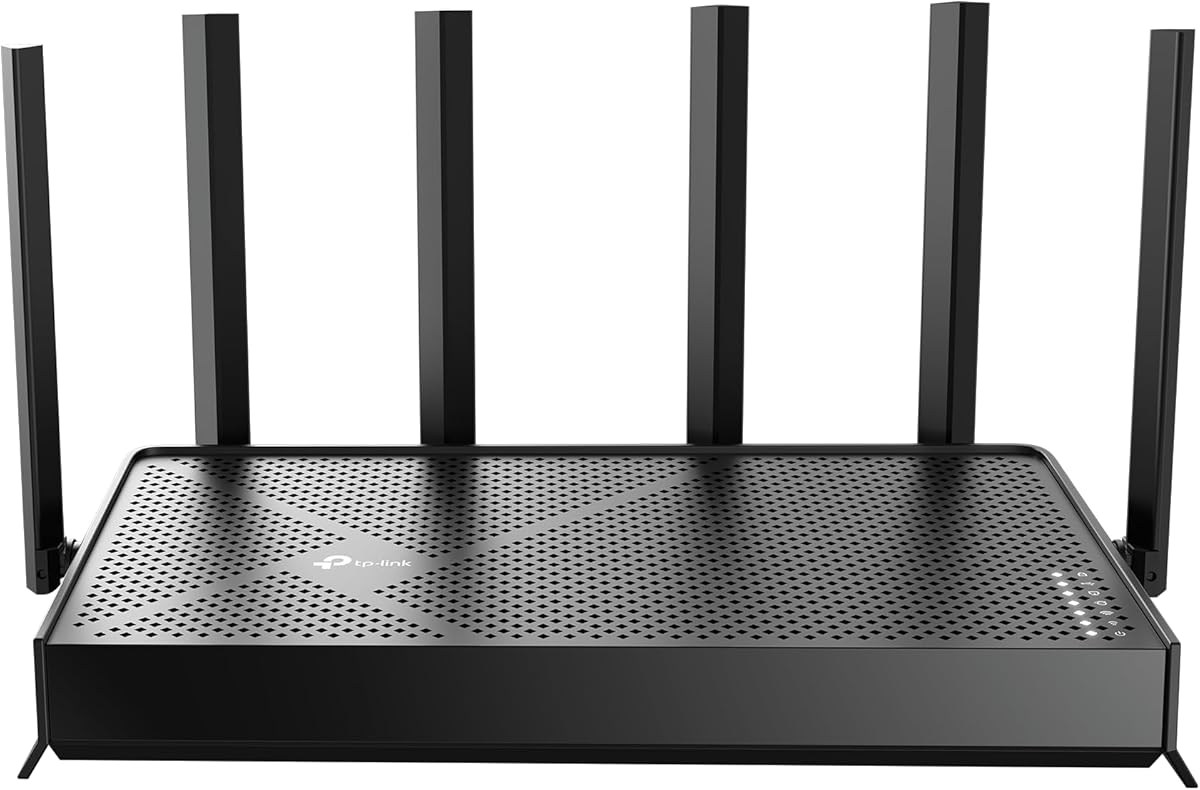
The TP-Link BE6500 is a Wi-Fi 7 router designed for future-proof connectivity. Rated 4.3 stars, it uses Multi-Link Operation to improve stability and reduce latency. With 6.5 Gbps bandwidth, it supports 4K/8K streaming and gaming without lag.
We may earn a commission when you buy through this link, at no additional cost to you.
Key strengths include its wide coverage and built-in security. The 2.5 Gbps ports enable multi-gig internet plans. TP-Link adheres to Secure-by-Design standards, enhancing trust. The Tether App simplifies setup and device management, making it accessible to non-experts.
Limited ports require switching for wired setups, and a high-speed modem is essential for full performance. These are manageable for most users. The BE6500 suits offices needing high-speed internet and flexible connectivity.
Tech-forward businesses should buy this router. It is excellent for high-performance streaming and work. With reliable security and speed, the BE6500 is a strong commercial wireless router choice.
Multi-Link Operation aggregates bands for faster, more stable connections across devices.
Adherence to Secure-by-Design pledges ensures robust safety and reliable network performance.
We may earn a commission when you buy through this link, at no additional cost to you.
The NETGEAR Nighthawk WiFi 7 router delivers fast, reliable performance for busy spaces. With a 4.3 rating, it supports 9.3 Gbps speeds across tri-bands. Its dedicated third band handles high-demand devices efficiently, ensuring seamless streaming and calls.
We may earn a commission when you buy through this link, at no additional cost to you.
It offers 2.5 Gigabit wired ports for NAS drives and PCs, supporting modern multi-gig plans. The Nighthawk App allows quick management and device pausing. Coverage extends to 2,500 sq ft, covering large rooms and offices effectively.
Cost may be high for small setups, and compatibility checks are needed for existing gateways. These issues are minor for those seeking top-tier wired and wireless speeds. The router suits businesses needing both fast connectivity and control.
Medium businesses seeking speed should buy this router. It is ideal for tech-heavy offices. For reliable performance and flexible management, the Nighthawk WiFi 7 is a strong choice.
Tri-band technology assigns a dedicated 6 GHz band to fastest devices for zero congestion.
Multi-Gig ports ensure wired devices access maximum internet speeds without bottlenecks.
We may earn a commission when you buy through this link, at no additional cost to you.
The ASUS RT-BE88U is a powerhouse router designed for high-speed wired and wireless needs. Rated 4.3 stars, it offers 7.2 Gbps throughput and dual 10G ports for massive wired capacity. Its AI WAN detection ensures always-on internet with smart failover.
We may earn a commission when you buy through this link, at no additional cost to you.
It features a quad-core CPU for handling heavy applications smoothly. Security includes AiProtection Pro, while Guest Network Pro manages IoT devices effectively. Mesh compatibility with AiMesh allows scalable coverage. The USB port supports mobile tethering for redundancy.
The premium cost and complexity may deter basic users. However, for power users needing 10G throughput, it is unmatched. The router serves as an enterprise-grade solution for demanding environments.
Enterprises with multi-gig infrastructure should buy this router. It suits server rooms and tech hubs. For unmatched wired speed and commercial security, the RT-BE88U is a top-tier choice.
Dual 10G ports support NAS and high-bandwidth wired devices effortlessly.
AI WAN detection monitors internet health and switches connections instantly for uptime.
We may earn a commission when you buy through this link, at no additional cost to you.
Selecting the right commercial wireless router requires evaluating several technical and operational factors to match your business needs.
Modern commercial networks benefit from Wi-Fi 6 or Wi-Fi 7 standards. These offer faster throughput and better device handling. Ensure the router supports at least AX3000 speeds for balanced performance across devices.
Choose higher standards like Wi-Fi 7 if your environment demands ultra-low latency and high bandwidth.
Check the number and type of Ethernet ports available. Multiple Gigabit or multi-gigabit ports are essential for wired devices like NAS drives. For stability, routers with SFP slots or multiple WAN ports enable load balancing and failover.
Verify ports match your cabling infrastructure and ISP connection type to avoid bottlenecks.
Commercial routers must offer robust security features like WPA3, firewall capabilities, and intrusion prevention. Built-in threat protection services provide ongoing defense against cyber threats without extra hardware.
Prioritize routers with enterprise-grade security subscriptions to safeguard sensitive business data effectively.
Easy management via cloud or local controllers simplifies deployment and ongoing maintenance. Look for models that support mesh or multiple SSIDs for growing networks. Scalability ensures your router adapts as business needs expand.
Choose solutions with intuitive apps or centralized dashboards to reduce IT workload.
Assess the physical space and expected number of devices. Mesh systems cover larger areas, while access points suit dense environments. Ensure the router supports simultaneous connections without dropping speed or stability.
Calculate square footage and device density to select a unit with adequate throughput and range.
Commercial routers range from budget access points to premium systems. Consider long-term value including hardware durability and support. A comprehensive warranty and responsive technical support reduce risks and downtime.
Balance initial cost against operational reliability and future upgrade paths for sustainable networking.
Many businesses require separate networks for visitors and IoT devices. Routers with custom guest portals and VLAN support help segregate traffic for security and performance. This ensures guest access does not slow main operations.
Select units with easy-to-configure guest features and strong device isolation to protect internal data.
Install the router in a central location away from obstructions and heat sources. Connect it to your modem using a high-quality Ethernet cable and plug into a surge protector. Secure it to a wall or stable surface if designed for mounting.
Access the admin panel or app to configure settings such as SSID, passwords, and guest portals. Update firmware regularly to maintain security and performance. Set up automatic updates if available to avoid manual oversight.
Monitor connected devices and performance through the management dashboard. Reboot the router occasionally to clear memory issues and maintain stability. Keep the device clean and free of dust to prevent overheating and extend its lifespan.
Wi-Fi 7 routers offer higher throughput, lower latency, and support for wider channel widths compared to Wi-Fi 6. They also utilize advanced technologies like Multi-Link Operation and 4096-QAM for improved efficiency and performance.
Yes, most commercial routers support multiple SSIDs allowing for dedicated guest networks. These isolate visitor traffic from internal systems and often include customizable portals for branding and access control.
Use strong WPA3 encryption, disable remote admin access, and enable built-in security features like threat protection. Regular firmware updates and separate VLANs for IoT devices also enhance overall network security.
Yes, routers with multiple WAN ports or SFP slots support load balancing and failover across multiple lines. This ensures continuous connectivity even if one ISP line experiences an outage.
Software Defined Networking (SDN) allows centralized control of network devices through a single controller. It simplifies management, enables automation, and supports scalable configurations across distributed sites.
Firmware updates should ideally be applied automatically or checked monthly for critical security patches. Regular updates fix vulnerabilities and improve performance, keeping your network safe and efficient.
This guide presented ten top commercial wireless routers, ranging from budget access points to premium mesh systems. Models like the ASUS ExpertWiFi EBR63 and NETGEAR Orbi 970 lead with speed and advanced management features.
When choosing, prioritize security, scalability, and port requirements that match your operational needs. Consider future-ready standards like Wi-Fi 7 if you plan to support high-density and high-bandwidth environments.
Prices and availability fluctuate often, so always check current details before making a purchase decision. Ensuring the right router fits your business today will secure reliable connectivity tomorrow.