
M-AUDIO Keystation 88 MK3 USB MIDI Controller
4.5Editor score
88 full-size velocity-sensitive keys
Plug-n-play USB connectivity
Includes MPC Beats and Ableton Lite
This guide compares the top 88 key weighted MIDI controllers for producers and pianists, focusing on key action, integration, and build quality.
Choosing the right 88 key weighted MIDI controller is crucial for musicians who need a piano-like feel in their digital setup. These instruments bridge the gap between acoustic pianos and modern software, offering expressive control over virtual instruments.
We evaluated ten top-rated models based on key action, connectivity, software bundles, and overall build quality. Our analysis ensures you find a controller that matches your playing style and production needs without compromising on performance or durability.
Each pick below highlights specific strengths and ideal use cases to help you make an informed decision. Keep in mind that prices and availability can fluctuate, so verify current details before purchasing your next musical investment.
4.5Editor score

4.6Editor score

4.3Editor score
Here is a side-by-side comparison of all ten models to help you quickly identify which features matter most for your specific workflow and performance requirements.



The Novation Launchkey 88 MK3 stands out as a top choice for producers who need seamless software interaction. With a rating of 4.6 stars, it balances playability and control exceptionally well for modern workflows.
We may earn a commission when you buy through this link, at no additional cost to you.
Its deep integration across leading DAWs allows immediate access to controls without complex mapping. The premium semi-weighted keys offer a comfortable feel, while the arpeggiator with Strum Mode unlocks new melodic possibilities.
While the keys are not fully weighted, this design keeps the controller responsive for synth playing. The trade-off is acceptable for electronic music producers who prioritize speed over acoustic piano simulation.
If you need a versatile controller that grows with your production skills, this model is highly recommended. It offers the perfect blend of creative tools and reliable hardware for daily use.
The controller offers deep integration with major digital audio workstations, providing instant access to transport and mixer controls.
Built-in Scale and Chord Modes simplify composition, allowing you to trigger complex harmonies with single finger presses.
We may earn a commission when you buy through this link, at no additional cost to you.
This Arturia model offers a premium experience with its fully weighted hammer-action keys designed for serious pianists. The black version is sleek and durable, ensuring it fits any professional studio environment.
We may earn a commission when you buy through this link, at no additional cost to you.
The inclusion of 12 pressure-sensitive pads adds versatility beyond traditional piano playing, allowing for percussion and sample triggering. USB-C power ensures stable connectivity across modern devices.
While the price is higher than semi-weighted options, the key action justifies the cost for those seeking an authentic piano feel. The included music stand enhances usability during composition sessions.
Choose this controller if you need a high-end instrument that delivers exceptional touch sensitivity and build quality for both live performance and studio recording.
The fully weighted hammer-action keys replicate the feel of an acoustic piano, providing dynamic range and expressive control.
Pressure-sensitive pads expand your creative palette, enabling beat-making and sample triggering alongside traditional keyboard playing.
We may earn a commission when you buy through this link, at no additional cost to you.
The M-AUDIO Keystation 88 MK3 is an excellent entry-level choice for beginners needing full-sized keys without breaking the bank. Its high rating reflects its reliability and ease of use.
We may earn a commission when you buy through this link, at no additional cost to you.
Plug-n-play USB connectivity means you can start creating immediately without installing drivers. The slimline design ensures it fits easily on smaller desks, while the included software adds value.
Though it lacks advanced features like aftertouch, it covers the essentials perfectly for home studios. This makes it a practical option for those who prioritize core functionality over extra bells and whistles.
If you are looking for a straightforward, reliable controller to launch your music production journey, this model delivers outstanding value for the price.
Setup is incredibly simple with USB connectivity that requires no additional drivers, allowing you to start playing right away.
The slimline profile fits comfortably on smaller workspaces, making it ideal for bedroom studios with limited room.
We may earn a commission when you buy through this link, at no additional cost to you.
The KeyLab 88 MkII is renowned for its Fatar keybed which provides an exceptionally realistic playing experience. It remains a favorite among professionals who demand precise dynamic control.
We may earn a commission when you buy through this link, at no additional cost to you.
With 16 drum pads and a comprehensive control bank, you can manage virtual instruments and effects efficiently. The included Analog Lab V software adds immediate value to the package.
Its weight and size make it less portable than lighter alternatives, but this contributes to its stability during performance. The lack of a stand in the box is a minor inconvenience given the build quality.
Ideal for studio-based musicians, this controller offers a premium mix of key action and control features that justify its higher price point.
The Fatar TP/100 keybed ensures a responsive and durable playing surface that mimics the touch of acoustic pianos.
A full array of faders and knobs allows detailed parameter manipulation without needing to navigate software menus.
We may earn a commission when you buy through this link, at no additional cost to you.
This controller is designed for live performance with its durable construction and intuitive layout. It delivers reliable weighted keys that inspire confidence during intense playing sessions.
We may earn a commission when you buy through this link, at no additional cost to you.
The onboard display helps you navigate settings quickly without looking at your computer screen, which is crucial on stage. The Numa player compatibility ensures it works seamlessly with specific plugins.
It lacks the extensive software bundles found in home studio controllers, focusing instead on hardware reliability. This makes it a pure tool for musicians who bring their own sounds to the gig.
For touring keyboardists or those who need a reliable stage controller, the SL88 MK2 offers the perfect balance of build quality and playability.
Built to withstand the rigors of touring, this controller offers rugged reliability without sacrificing playability.
The OLED display provides essential information at a glance, allowing you to adjust settings mid-performance easily.
We may earn a commission when you buy through this link, at no additional cost to you.
The Hammer 88 Pro offers a traditional piano feel with graded hammer action keys that replicate the touch of an acoustic grand. This feature is essential for classical pianists transitioning to digital setups.
We may earn a commission when you buy through this link, at no additional cost to you.
NKS integration allows seamless browsing of Native Instruments libraries, streamlining your workflow for sound design. The inclusion of MIDI output ensures connectivity with older hardware synthesizers.
Some users report that the keys require adjustment to play comfortably, but this is typical for weighted models. Once calibrated, the controller provides a highly expressive instrument for serious composition.
If your priority is an authentic piano experience paired with modern software integration, this model stands out despite the slightly lower user ratings.
The keys offer a graded touch that mimics acoustic pianos, with heavier resistance in the low end and lighter in the high end.
Native Kontrol Standard support allows you to browse and control presets directly from the keyboard without touching your computer.
We may earn a commission when you buy through this link, at no additional cost to you.
This Yamaha model is ideal for musicians who prioritize high-quality sound and simple operation over complex controller features. It functions as a standalone piano while still offering basic MIDI capabilities.
We may earn a commission when you buy through this link, at no additional cost to you.
The acoustic piano feel and 10 unique voices provide a rich sonic palette. Layered sound mode allows blending voices like piano and strings for a fuller performance experience.
While it lacks advanced controller buttons and pads, its high customer rating reflects the satisfaction users feel with its core musical performance. It is perfect for practice rooms or simple setups.
Choose this if you want a reliable digital piano that doubles as a MIDI keyboard without unnecessary complexity or steep learning curves.
Yamaha delivers rich resonance and dynamic sound that closely mimics a grand piano experience.
Streamlined functionality keeps you focused on music rather than technical settings or complicated menus.
We may earn a commission when you buy through this link, at no additional cost to you.
The KeyLab Essential mk3 expands the waterfall keybed to a full 88-key range, offering a unique hybrid feel. It is perfect for synth lovers who need a larger range without heavy keys.
We may earn a commission when you buy through this link, at no additional cost to you.
With Analog Lab Pro included, you get access to thousands of presets immediately. The LCD screen provides real-time feedback on parameter changes, which is rare at this price point.
The lack of fully weighted keys means it is less suitable for pianists but ideal for electronic music production. The design is modern and fits well in any contemporary studio.
This is a top pick for beginners and synth enthusiasts looking for a feature-rich controller that encourages experimentation and creativity.
The waterfall style keys offer a smooth, comfortable playing experience suited for modern electronic production.
The bright LCD screen offers clear, real-time status updates so you stay informed while tweaking sounds.
We may earn a commission when you buy through this link, at no additional cost to you.
Roland is known for durability, and this controller features wood and premium materials to ensure years of dependable performance. It is built to last with a shallow depth that fits modern desks.
We may earn a commission when you buy through this link, at no additional cost to you.
The PHA-4 keyboard action offers unmatched playability with realistic key resistance and responsiveness. MIDI 2.0 readiness future-proofs your setup against upcoming software standards.
While the price is steep, the build quality justifies the investment for those planning to use it long term. It is an excellent choice for professional studios prioritizing hardware longevity.
If you are looking for a controller that is designed to endure professional use, Roland delivers a robust and premium instrument.
Built with wood and high-grade materials, this controller is designed to withstand the rigors of daily professional use.
MIDI 2.0 readiness ensures compatibility with next-generation software and hardware standards for years to come.
We may earn a commission when you buy through this link, at no additional cost to you.
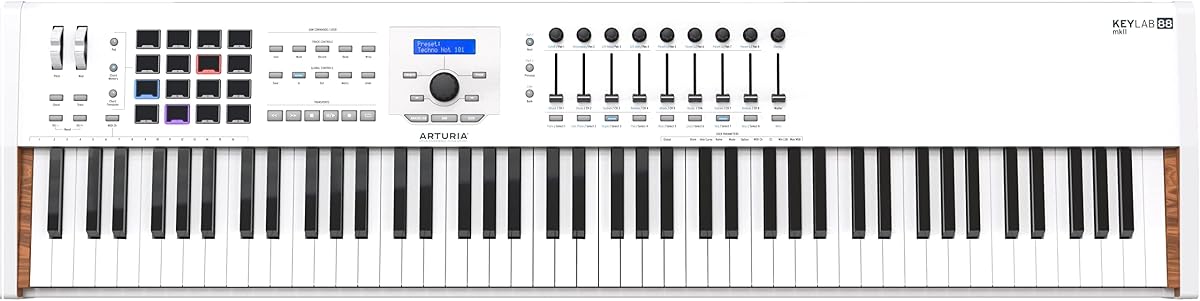
The white variant of the KeyLab 88 mk3 offers the same premium features as the black model but with a clean, modern aesthetic. It brings a fresh look to your studio while maintaining high performance.
We may earn a commission when you buy through this link, at no additional cost to you.
It includes 12 pressure-sensitive pads and USB-C power, ensuring modern connectivity options. The fully weighted hammer-action keys deliver the expressive touch required for dynamic piano playing.
Maintenance is slightly higher as the white finish shows dust more easily than darker models. However, the visual appeal often makes this a worthwhile trade-off for creative spaces.
Choose this color if aesthetics are a priority for your setup, knowing that you are still getting a high-quality, feature-rich controller.
The white finish provides a sleek and professional look that stands out in any studio environment.
USB-C power ensures stable energy transfer and connects easily with modern computers and interfaces.
We may earn a commission when you buy through this link, at no additional cost to you.
Selecting the right controller involves considering key action, features, and compatibility with your existing setup.
Key action determines how your controller feels to play. Fully weighted hammer action mimics an acoustic piano and is ideal for piano players. Semi-weighted or synth action is lighter and better for electronic music.
Prioritize full weighted keys if you want a realistic piano feel.
Modern controllers offer USB-C or USB-A for computer connection. Some models also include 5-pin MIDI for hardware synths or audio interfaces. Ensure the controller matches your computer ports.
Check for USB-C and MIDI outputs to maximize hardware compatibility.
Many controllers come with production software like Ableton Lite or Analog Lab. These add significant value and help you start producing immediately without extra purchases.
Look for bundles that include DAWs and instrument plugins.
Knobs, faders, and pads allow you to control parameters without reaching for your mouse. Consider how many controls you need for mixing and sound design in your workflow.
More knobs and pads mean more hands-on control during production.
Controllers are built with varying materials. Wooden frames or metal chassis offer better longevity than plastic bodies. This is crucial if you plan to transport your equipment often.
Choose sturdy materials to ensure long-term reliability and stability.
Prices range from affordable entry models to high-end professional gear. Determine your budget but consider how features affect long-term usability and resale value.
Balance cost against features that matter most to your specific needs.
Some controllers are optimized for specific Digital Audio Workstations like Ableton or Logic. This provides plug-and-play functionality without custom mapping efforts.
Select a controller with DAW integration to streamline your workflow.
Weight and size matter if you plan to travel. Lightweight models are easier to carry but may lack sturdy construction. Consider if you need a stationary studio piece or a transportable controller.
Choose lighter models if you perform live frequently.
Connect your controller via USB to your computer or audio interface. Ensure drivers are installed if required and your DAW is set to recognize MIDI inputs.
Place the controller on a stable surface or stand to prevent tipping. Ensure it is at a comfortable height for your wrists to avoid strain during long sessions.
Keep keys clean by wiping with a dry cloth. Avoid spills and direct sunlight to protect the keys and electronics from damage over time.
Yes, they offer a realistic piano feel essential for serious musicians and composers. They bridge the gap between acoustic instruments and digital production effectively.
Most modern controllers like Novation and M-Audio work plug-and-play over USB. Some specific brands might require drivers for full functionality but usually not for basic use.
Weighted keys have mechanical resistance like an acoustic piano. Semi-weighted keys use springs for a lighter touch which is better for synths but less expressive for piano.
Absolutely. Many models like the Studiologic SL88 are designed specifically for stage use with durable builds and quick access controls.
Most do not include a stand unless specified. Always check product details for accessories before purchasing to avoid needing a separate stand.
Many support iOS via USB adapters. Check compatibility details for mobile connectivity if you plan to use your controller with mobile apps.
We reviewed ten top models ranging from budget-friendly M-Audio to premium Arturia and Roland options. Each offers unique strengths depending on your focus on piano feel or production control.
Prioritize key action quality if piano expression is your goal. For electronic production, look for DAW integration and control surfaces that match your software.
Always verify current prices and availability as deals may change frequently. Select the controller that best aligns with your current needs and future plans.