
Ueteto Mechanical Metronome Black/Loud Sound
4.4Editor score
Loud audible click and bell
Wide tempo range support
Durable metal construction
This guide compares the top ten mechanical metronomes for piano players, evaluating precision, sound quality, and durability to help you choose the right tool
Finding the right mechanical metronome for piano practice is essential for developing a solid sense of rhythm. These devices provide a reliable click without batteries, ensuring your practice sessions remain uninterrupted regardless of power availability or battery issues.
We have carefully compared ten top-rated mechanical metronomes based on precision, sound clarity, build quality, and ease of use. This list covers a wide range of options from budget-friendly choices to premium models with elegant designs for serious musicians.
Each pick highlights unique features and potential trade-offs to help you make an informed decision. Please note that product availability and pricing can change frequently, so check the current details before making your final purchase.
4.4Editor score

4.5Editor score

4.6Editor score
The following comparison table presents a side-by-side overview of all ten selected mechanical metronomes. This includes key specifications like tempo range, beat options, and material quality to help you quickly identify the model that suits your specific practice needs.


The Tempi Mechanical Metronome stands out as a top choice for musicians seeking both style and functionality. With a rating of 4.5 stars, users appreciate its ability to establish accurate musical timing while adding a classy look to any practice space.
We may earn a commission when you buy through this link, at no additional cost to you.
Its standout qualities include steel gears that ensure long-lasting durability and a wind-up mechanism that eliminates battery anxiety. The brown grain veneer makes it a beautiful decor piece, while the adjustable bell helps you maintain rhythm without distraction.
Trade-offs include a higher price compared to basic models, but the included microfiber cloth and two-year warranty add value. Some users might prefer a metal body, but the plastic construction is robust enough for daily practice sessions.
This metronome is ideal for both adults and kids who want a reliable tool that looks as good as it performs. Whether you play piano or violin, it provides the precise rhythm needed to master any piece of music effectively.
The brown grain veneer finish complements traditional pianos and adds elegance to your music room.
Wind-up design ensures uninterrupted practice without worrying about battery replacements or power sources.
We may earn a commission when you buy through this link, at no additional cost to you.
The Ueteto Mechanical Metronome offers exceptional value for beginners and budget-conscious musicians. Rated 4.4 stars, it delivers a loud sound that cuts through practice noise, making it easy to stay on beat during piano or drum sessions.
We may earn a commission when you buy through this link, at no additional cost to you.
Its key strengths include a wind-up mechanism that requires no batteries, ensuring reliability during long practice sessions. The bell ring feature adds a visual cue, and the wide tempo range supports everything from slow adagios to fast allegros.
Trade-offs involve a simpler plastic design compared to premium models and a wind duration that depends on tempo settings. However, the affordable price and durable construction make it a practical choice for daily use at home.
Ideal for children and beginners, this metronome helps develop rhythm quickly with simple adjustments. Its versatility across instruments like guitar and violin makes it a handy tool for multi-instrumentalists needing an affordable timing solution.
The audible click and bell ensure you hear the beat clearly even in noisy environments.
Suitable for piano, violin, guitar, and drums, making it a one-stop tool for various musicians.
We may earn a commission when you buy through this link, at no additional cost to you.
The Wittner 836 Taktell Piccolo Metronome is a premium choice known for its precision and classic brand reputation. With a 4.6 star rating, it is favored by professionals who value accurate timing and a compact footprint on their piano bench.
We may earn a commission when you buy through this link, at no additional cost to you.
Its standout qualities include a lightweight yet durable plastic casing that ensures consistent performance. The piccolo design saves space without sacrificing functionality, making it perfect for travel or small practice rooms where desk space is limited.
Trade-offs include the absence of a bell feature and a higher price compared to basic models. However, the precision of the movement and the minimalist aesthetic often justify the cost for serious musicians seeking reliability and style.
This metronome is best for advanced pianists who prefer a clean, no-fuss tool for daily practice. Its portability and high precision make it a reliable companion for rehearsals, recitals, and personal practice sessions alike.
Wittner's reputation for accuracy ensures your timing remains consistent across different pieces.
The piccolo shape fits easily on pianos and stands without cluttering your workspace.
We may earn a commission when you buy through this link, at no additional cost to you.
This Mechanical Metronome offers a blend of classic style and modern precision suitable for beginners. Rated 4.4 stars, it features a wood grain finish that looks elegant on any instrument, while the metal movement ensures accurate beat tracking.
We may earn a commission when you buy through this link, at no additional cost to you.
Key strengths include high precision and a loud sound that helps maintain tempo effectively. The metal components prevent rust, ensuring long-term use, and the adjustable beat options allow for flexible practice sessions across different musical styles.
Trade-offs involve the need to wind it up and standard plastic parts that may not feel as premium as all-metal units. Despite this, its performance and aesthetic make it a strong contender for home practice environments.
Ideal for guitar and violin players, it provides a reliable way to master rhythm. The wood grain design adds a touch of sophistication, making it a favorite for those who appreciate traditional musical aesthetics.
Metal gears ensure stable performance over time without significant drift or wear.
The classic wood look complements traditional pianos and enhances your music room decor.
We may earn a commission when you buy through this link, at no additional cost to you.
The M350 AUPHY Mechanical Metronome provides a classic shape with an accent bell for varied beat patterns. Rated 4.4 stars, it is designed for stability and accuracy, making it a solid choice for piano and drum practice alike.
We may earn a commission when you buy through this link, at no additional cost to you.
Its standout qualities include a low center of gravity that keeps it steady during use and a transparent dust cover to protect the internal gears. The accent bell allows you to hear the first beat of a measure clearly.
Trade-offs include a plastic body that may not feel as premium as wood or metal, but the durability remains high. The transparent cover is functional but may collect dust if not cleaned regularly.
Best for those who need a sturdy tool with beat customization, this metronome supports multiple instruments. It is simple to use and offers reliable performance for daily rhythm practice sessions at home.
The low center of gravity design prevents tipping even on uneven surfaces during use.
Accent bells help you keep time accurately by emphasizing the first beat of each measure.
We may earn a commission when you buy through this link, at no additional cost to you.
This Mechanical Metronome emphasizes simplicity with a classic walnut color design. Rated 4.2 stars, it is perfect for beginners who need a loud, high precision beat to establish rhythm without complex features or confusion.
We may earn a commission when you buy through this link, at no additional cost to you.
Key strengths include easy-to-follow operation steps and a metal movement that prevents rust over time. The loud sound ensures you hear the beat clearly, which is essential for developing a strong sense of timing during practice.
Trade-offs involve the need for manual winding and standard materials that may not feel luxurious. However, for the price, it delivers reliable performance and an elegant look that fits well in any home environment.
Ideal for students and casual players, it helps build confidence with its straightforward design. Whether you practice piano or saxophone, this tool provides the steady tempo needed to improve your musical skills effectively.
Simple steps make it easy for children to start practicing rhythm immediately without help.
The classic walnut color adds a sophisticated touch to your instrument stand or desk.
We may earn a commission when you buy through this link, at no additional cost to you.
The Universal Metronome in Standard Black offers multiple color options to suit individual tastes. With a high 4.6 rating, it is praised for its reliable movement and durable construction, making it a great choice for daily piano use.
We may earn a commission when you buy through this link, at no additional cost to you.
Standout qualities include high-hardness plastic and metal movement that ensure precise rhythm. The heavy bell options help you mark beats clearly, and the warranty provides peace of mind regarding product quality and longevity.
Trade-offs include a standard design that may lack the flair of premium wooden models. However, the performance and flexibility make it a practical choice for those who prioritize function and color variety over aesthetics.
This model is best for children and beginners who want a fun and reliable tool. Its adjustability and strong construction make it a solid investment for anyone looking to improve their rhythmic skills on any instrument.
Multiple colors allow you to pick a metronome that matches your instrument or personal style.
High-hardness materials ensure the metronome withstands daily use and accidental bumps.
We may earn a commission when you buy through this link, at no additional cost to you.
This Ueteto Metronome features a wood grain finish that adds elegance to your practice setup. Rated 4.3 stars, it offers a loud crisp tick that helps you stay on beat without distraction during intensive practice sessions.
We may earn a commission when you buy through this link, at no additional cost to you.
Key strengths include a straightforward winding key design and a range that covers all common tempos. The clear sound and visual design make it a great tool for developing a steady rhythm without constant adjustments.
Trade-offs include wind duration that varies based on tempo settings, which requires attention before long sessions. Despite this, its simple operation ensures you can start practicing immediately with minimal setup time.
Ideal for musicians who value style and functionality, it serves piano and drum players equally well. The easy-to-use design helps beginners focus on their music rather than figuring out complex controls.
The loud tick cuts through ambient noise to keep your focus on the music.
Easy winding and slider adjustments mean you spend less time setting up and more time playing.
We may earn a commission when you buy through this link, at no additional cost to you.
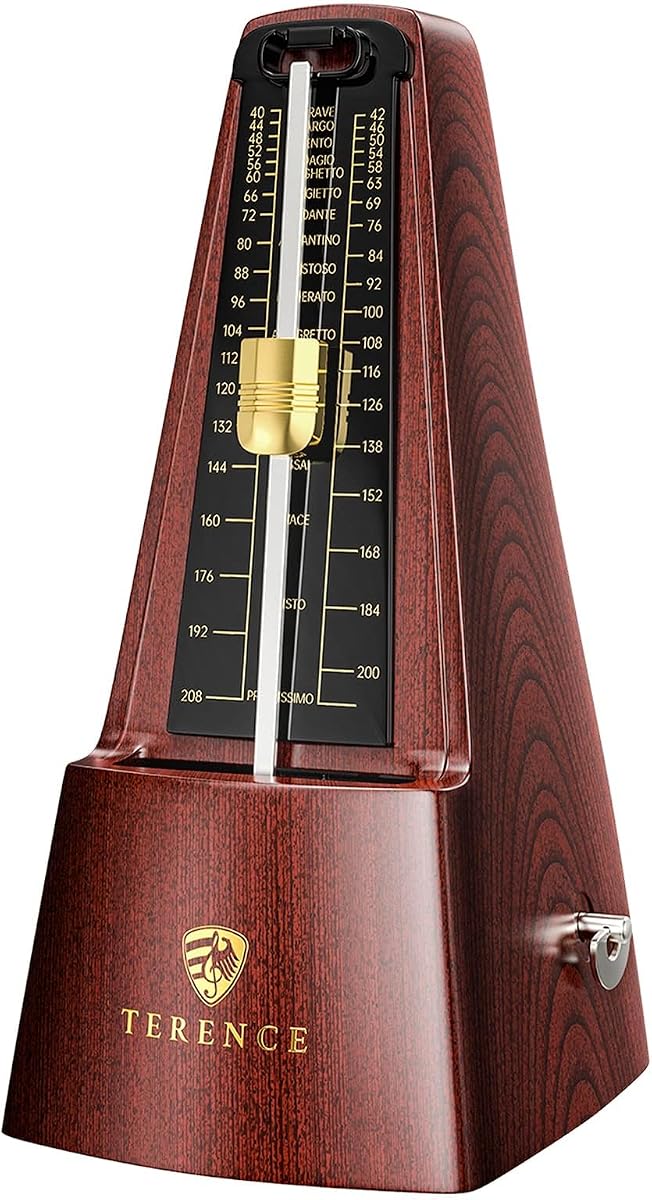
The TERENCE Mechanical Metronome stands out with its unique transparent design and high precision tracking. Rated 4.0 stars, it is a great gift for beginners, combining visibility with a sturdy all-metal movement for consistent performance.
We may earn a commission when you buy through this link, at no additional cost to you.
Its standout qualities include a bright ABS material that resists yellowing and a copper pendulum that swings smoothly. The precision helps improve practice efficiency, ensuring each session is effective for mastering rhythm.
Trade-offs include a lower user rating and a clear body that may show fingerprints easily over time. However, the internal metal quality and clear scale ensure that the function remains reliable for daily use.
Best for visual learners and students, it helps you see the pendulum swing clearly. Its portability makes it easy to carry to lessons or rehearsals, providing consistent tempo support anywhere.
The clear body makes the internal mechanics visible, adding a modern visual appeal.
Its size and design make it an excellent gift for students starting their musical journey.
We may earn a commission when you buy through this link, at no additional cost to you.
This mechanical metronome offers a loud, clear sound for efficient rhythm mastery. Rated 3.8 stars, it is a strong value choice for candidates and educators who need a reliable tool without extra frills or high costs.
We may earn a commission when you buy through this link, at no additional cost to you.
Key strengths include engraved markings for durability and a wide application for various skill levels. The loud sound ensures you never lose the beat, making it a high-efficiency tool for daily training routines.
Trade-offs include a lower rating than some competitors, suggesting build quality may vary. Despite this, the simple operation and loud output make it a practical solution for those seeking budget-friendly rhythm assistance.
Ideal for beginners and exam candidates, it allows new learners to get started quickly. Whether you practice violin or guitar, this metronome provides the steady beat needed to progress confidently in your musical studies.
Loud sound ensures you hear the beat clearly, keeping your practice sessions focused.
An affordable option for students who need a reliable tool without breaking the bank.
We may earn a commission when you buy through this link, at no additional cost to you.
Choosing the right mechanical metronome requires understanding key features like movement precision, sound clarity, and build material. This guide breaks down essential factors to help you select a model that fits your practice needs and budget.
Precision is crucial for a metronome to keep time accurately across various tempos. Look for models with metal gears or high-quality internal components, as these tend to be more stable and less prone to drift over time compared to plastic parts. Precise beats ensure your practice remains consistent, helping you develop a reliable sense of rhythm for performances.
Prioritize models with metal or steel movements for long-term accuracy in your daily routine.
A wide tempo range allows you to use the metronome for different styles and difficulty levels. Most mechanical models cover 40 to 208 beats per minute, which is sufficient for almost all musical pieces. Ensure the markings are clear and the slider is easy to adjust for quick tempo changes during practice.
Choose a range of 40 to 208 BPM to support both slow and fast pieces comfortably.
The sound of the click and bell must be loud enough to hear over your instrument. A clear, crisp sound helps you focus on timing without straining your ears. Look for models with adjustable bells or accent beats that emphasize the first beat of a measure for better rhythm tracking.
Select a model with loud, clear sound to maintain focus during noisy practice sessions.
The casing material affects both durability and aesthetics. Wood grain finishes offer a classic look but may scratch easily, while plastic models are durable but less elegant. Ensure the internal movement is protected by a dust cover to maintain performance over time.
Pick a casing that balances your aesthetic preferences with the need for long-term durability.
One of the main benefits of mechanical metronomes is that they do not require batteries. This ensures uninterrupted practice and saves money on replacements. Check that the winding mechanism is smooth and can hold a full wind for at least 15 minutes of typical use.
Choose a battery-free model with reliable wind-up performance for uninterrupted daily sessions.
Simple operation is essential for beginners and children. Look for intuitive sliders and clear markings for tempo and beat selection. Avoid complex features that may confuse you during practice. A metronome that is easy to set up encourages more consistent use.
Opt for simple controls and clear markings to ensure quick setup and focus on playing.
Your metronome sits on your instrument or desk, so design matters. Options range from classic wooden designs to modern transparent or sleek black styles. Select a look that complements your instrument and practice environment to keep your space organized and visually pleasing.
Choose a design that matches your room and instrument to enhance your overall practice setup.
Prices vary based on materials and brand reputation. While budget options are functional, investing in a reputable brand may offer better precision and warranty coverage. Look for models with at least a one-year warranty to protect against defects and ensure customer support.
Consider a model with a warranty that fits your budget to ensure peace of mind.
To start using your mechanical metronome, place it on a flat, stable surface near your piano. Pull out the bottom brake to unlock the pendulum, remove the cover if applicable, and slide the weight to your desired tempo. Turn the winding key clockwise gently until you feel resistance to avoid damaging the spring.
Once wound, flick the pendulum to one side and let it swing to begin the click. Adjust the beat selector to hear accent bells on the first beat of the measure if you need visual and audio cues. This helps you maintain a steady rhythm throughout your practice session without confusion.
To care for your metronome, wipe it with a soft cloth after each use to remove dust and fingerprints. Store it in a dry place to prevent rust on metal parts. Regularly check the winding mechanism and adjust the beat slider gently to ensure smooth operation over years of use.
No, mechanical metronomes do not need batteries as they operate using a wind-up mechanism. This design ensures your device works anytime without worrying about power sources or running out of battery mid-session. You simply wind the key and let gravity and springs regulate the tempo.
A full wind typically lasts between 15 and 45 minutes depending on the tempo you select. Lower tempos consume less energy, allowing the metronome to run longer, while higher tempos require more frequent winding. Check your model's manual for exact duration estimates.
A range of 40 to 208 beats per minute covers almost all musical needs, from slow ballads to fast allegros. This wide range ensures you can practice any piece of music accurately. Look for a metronome that offers this full spectrum for versatile use.
Yes, most mechanical metronomes are versatile and work for violin, guitar, drums, and more. The universal design helps any musician keep a steady beat regardless of their instrument. Check the product description to confirm compatibility with your specific needs.
A weak sound may result from the cover being on or the volume settings not being fully adjusted. Ensure the metronome is on a hard surface for resonance and wind it fully for consistent volume. If the issue persists, check for internal damage or debris.
Use a soft, dry microfiber cloth to wipe the exterior and cover gently. Avoid water or chemical cleaners that could damage the plastic or wood finish. For internal dust, blow gently or use a soft brush to keep the gears moving smoothly.
If your metronome stops frequently, ensure it is fully wound and placed on a stable surface. Check that the pendulum is not hitting any obstacles and the brake is removed. If the issue continues, the internal mechanism may need maintenance or replacement.
Wooden metronomes offer a classic look and often have heavier bases for stability, but plastic ones are more durable and resistant to moisture. Both types can offer similar precision depending on the internal movement. Choose based on your aesthetic preferences and environment.
Choosing the right mechanical metronome for piano practice involves balancing style, precision, and budget. Our top picks highlight models that offer excellent durability and sound quality to help you master your rhythm effectively. Whether you prefer a classic wooden finish or a modern transparent design, there is an option for every pianist.
Prioritize models with metal movements and clear tempo markings to ensure reliable performance over time. Avoid those with complex controls that might distract from your playing. Focus on what matters most for your practice style and stick to reputable brands for better support.
Remember to check current prices and availability before making your final purchase. Prices can change due to demand and promotions, so visiting the linked pages directly is best. With the right mechanical metronome, you will maintain a steady beat and improve your musical skills efficiently.