
YCA1030 Dusk to Dawn Sensor
4.4Editor score
Hard-wired post eye design
UL listed for safety
IP65 weatherproof rating
Automatic dusk to dawn control
This guide compares the top light sensors for home security including motion detectors dusk to dawn sensors and smart integrations to help you secure your
Securing your home often starts with detecting movement and controlling lighting based on ambient conditions. Light sensors for home security play a crucial role in automating defenses and deterring intruders without constant manual intervention.
We evaluated ten real products ranging from smart Zigbee motion detectors to hardwired photocell switches. Our comparison focuses on detection range, connectivity options, ease of installation, and compatibility with major smart home ecosystems.
Each pick highlights key features, pros, and cons to help you match the right sensor to your specific needs. Please note that product availability and terms may change so always verify details before purchasing.
4.4Editor score

4.8Editor score

4.4Editor score
The following table provides a side-by-side overview of key specifications for all ten products included in this guide to help you quickly identify the best fit for your home security setup.


This Zigbee motion sensor stands out for combining precise motion detection with real-time ambient light monitoring. It is ideal for users who want to automate lights based on both presence and darkness without relying on cloud services.
We may earn a commission when you buy through this link, at no additional cost to you.
The integration of a Lux sensor allows you to set automations that only trigger when the room is dark. This saves energy and reduces false triggers caused by daylight. The 360-degree adjustable mount ensures you can aim it perfectly.
One trade-off is the requirement for a compatible Zigbee hub such as Home Assistant or SmartThings. If you do not have one already set up, this adds a step to the initial setup process before the sensor becomes fully functional.
This sensor is best suited for tech-savvy users who value local control and energy efficiency. It delivers reliable performance for hallways, closets, and entryways where smart lighting automation is desired.
It supports Home Assistant and SmartThings enabling deep customization of triggers and actions without cloud dependency.
The low power consumption ensures over a year of typical use on a single battery making it cost-effective.
We may earn a commission when you buy through this link, at no additional cost to you.
The TP-Link Tapo Motion Sensor is designed to work seamlessly within the Tapo smart home ecosystem. It offers a reliable way to detect motion and trigger alarms or lights through the Tapo Hub.
We may earn a commission when you buy through this link, at no additional cost to you.
Its Sub-1G protocol provides better range and battery efficiency compared to standard Wi-Fi sensors. The adjustable sensitivity and viewing angle make it easy to tailor detection to your specific space.
Users should note that it requires the Tapo Hub to function which is sold separately. Without the hub this sensor cannot connect to your network or send notifications to your phone.
This sensor is perfect for those already invested in Tapo products looking to expand their security setup easily. It balances performance with simplicity for everyday home monitoring.
Using Sub-1G technology extends range and reduces power consumption significantly for longer battery life.
Custom time frames and push notifications help you stay informed without constant false alerts.
We may earn a commission when you buy through this link, at no additional cost to you.
The Akamatis Litos v3 uses mmWave radar to detect both moving and stationary humans making it more reliable than traditional PIR sensors. It also includes an integrated light sensor for precise ambient light measurement.
We may earn a commission when you buy through this link, at no additional cost to you.
This sensor is ideal for users who need to detect if someone is sitting still in a room. The light sensor ensures automation rules consider lighting conditions automatically without external inputs.
It requires an existing Home Assistant installation and some technical familiarity to set up correctly. While the firmware is pre-flashed, integration with Home Assistant is mandatory for full functionality.
For enthusiasts seeking advanced detection capabilities this sensor offers a modern solution. It bridges the gap between simple motion detection and true human presence monitoring.
Radars detect minute movements allowing it to identify presence even when a person is not moving.
The built-in light sensor allows for nuanced automation rules based on both occupancy and darkness.
We may earn a commission when you buy through this link, at no additional cost to you.
This contact sensor is specifically designed to monitor doors and windows for intrusion. It works within the Philips Hue ecosystem to provide robust security features beyond simple lighting control.
We may earn a commission when you buy through this link, at no additional cost to you.
When armed the sensor sends real-time alerts to your mobile device and can trigger light alarms to scare off intruders. The mimic presence automation helps make your home look occupied when you are away.
You must have a Hue Bridge to use this sensor as it does not connect directly to Wi-Fi. The adhesive backing makes installation quick without drilling holes in your doors or frames.
This product is perfect for Hue users who want to upgrade their home security. It provides peace of mind with reliable alerts and automation capabilities.
The system can arm and disarm automatically or manually through the Hue App for flexible control.
You receive alerts if someone tries to remove or tamper with the sensor ensuring your security remains intact.
We may earn a commission when you buy through this link, at no additional cost to you.
This outdoor motion sensor is built to withstand rain and dust thanks to its IP44 rating. It detects motion across a wide area and automatically turns lights on when someone approaches.
We may earn a commission when you buy through this link, at no additional cost to you.
The automatic dusk to dawn control ensures lights only activate when it is dark. This saves battery and prevents unnecessary operation during daylight hours in your outdoor spaces.
While it requires a Hue Bridge and is relatively expensive it integrates well with major voice assistants. This makes it a solid choice for a unified smart home security setup.
Ideal for porches patios and driveways this sensor provides reliable outdoor security. It balances durability with smart features for convenient home protection.
Rigorous testing ensures performance in outdoor environments without degradation from moisture or debris.
Battery power allows flexible placement without running wires to outdoor outlets.
We may earn a commission when you buy through this link, at no additional cost to you.
The YCA1030 is a simple hard-wired photocell sensor designed for outdoor lighting control. It automatically turns lights on at dusk and off at dawn without any manual input.
We may earn a commission when you buy through this link, at no additional cost to you.
Its UL listing and IP65 rating ensure it meets safety standards for residential and commercial fixtures. The built-in time delay prevents accidental switching due to passing car headlights or flashes.
Installation requires basic electrical skills to wire it into a post lamp or wall pack. Once installed it operates independently of any smart home system or internet connection.
This is the best choice for users who want reliable automatic lighting without the complexity of smart devices. It is cost-effective and durable for basic outdoor needs.
Meeting UL standards ensures safe operation in various electrical environments and lighting conditions.
Hands-free operation eliminates the need to remember turning lights on and off daily.
We may earn a commission when you buy through this link, at no additional cost to you.
This two-pack of photocell sensors offers excellent value for covering multiple outdoor areas simultaneously. Each unit features a swivel mount to focus light precisely where it is needed.
We may earn a commission when you buy through this link, at no additional cost to you.
The sensors handle various input voltages making them compatible with a wide range of lighting fixtures. Surge protection helps protect your bulbs and electrical system from spikes.
Installation involves disconnecting power and mounting the sensor into a knockout hole. The rubber gasket helps seal the device against moisture intrusion.
Ideal for large properties with several lights this pack ensures consistent lighting control. It is a practical solution for homeowners who want to automate exterior lighting effectively.
Supporting multiple voltages increases compatibility with different international or older electrical systems.
Getting two units at once reduces the cost per sensor and simplifies bulk installation.
We may earn a commission when you buy through this link, at no additional cost to you.
The Ring Motion Detector provides instant intruder alerts without needing a separate base station. It uses Amazon Sidewalk to connect directly to your network for flexible coverage.
We may earn a commission when you buy through this link, at no additional cost to you.
You can customize settings to reduce false alerts from pets under 50 lbs ensuring you only get notified for real motion. It covers a full room with a 90-degree field of view.
While it offers strong integration with other Ring devices it may have limited utility outside that ecosystem. Coverage may vary depending on your location and Sidewalk strength.
This sensor is perfect for those who already use Ring products for home security. It adds a layer of protection without complex wiring or hubs.
Adjusting sensitivity prevents your pets from triggering constant alerts while still detecting human movement.
Using Sidewalk allows communication even in areas where standard Wi-Fi might be weak or unstable.
We may earn a commission when you buy through this link, at no additional cost to you.
The YoLink Indoor Motion Sensor uses a LoRa wireless system to achieve an extreme range of over 2000 feet. This makes it ideal for large properties or multi-building setups.
We may earn a commission when you buy through this link, at no additional cost to you.
You can set up automatic alerts via text or email ensuring you are notified even if the internet is down. The built-in magnet allows for quick installation on metal surfaces.
It does not connect to your Wi-Fi network reducing security risks and network congestion. Instead it communicates with a dedicated hub that bridges to the cloud.
For those needing long-range coverage this sensor excels where others fail. It provides robust automation for both security and lighting across large spaces.
LoRa technology penetrates walls better than standard Wi-Fi ensuring stable signals across the property.
Critical alerts can reach your phone even in silent mode keeping you informed at all times.
We may earn a commission when you buy through this link, at no additional cost to you.
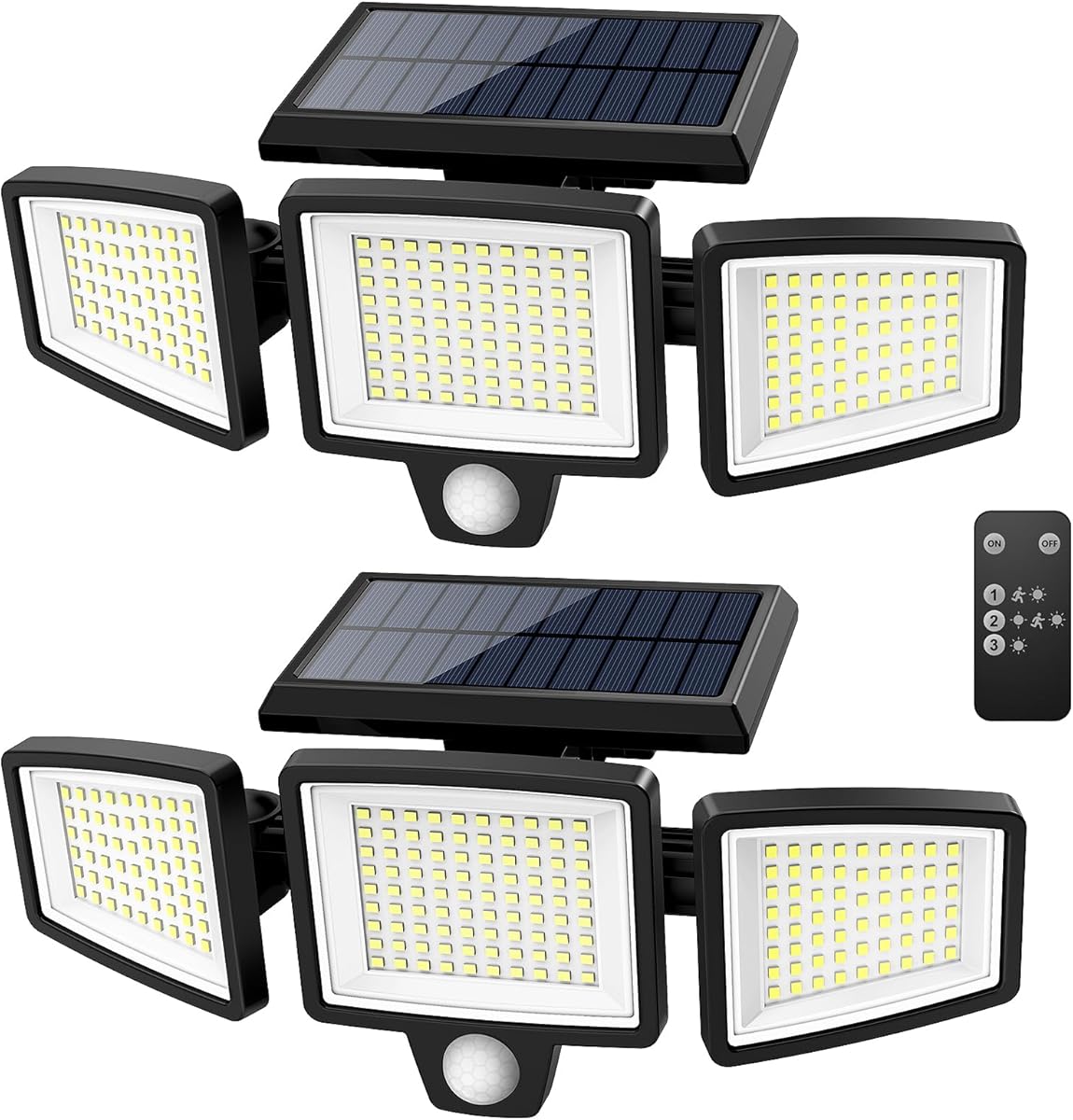
These solar motion lights combine a high-brightness panel with an integrated PIR sensor for complete outdoor security. They provide up to 2500 lumens to illuminate driveways and yards.
We may earn a commission when you buy through this link, at no additional cost to you.
The wireless design means no need for electrical wiring. You mount them directly on a wall and let the solar panel charge the internal battery during the day.
Three lighting modes allow you to choose between bright light dim light or constant lighting based on your needs. A remote control adds convenience to adjusting settings.
This solution is best for areas with good sun exposure. It delivers a powerful all-in-one security and lighting upgrade without wiring.
Efficient solar panels ensure rapid charging so lights operate effectively even on cloudy days.
The 270-degree angle covers large areas reducing blind spots around your property.
We may earn a commission when you buy through this link, at no additional cost to you.
Selecting the right light sensor depends on your home's layout power availability and existing smart home ecosystem. This guide outlines the key factors to consider.
Sensors are either battery powered hardwired or solar powered. Battery units offer flexibility but require maintenance while hardwired units are permanent but need professional installation. Solar options are eco-friendly but depend on sun exposure.
Choose battery or solar for flexible placement and hardwired for high traffic areas with stable power.
Connectivity options include Wi-Fi Zigbee LoRa and Sub-1G. Wi-Fi offers direct internet connection but drains batteries quickly. Zigbee and LoRa provide better range and efficiency for larger homes.
Consider your hub compatibility and range needs before choosing a protocol.
PIR sensors detect motion while mmWave radar detects stationary presence. PIR is cost-effective for general use but radar offers advanced accuracy for automation and security.
Choose radar if you need to detect people sitting still or moving subtly.
Ensure the sensor works with your existing platform like Home Assistant Philips Hue or Ring. Some devices require specific hubs to function and lack native Wi-Fi support.
Verify compatibility with your current setup to avoid extra costs.
Sensors with integrated light sensors can differentiate between day and night allowing for more energy-efficient automation. This prevents lights from turning on during daylight.
Prioritize models with Lux detection for smarter energy management.
For outdoor use look for IP ratings like IP44 or IP65 to ensure resistance against rain and dust. Indoor sensors do not need weatherproofing but should be discreet.
Check the IP rating to ensure the sensor survives your specific climate.
Detection range and angle determine how much area a sensor covers. Look for wide angles like 90 to 270 degrees to minimize blind spots in large rooms.
Match the sensor range to the size of the room or space you need to secure.
Battery life varies significantly based on usage frequency and connectivity type. Some units last up to two years while others may need frequent replacements.
Check battery ratings to minimize maintenance interruptions.
Install the sensor at a height of 6 to 8 feet to optimize detection range. Use the included adhesive or mounting screws to secure it firmly to walls or posts.
Pair the sensor with your hub or app immediately after installation. Follow the setup steps carefully to ensure it connects properly and sends notifications.
Regularly check battery levels and clean the lens to maintain sensitivity. Replace batteries as soon as low alerts appear and wipe off dust or spider webs from the sensor face.
Many smart light sensors require a hub to function properly especially those using Zigbee or LoRa protocols. Direct Wi-Fi models exist but may drain batteries faster. Always check product specs before buying.
Most modern sensors offer pet-friendly modes that ignore movement from animals under a certain weight. Adjust the sensitivity settings in the app or hardware to exclude small pets effectively.
Only sensors rated for outdoor use with IP ratings like IP44 or IP65 should be used outside. Indoor models will fail quickly when exposed to rain dust or extreme temperatures.
PIR sensors detect heat signatures from moving objects while mmWave radar uses radio waves to detect motion and stationary presence. Radar is more accurate but generally more expensive.
Battery life varies but many smart sensors last between one to two years on a single charge. Usage frequency and connectivity type play major roles in battery drain rates.
Yes most smart sensors can trigger lights automatically when motion is detected. You can set up automations in the companion app to link sensors with bulbs or switches.
We reviewed ten top light sensors for home security ranging from budget hardwired options to advanced smart detectors. Each offers unique benefits depending on your specific security needs and home setup.
Prioritize sensors with light detection and reliable connectivity to ensure your system works when you need it most. Choose a model that fits your existing smart ecosystem for seamless control.
Always verify compatibility and current product details before purchasing as terms may change. Secure your home with confidence by selecting the right light sensor today.