
Anysecu SF-103
4.2Editor score
Affordable price point for beginners
Supports VHF and UHF bands
Simple four-button control interface
Discover the top frequency counters for ham radio operators in October 2026. This guide compares ten reliable models for accurate signal measurement and tuning.
Frequency counters are essential tools for any serious ham radio operator. They allow you to verify signal frequencies accurately ensuring your transmissions stay within legal bands. A good counter offers high precision and portability for field use.
We evaluated ten top-rated models based on accuracy range and ease of use. Our analysis focuses on devices that provide reliable readings across VHF UHF and HF bands. Each product was reviewed for its build quality and specific features.
This guide presents detailed reviews of each ranked product including pros and cons. You will find information on specifications and intended use cases for every item. Please note that prices and availability may change over time.
4.2Editor score

4.1Editor score

5.0Editor score
The following table provides a side-by-side comparison of all ten products reviewed in this guide. It highlights key specifications and features to help you choose the right model for your needs.


The Mcbazel Surecom SF401 Plus stands out as a top choice for ham radio operators needing a reliable frequency counter. It offers a wide measurement range and includes useful decoding features.
We may earn a commission when you buy through this link, at no additional cost to you.
This device measures continuous carrier signals from walkie-talkies and two-way radios effectively. The built-in CTCSS and DCS decoder adds significant value for users who need to identify sub-audible tones.
While it lacks wide bandwidth capabilities, it excels in its intended range. The temperature compensated crystal oscillator ensures accuracy across varying environmental conditions.
It is an excellent choice for technicians and enthusiasts who need a portable tool for field testing. The included antennas and accessories make it ready to use right out of the box.
The 27MHz to 3000MHz range covers most amateur radio bands used by operators today.
The built-in decoder helps identify signals with CTCSS or DCS encoding for better analysis.
We may earn a commission when you buy through this link, at no additional cost to you.
The Surecom SF401 Plus is similar to the Mcbazel version and offers robust features for ham radio testing. It provides accurate readings and includes a signal strength indicator.
We may earn a commission when you buy through this link, at no additional cost to you.
This counter is designed for continuous wave signals from two-way radios. The signal strength indicator helps users gauge the quality of the signal they are measuring.
Its portability is a key advantage for field operations. The device is small enough to carry easily while maintaining high accuracy with its TCXO.
It is recommended for users who need a reliable tool for verifying transmission frequencies. The ease of use makes it accessible for both beginners and experienced operators.
The signal strength feature helps users optimize antenna positioning for better readings.
Simple button controls allow for quick frequency checks without complex setup.
We may earn a commission when you buy through this link, at no additional cost to you.
The FC-2800M offers a versatile frequency range and specific support for DMR digital signals. This makes it a great choice for modern radio systems.
We may earn a commission when you buy through this link, at no additional cost to you.
It features a built-in decoder for CTCSS and DCS tones which is essential for identifying signals. The digital mode ensures accuracy when dealing with digital voice transmissions.
The two-year warranty provides peace of mind for buyers. Its compact size ensures it fits easily into a field kit for portable operations.
This model is ideal for operators who deal with a mix of analog and digital systems. The range allows for measurements across CB HF VHF and UHF bands.
The digital mode ensures accurate readings for modern digital voice systems.
A two-year warranty covers defects ensuring long-term reliability for the user.
We may earn a commission when you buy through this link, at no additional cost to you.
The TinySA Spectrum Analyzer is more than just a frequency counter. It provides a visual spectrum display that helps users see interference and signal patterns clearly.
We may earn a commission when you buy through this link, at no additional cost to you.
Its built-in signal generator adds functionality for testing and calibration. The touchscreen interface makes navigating the device intuitive once learned.
This tool is excellent for troubleshooting RF issues. The USB connectivity allows for remote control and data logging for detailed analysis.
It is recommended for ham radio operators who need to visualize the RF environment. The portability ensures it can be taken anywhere for field testing.
The visual display helps identify interference sources that counters might miss.
An internal signal generator allows for testing and calibration without external equipment.
We may earn a commission when you buy through this link, at no additional cost to you.
This portable frequency counter is designed for users who primarily operate on local VHF and UHF bands. Its simplicity makes it a great tool for quick checks.
We may earn a commission when you buy through this link, at no additional cost to you.
The single button control allows for quick power on and frequency testing. It includes a decoder for CTCSS and DCS tones which is useful for identifying repeaters.
Powered by a standard 9V battery it is easy to find replacements. The compact size ensures it can fit in a small tool kit or pocket.
It is ideal for local repeater maintenance or simple signal verification. The limited range is a trade-off for its portability and low cost.
The one button interface makes it accessible for users of all experience levels.
Focused ranges for VHF and UHF make it perfect for local radio operations.
We may earn a commission when you buy through this link, at no additional cost to you.
The Anysecu SF-103 is an upgrade of the SF401 series offering better performance at a budget price. It covers a wide range of frequencies useful for ham radio.
We may earn a commission when you buy through this link, at no additional cost to you.
This counter is designed for measuring continuous wave signals. The signal strength indicator helps users determine if the signal is strong enough to measure accurately.
Its portability is a key feature for field work. The device is small and easy to carry along with other testing tools.
It is recommended for hobbyists and maintenance personnel needing a cost-effective solution. The ease of use ensures quick results for signal verification.
The range from 2MHz to 2.8GHz covers most common amateur radio bands.
An affordable price point makes it accessible for beginners and hobbyists.
We may earn a commission when you buy through this link, at no additional cost to you.
The Mcbazel Surecom SF-103 is a handheld frequency counter designed for walkie talkies and two-way radios. It features a TCXO for high accuracy in various temperatures.
We may earn a commission when you buy through this link, at no additional cost to you.
This device supports DMR radio signals which is crucial for modern digital users. The four-button control is simple to use and ensures quick measurements.
It is compact enough to carry anywhere. The TCXO ensures that readings remain stable even when the environment changes.
It is recommended for operators who need reliable handheld testing. The support for DMR makes it a versatile tool for various radio types.
The temperature compensated oscillator ensures stable readings across a wide range of conditions.
Support for DMR signals allows for accurate frequency measurement of digital radios.
We may earn a commission when you buy through this link, at no additional cost to you.
The Acxico 1 Pcs Module is a frequency counter intended for DIY enthusiasts who want to build their own test gear. It offers accuracy for a low price.
We may earn a commission when you buy through this link, at no additional cost to you.
This module covers frequencies up to 500MHz which is useful for many lower band applications. It includes a digital LCD display for reading results.
The PCB construction is standard for hobbyist projects. Users should be comfortable with electronics assembly to use this effectively.
It is recommended for those building custom test equipment. The low cost makes it a great option for experimentation and learning.
Designed for integration into custom projects for hobbyists who build their own gear.
A low price point makes it accessible for students and enthusiasts on a budget.
We may earn a commission when you buy through this link, at no additional cost to you.
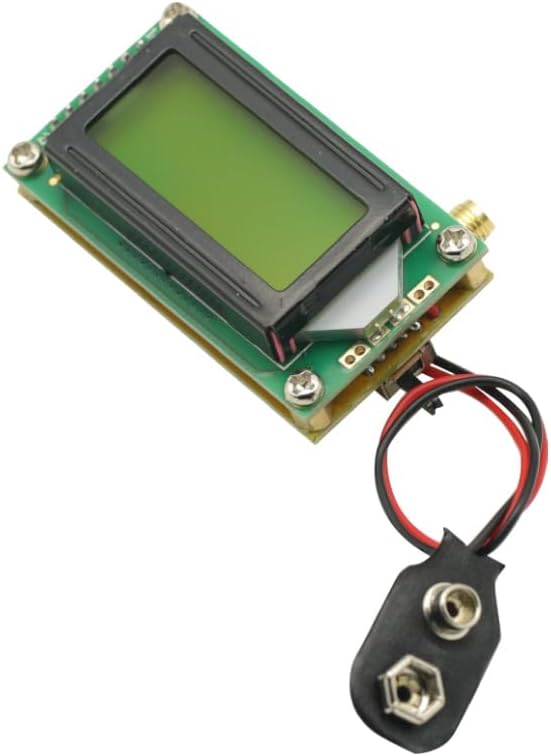
This frequency counter board is designed for ham radio kits. It provides basic functionality at a low cost for hobbyists.
We may earn a commission when you buy through this link, at no additional cost to you.
The range covers frequencies up to 500MHz which is suitable for many standard radio applications. The LCD display ensures results are easy to read.
Its low power consumption is beneficial for portable builds. The board is compact and fits easily into custom enclosures.
It is recommended for users building simple test equipment. The cost makes it a great addition to a learning kit.
The simple design makes it easy to integrate into custom test projects.
Low power consumption ensures the device can run on small battery packs.
We may earn a commission when you buy through this link, at no additional cost to you.
The AURSINC TinyGTC 7GHz is a premium device offering GPS disciplined accuracy for professional testing. It is ideal for users needing extreme precision.
We may earn a commission when you buy through this link, at no additional cost to you.
This counter features a built-in GPSDO which ensures long-term stability unmatched by standard oscillators. The resolution is extremely high for time and frequency measurements.
Dual channel capability allows for complex measurements. The portable design with touchscreen ensures it can be used in the field.
It is recommended for professionals and serious hobbyists building high-end systems. The GPSDO ensures reliable readings regardless of location.
The GPSDO ensures that frequency accuracy remains locked to a global standard.
Two independent channels allow for phase and frequency comparison simultaneously.
We may earn a commission when you buy through this link, at no additional cost to you.
Choosing the right frequency counter involves evaluating several factors based on your specific needs and budget. This guide outlines the key considerations to help you make an informed decision.
The frequency range determines which bands the device can measure. Ensure the counter covers the bands you use most frequently.
Look for a device that covers your target range fully without gaps.
Accuracy is crucial for staying within legal bands. Higher quality oscillators provide better stability over time.
Opt for devices with TCXO or GPSDO for higher precision.
The interface should be intuitive for quick field use. Too many buttons can complicate simple measurements.
Look for simple controls and clear displays for faster operation.
Ham radio operators often work in the field. A lightweight device ensures easier carrying and setup.
Prioritize compact designs that fit easily into a field kit.
Extended field testing requires reliable battery power. Check if the device runs on standard batteries or rechargeable ones.
Consider battery type and life before purchasing for remote use.
Knowing signal strength helps optimize antenna placement. Some counters include this feature to aid in troubleshooting.
A built-in indicator adds significant value for field operators.
Features like CTCSS DCS decoders or signal generators enhance functionality. Determine if these are necessary for your workflow.
Choose a device with features that match your technical requirements.
Frequency counters vary in price from budget to premium. Balance cost with the accuracy you need for your tasks.
Set a budget that allows for necessary features without overspending.
Connect the device to a reliable power source before starting. Ensure the device is calibrated according to the user manual.
Use the appropriate antenna for your target frequency. Avoid connecting the input directly to the radio antenna port without attenuation.
Store the device in a protective case to avoid physical damage. Clean the display regularly to maintain readability during use.
A frequency counter measures the frequency of a single signal. A spectrum analyzer shows multiple signals across a bandwidth for analysis.
Ideally yes. Different antennas are tuned to specific ranges for better accuracy and sensitivity.
Some models support digital signals. Check the product description for DMR or digital voice compatibility.
Calibration depends on usage. For precision work calibrate regularly. Casual users may do it less frequently.
GPSDO provides long-term stability. It keeps the oscillator accurate to global time standards.
Handheld counters work well for general tasks. Bench units offer higher precision for complex work.
Compare readings with a known reference source. A GPSDO unit helps verify accuracy.
High-quality counters last for years. Proper care and battery maintenance extend the lifespan.
We reviewed ten models ranging from basic handheld units to high-precision systems. Each option offers unique features tailored to different operator needs.
Consider your primary use case whether it is field testing or home lab work. This will help narrow down the right model for you.
Prices and availability change so check current listings before purchasing. We hope this guide helps you find the best frequency counter for your ham radio setup.