
Focusrite Scarlett Solo 4th Gen USB-C Audio Interface
4.6Editor score
Studio quality sound conversion
Air mode for rich harmonics
Includes recording software bundle
Compare the top audio interfaces with built in dsp for recording and streaming. We review features, sound quality, and real time effects for every budget.
Finding the right audio interface is crucial for producers who need low latency monitoring. Built in dsp allows you to run effects without taxing your computer CPU. This guide explores the best options available today for music and voice work.
We analyzed ten top rated models based on sound quality, connectivity, and onboard processing power. Each product offers unique strengths for different workflows ranging from home studios to live streaming setups. Our team evaluated specs and user feedback to create this comprehensive list.
Every pick includes detailed breakdowns of key features and real world performance notes. Prices and availability change frequently so check current offers before buying. Read on to discover which interface fits your specific recording needs best.
4.6Editor score
4.7Editor score

4.0Editor score
This side by side comparison highlights the core specifications and capabilities of each interface. Use this table to quickly identify the model that matches your input needs and software requirements.




The Focusrite Scarlett Solo 4th Gen delivers top tier sound quality for home studios. With a huge 120dB dynamic range it captures vocals and instruments with pristine clarity. This model is rated highly by users for its reliability and ease of use.
We may earn a commission when you buy through this link, at no additional cost to you.
Its standout feature is the improved Air mode which lifts vocals to the front of the mix. This adds musical presence and rich harmonic drive to your recordings instantly. The interface uses the same converters as Focusrite flagship units found in world class studios.
While it is simple it does not offer multiple inputs for larger sessions. You may need a larger model if you record drums or full bands often. For solo artists and podcasters the single input design is perfectly adequate.
We recommend this interface for songwriters needing big studio sound anywhere. It includes Pro Tools Intro plus Ableton Live Lite and Hitmaker Expansion to get you started. This makes it a complete package for recording mixing and mastering.
The new generation uses flagship converters for wider dynamic range and lower noise.
Includes essential plugins and software to start making music right out of the box.
We may earn a commission when you buy through this link, at no additional cost to you.
Elgato Wave XLR MK.2 is built for creators who want professional audio control. It features 80dB gain for any XLR mic and ultra-low latency monitoring. The touch control with LED feedback lets you adjust levels instantly during broadcasts.
We may earn a commission when you buy through this link, at no additional cost to you.
The Wave FX Processor unifies DSP effects and VST plugins in one signal chain. This means you can enhance your voice with built-in compressor and EQ easily. The Wave Link app provides powerful audio control native integrated for precise routing.
Some users may find it lacks the connectivity of larger audio interfaces. It focuses more on monitoring and control for specific setups. For podcasters and streamers this focus is exactly what is needed.
Choose this if you need easy visual feedback and powerful voice processing. The customizable LED lighting shows levels and status at a glance. It is an excellent choice for live content creation.
Adjust levels and mute instantly with touch controls and visual LED feedback.
DSP effects and VST plugins work together in one chain for flexible sound shaping.
We may earn a commission when you buy through this link, at no additional cost to you.
This interface offers next generation audio conversion with the widest dynamic range. Experience analog tones with Unison preamps letting you record in realtime. Access the full library of 200 plus UAD DSP and Native plug-ins.
We may earn a commission when you buy through this link, at no additional cost to you.
Mix with confidence in any room using Apollo Monitor Correction powered by Sonarworks. The Auto-Gain feature sets your levels across multiple inputs in seconds. You will never miss the take with these smart features.
The cost and Thunderbolt requirement may be barriers for some users. Not all computers have the necessary ports without adapters. However professionals who need studio quality will find the value unmatched.
Invest in this for serious production work needing authentic gear emulations. From Neve to Fender you get classic tones right in your DAW. It is the choice for those who demand the best.
Record through authentic emulations of Neve API Avalon and Fender gear in realtime.
Access award-winning titles like Capitol Chambers and Sound City Studios easily.
We may earn a commission when you buy through this link, at no additional cost to you.
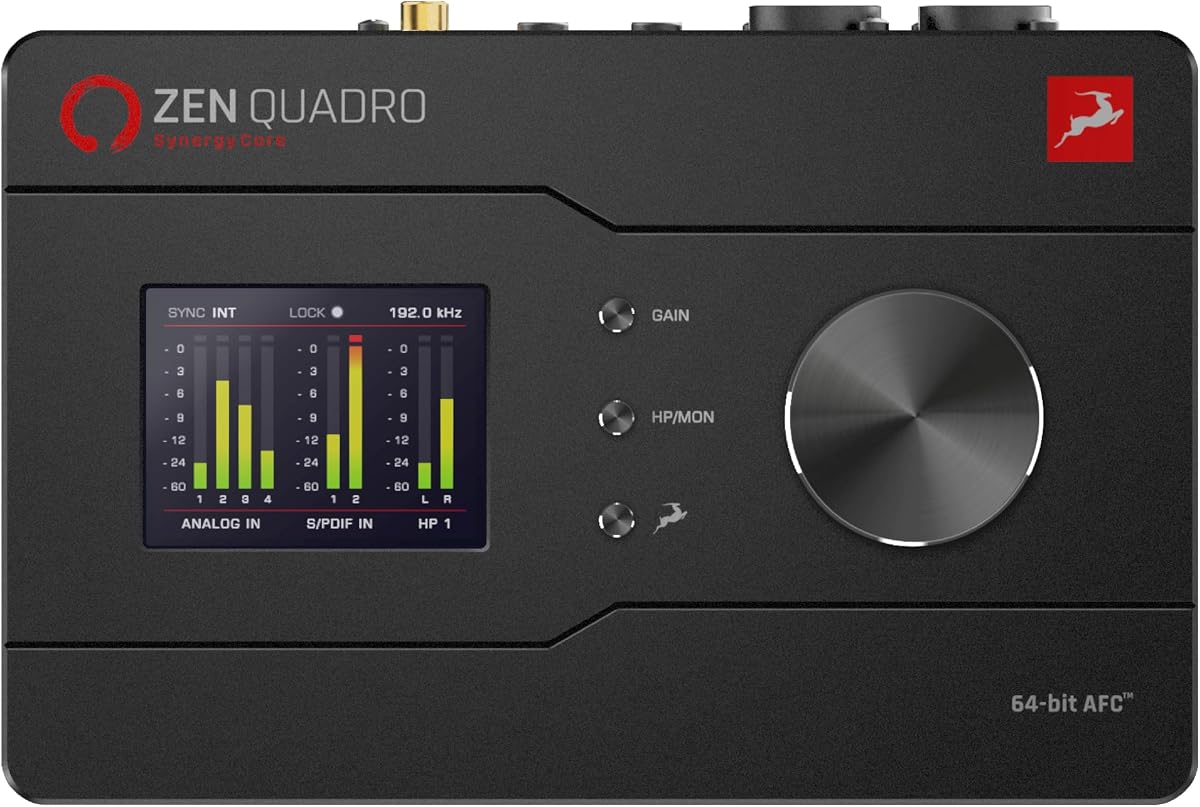
Antelope Audio Zen Quadro captures vocals and instruments with four Discrete preamps. Track through 37 included effects with 90 plus available via Synergy Core FX. These run on dedicated DSP and FPGA hardware for near-zero latency.
We may earn a commission when you buy through this link, at no additional cost to you.
The flagship sound and clocking deliver up to 130 dB AD/DA dynamic range. You get 64-bit AFC clocking trusted by Grammy-winning engineers worldwide. Dual USB-C ports connect a computer plus phone for modern workflows.
Setting up the software may take time compared to plug-and-play units. However the standalone presets save you for studio stage and mobile setups. The effort pays off with professional flexibility.
Use this for small sessions and live workflows without host CPU load. Add up to 8 channels over ADAT for expandable studio hub capabilities. It suits creators needing high-end clocking and flexible routing.
Run compressors EQs and amps on FPGA hardware without loading your computer.
Dual USB-C allows connection to computers phones and tablets simultaneously.
We may earn a commission when you buy through this link, at no additional cost to you.
Experience analog tones with Unison preamps letting you record in realtime through authentic emulations. Access the full library of 200 plus UAD DSP and Native plug-ins. Mix with confidence in any room or through headphones.
We may earn a commission when you buy through this link, at no additional cost to you.
Use Auto-Gain to set your levels across multiple inputs in seconds. Hear all the low-end detail in your mixes using bass management. You can add a subwoofer to your monitor setup easily.
It shares features with the QUAD model but at a different price tier. Thunderbolt connectivity is a requirement that limits compatibility with some laptops. For Mac users this is a standard powerful option.
Choose this for professional mixes needing classic hardware emulations. The Sonarworks integration helps you trust your monitoring environment. It is ideal for producers prioritizing tone and workflow.
Record through authentic analog emulations of Neve API and Avalon preamps.
Use bass management to add a subwoofer for better low-end monitoring.
We may earn a commission when you buy through this link, at no additional cost to you.
Solid State Logic offers 32-Bit 192 kHz AD/DA converters for high fidelity. The Legacy 4K Analog Enhancement adds classic SSL tone to your tracks. It includes 48V phantom power and zero-latency monitoring features.
We may earn a commission when you buy through this link, at no additional cost to you.
MIDI I/O on 5-Pin DIN Jacks connects your hardware controllers easily. The SSL Production Pack Software Bundle provides tools for production and editing. This is a bus powered unit for Mac and Windows users.
Two inputs limit you to single mic or instrument recording. You cannot record full band sessions simultaneously. However for vocals and guitars the quality is top tier.
Select this if you want classic SSL analog enhancement in a compact unit. It is perfect for podcasters and solo musicians needing professional tone. The software bundle adds value to the package.
Legacy 4K Analog Enhancement brings authentic SSL console tone to digital recordings.
Bus powered design means you can use it without external power supplies.
We may earn a commission when you buy through this link, at no additional cost to you.
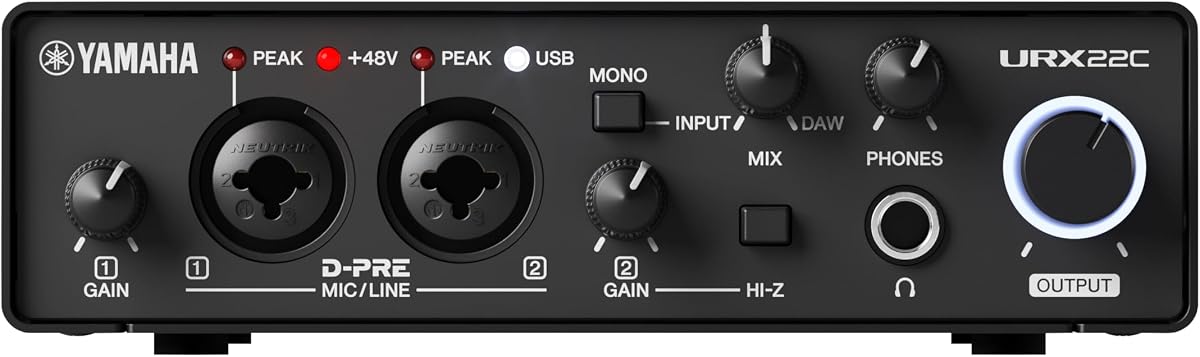
This 32-bit Integer 192 kHz interface supports Windows macOS and iOS easily. Rugged full-metal housing ensures ultimate durability for live or travel use. It includes latency-free DSP-powered monitoring with REV-X reverb and EQ.
We may earn a commission when you buy through this link, at no additional cost to you.
2 analog XLR/TRS combo inputs support Class-A D-PRE mic preamps. The DSPMixFx application is included for easy mixing and effects control. Cubase AI and Steinberg Plus software are part of the bundle.
While durable the setup process depends on your operating system version. You may need to check driver updates for best compatibility. Still it is robust for various environments.
Choose this for portable recording needing solid build and software flexibility. It works well for iOS users due to cross-platform support. The included reverb and EQ make tracking easy.
Full-metal housing protects the interface during travel and live events.
Use latency-free DSP monitoring with included REV-X reverb and EQ plugins.
We may earn a commission when you buy through this link, at no additional cost to you.
MOTU UltraLite-mk5 delivers 18 x 22 USB audio channels for complex sessions. It supports 40 simultaneous audio channels via optical and analog outputs. Superb analog quality with 125 dB dynamic range ensures clear sound.
We may earn a commission when you buy through this link, at no additional cost to you.
DSP-driven monitor mixing lets you create unique mixes for each output pair. On-board effects include reverb and parametric EQ for processing. The high-resolution OLED display lets you view signal activity at a glance.
The large channel count can be complex to route initially. CueMix 5 app helps control mixing from Mac PC or iOS. Users may need time to master all features.
Use this for recording full bands or multiple microphones at once. Universal connectivity works with all audio software and drivers. It is a powerful choice for expanding your studio.
Add up to 40 simultaneous audio channels with optical and analog connections.
High-resolution OLED display provides detailed metering for all inputs.
We may earn a commission when you buy through this link, at no additional cost to you.
This interface features a 4.3 touchscreen with 5 control knobs for easy control. Premium Microphone preamps offer 78 dB gain range and +48 V phantom power. A built-in DSP processor ensures professional sound and latency-free monitoring.
We may earn a commission when you buy through this link, at no additional cost to you.
Dual MAIN/SUB USB ports allow flexible connectivity and streaming options. It includes Cubase Al WaveLab Cast Basic FX Suite and Steinberg Plus. This bundle provides a complete toolkit for creators.
Touchscreen interfaces may take getting used to compared to traditional knobs. The specific software bundle might require updates for new DAW versions. Still it offers unique control options.
Choose this if you want direct on-device screen control for mixing. It is great for content creation needing dual USB streaming features. The software bundle adds significant value.
Use the 4.3 touchscreen and knobs to adjust levels without a computer.
Dual USB ports support direct streaming and recording simultaneously.
We may earn a commission when you buy through this link, at no additional cost to you.
This USB-C bus-powered interface works seamlessly for mobile recording. It includes a complete virtual guitar audio interface with zero latency. Transform your voice with a dedicated Smart Vocal Chain and integrated Loopback.
We may earn a commission when you buy through this link, at no additional cost to you.
Dual independent headphone mixes let you monitor independently during sessions. Elite AD/DA conversion provides 123 dB 192 kHz/32bit clarity. Record with zero lag using onboard DSP for real-time effects.
While powerful for voices guitars input count is limited to two. This suits streaming better than full band recording. Still the included software makes it a complete solution.
Select this for content creators needing professional vocal and guitar tones. The software bundle includes Bitwig Studio Essentials and 75 plus effects. It is ideal for podcasting and streaming on any platform.
Use the Smart Vocal Chain and guitar rig simulations for polished sound.
Two headphone outputs with fully independent mixes for collaboration.
We may earn a commission when you buy through this link, at no additional cost to you.
Choosing the right interface depends on your specific needs for inputs and effects processing.
Built-in DSP allows you to run effects like reverb and compression without taxing your computer CPU. This is crucial for low latency monitoring during live recording or streaming sessions. Look for interfaces that support real-time effects in their signal chain.
Prioritize models with dedicated FPGA or DSP hardware if you need zero latency workflows.
Determine how many microphones and instruments you need to record simultaneously. Solo artists may only need one input while bands require eight or more channels. Outputs should match your monitor and headphone requirements.
Check for ADAT or S/PDIF options if you plan to expand your setup later.
Interfaces connect via USB-C Thunderbolt or USB 2.0. Thunderbolt offers faster data transfer and lower latency. USB-C is versatile and works with many modern laptops. Ensure your computer has the required ports.
Match the connection type to your computer capabilities for stable performance.
The preamp quality defines how clean and clear your recordings will sound. Look for discrete transistor designs and high dynamic range numbers. Phantom power is essential for condenser microphones.
Test preamps if possible or read reviews about noise floor and headroom.
Many interfaces come with DAWs plugins and effects suites. These add value and help you start recording immediately. Check what is included such as Cubase Pro Tools or Ableton.
Consider whether the included software meets your workflow or if you need separate licenses.
If you travel often the build quality matters. Metal housing protects your gear from drops and wear. Compact designs save space on crowded desks.
Choose a chassis that fits your environment and usage habits.
Connect the interface directly to your computer using the provided USB or Thunderbolt cable. Install drivers or use class-compliant modes for plug-and-play functionality on mobile devices.
Adjust gain levels using the knobs while monitoring input LEDs to prevent clipping. Use onboard DSP controls to route effects to your mix before hitting record.
Keep the device clean with a dry cloth and store it in a protective case when not in use. Avoid extreme temperatures to preserve internal components and conversion quality.
Most interfaces require drivers for full DSP control. Some support class-compliant modes for basic operation without drivers. Check manufacturer specs for your operating system.
Yes most support loopback features for system audio capture. This allows you to mix game or app sound with your mic. Check for dedicated streaming software support.
DSP processors run effects on the interface hardware not your computer. This frees up CPU resources for your DAW. It is ideal for high track counts or complex projects.
DSP effects offer zero latency monitoring which plug-ins cannot provide. Plug-ins may have more flexibility but add processing load. Use both depending on your workflow needs.
A smart vocal chain is a preset DSP sequence for vocals. It includes EQ compression and reverb for quick setup. This simplifies recording vocals without manual tweaking.
No USB-C interfaces can also use DSP for effects. Thunderbolt offers higher bandwidth but USB suffices for most. Check speed requirements for your session size.
We reviewed ten top models including Focusrite Antelope and Universal Audio. Each offers unique strengths in sound quality DSP processing and connectivity. Budget and specific needs define your best match.
Prioritize latency and preamp quality if you record vocals. Choose software bundles that fit your DAW workflow. DSP options help if you need effects during recording.
Prices and stock change so verify current offers on the product links. Check your computer compatibility before purchasing. With the right interface your recordings will sound professional.