
Nayax VPOS Touch
Customizable 2.4 inch LCD
IP55 rated anti-vandal glass
Loyalty and marketing tools
This guide compares the top ten card readers for vending machines based on connectivity, security, compatibility, and real-time telemetry features for
Modern vending machines need reliable cashless payment options to serve customers effectively. Card readers for vending machines enable operators to accept credit cards, mobile wallets, and contactless payments securely and efficiently across various locations.
We compared ten leading card reader models based on their connectivity options, security certifications, protocol compatibility, and ease of integration. Our analysis focuses on devices that support MDB and Pulse standards while offering robust telemetry and payment processing capabilities.
Each selection highlights specific strengths like built-in cellular connectivity, touchscreen interfaces, or budget-friendly pricing. Keep in mind that pricing and availability change frequently, so verify current details directly with the manufacturer or retailer before purchasing.
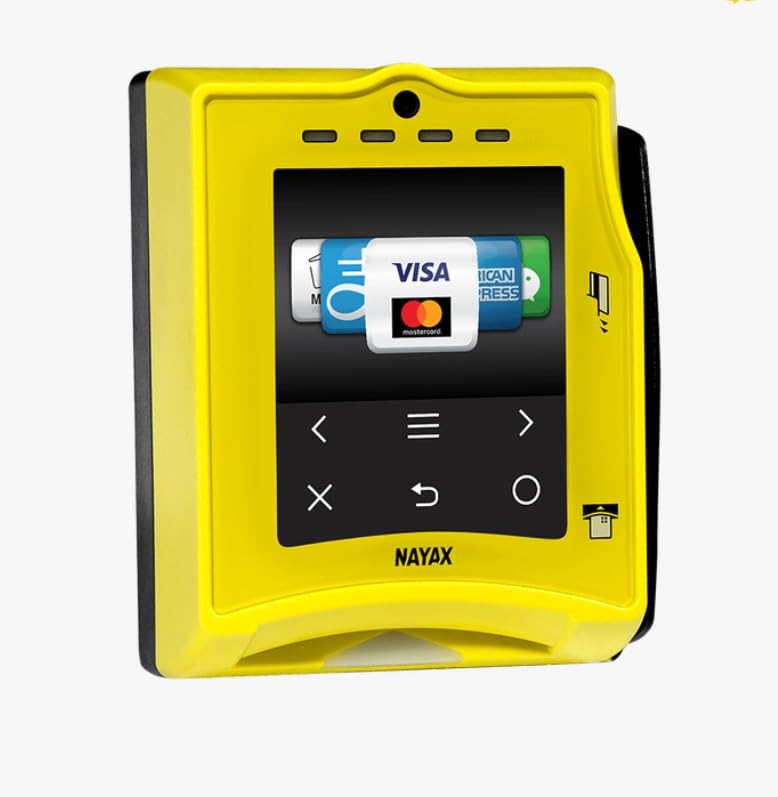
3.8Editor score

3.5Editor score
The following table provides a side-by-side comparison of all ten card reader models evaluated in this guide, highlighting key specifications and capabilities relevant to vending machine integration and payment processing needs.


The VPOS Touch stands out as a top contender for operators seeking a complete cashless solution. With a rating of 3.8, it balances security and connectivity effectively. Its ability to handle EMV chip cards, NFC, and magnetic stripes ensures broad customer acceptance without requiring extra hardware.
We may earn a commission when you buy through this link, at no additional cost to you.
Key strengths include its plug-and-play 4G LTE antenna and MDB harness which eliminate the need for complex networking setups. The integrated Nayax management suite provides real-time telemetry for inventory and sales monitoring. This level of oversight helps operators respond quickly to low stock or technical issues remotely.
One trade-off is the requirement for device activation which may take up to ten business days. Additionally, operators must align with the specific Nayax ecosystem for management. However, these constraints are often acceptable given the robust security certifications and streamlined connectivity it offers for unattended machines.
This reader is ideal for vending operators who prioritize seamless integration and remote management. If you manage multiple machines across different locations, the telemetry features provide actionable insights. The PCI DSS compliance ensures both operator and customer data remain secure during every transaction.
The built-in 4G LTE antenna removes the need for external routers or Wi-Fi configuration.
Full PCI DSS compliance with EMV Level 1 and 2 certifications protects sensitive payment data.
We may earn a commission when you buy through this link, at no additional cost to you.
This premium variant of the VPOS Touch offers enhanced features tailored for high-traffic or public environments. While specific ratings are unavailable, its robust build and advanced interface suggest strong reliability. The color LCD and voice prompts improve user experience by guiding customers through the payment process clearly.
We may earn a commission when you buy through this link, at no additional cost to you.
Durability is a major advantage with dragontrail glass and IP55 rating protecting against spills and impacts. The device supports a wide array of mobile wallets including WeChat Pay and Paytm making it suitable for international markets. Marketing tools like loyalty programs and punch cards help operators increase repeat business.
The main drawback is the premium pricing compared to basic readers. Additionally, users must ensure compatibility with their specific machine protocols. These factors are manageable for operators who value brand interaction and device longevity over initial cost savings.
Ideal for arcade machines or luxury vending units where customer experience matters. The combination of durability and smart marketing features makes it a strategic investment. Ensure your merchant account supports the necessary international payment methods before deployment.
A customizable 2.4 inch color LCD supports multiple languages and voice prompts for clarity.
IP55 rating and dragontrail glass ensure the device survives harsh or high-traffic environments.
We may earn a commission when you buy through this link, at no additional cost to you.
This generic card reader provides a straightforward path to cashless payments but requires patience for activation. Ratings are not listed, suggesting it is a newer or rebranded unit. The activation process involves following instructions on a yellow sheet found inside the packaging.
We may earn a commission when you buy through this link, at no additional cost to you.
The primary strength is its simplicity and likely lower cost compared to branded alternatives. It supports standard protocols which makes it compatible with many common vending machines. However, the lack of detailed public specifications means operators should verify features before ordering.
Operators should plan for a delay of up to ten business days before the device becomes active. This downtime could impact revenue if not scheduled during maintenance periods. The lack of detailed telemetry features may limit remote monitoring capabilities.
Best suited for small operators with flexible schedules and basic needs. Ensure you have time to complete the activation steps upon receipt. For those requiring immediate deployment or advanced features, consider the top-rated options instead.
The device requires a specific activation process outlined on the included yellow instruction sheet.
We may earn a commission when you buy through this link, at no additional cost to you.
This Symcode device serves as a versatile USB reader for membership or check-in systems rather than standalone vending. With a rating of 2.8, user feedback suggests mixed reliability. It supports reading magnetic stripes chips and NFC without writing capabilities.
We may earn a commission when you buy through this link, at no additional cost to you.
The keyboard emulator mode allows seamless integration with POS software. However, the read-only nature limits its use for secure credit card transactions that require full EMV validation. The low rating indicates potential compatibility or connectivity issues in some setups.
While affordable, the lack of secure payment processing certification makes it unsuitable for financial transactions. It is better suited for non-cash identification systems. Operators should avoid relying on it for direct monetary payments due to potential security gaps.
Consider this only for internal member access systems. For customer payments, choose a certified EMV reader. The price is attractive but the functional limitations outweigh the benefits for vending applications.
The device reads magnetic stripes and chips but does not encode data for secure transactions.
We may earn a commission when you buy through this link, at no additional cost to you.
The Verifone VX520 is a well-known terminal widely used in retail and vending. With a rating of 3.5, it offers proven reliability for basic payment processing. It accepts contactless payments including Apple Pay alongside traditional EMV chip transactions.
We may earn a commission when you buy through this link, at no additional cost to you.
Its ability to connect via Ethernet or dial adds flexibility for different locations. The durable build ensures it withstands daily wear and tear. However, being an older model, it may lack modern mobile telemetry features found in newer solutions.
Setting up a merchant account is necessary which adds a step to the process. Integration with vending controllers may require additional cabling compared to dedicated MDB devices. Despite this, its low cost and trustworthiness make it a solid budget choice.
Choose this if you need a proven terminal for a kiosk or fixed location. Verify MDB compatibility before purchase. It remains a cost-effective way to accept cards if you can handle the separate merchant setup.
Verifone terminals are known for durability and compliance with global payment standards.
We may earn a commission when you buy through this link, at no additional cost to you.
This device functions more as a development tool than a ready-to-use vending reader. It supports reading various chip types and writing to specific cards but lacks full payment certification. The SDK and software CD allow customization for membership or check-in systems.
We may earn a commission when you buy through this link, at no additional cost to you.
Operators looking to build custom interfaces will appreciate the developer support. However, the magnetic stripe reader is read-only which limits its use for payments. The rating of 3.5 suggests average usability without major technical breakthroughs.
Integration requires technical know-how which may be a barrier for typical vending operators. It is not recommended for accepting credit cards without significant development work. Ensure your system supports the required APDU commands for chip operations.
Best for technical teams building custom kiosks or membership systems. Avoid for standard cashless payments due to lack of EMV certification. The SDK inclusion is a plus for advanced use cases.
Includes an SDK and testing cards to assist developers in custom applications.
We may earn a commission when you buy through this link, at no additional cost to you.
The E-seek M-260 excels at reading government IDs and 2D barcodes with a strong 4.0 rating. While primarily for identification, it can serve access control systems linked to vending or pay-as-you-go services. The bottom connector facilitates easier integration into kiosks.
We may earn a commission when you buy through this link, at no additional cost to you.
Its robust USB and RS-232 support ensures compatibility with various hosts. The included cable simplifies setup but the high cost makes it less ideal for simple payment needs. Focus is on data transfer rather than financial transaction processing.
Operators using this for age verification or member access will find it reliable. It is not a direct payment reader so it complements other financial hardware. The bottom connector reduces cable clutter in enclosed machine environments.
Consider this for specialized ID verification tasks. For general card payments, look elsewhere. The high rating reflects its effectiveness in its niche role.
The bottom interface connector simplifies integration into enclosed kiosk environments.
We may earn a commission when you buy through this link, at no additional cost to you.
This VP3350 unit is designed for flexibility with a compact stand and PCI P2PE compliance. It supports EMV contact and contactless payments making it versatile for different environments. However, a new merchant account is required prior to shipping which adds setup time.
We may earn a commission when you buy through this link, at no additional cost to you.
The surcharge compatibility helps operators offset processing fees. The mobile-friendly design suits portable vending setups. Yet, the lack of specific telemetry or MDB details limits its utility for fixed automated machines.
Account setup can delay deployment by several days. Ensure you have the necessary merchant documentation ready. It works well for mobile service carts but may lack robust features for stationary vending machines.
Select this if you prioritize security and portability. Confirm merchant requirements before ordering. It is a solid choice for secure transactions on the go.
PCI P2PE compliance ensures encrypted data transmission for secure payment handling.
We may earn a commission when you buy through this link, at no additional cost to you.
The MTMS15 supports multi-factor authentication using cards and PINs which is great for secure access. It features open architecture allowing custom integration. Mobile NFC support adds versatility for modern users.
We may earn a commission when you buy through this link, at no additional cost to you.
However, it is more targeted at access control than direct payment processing. Real-time data capabilities help operators track usage. The lack of detailed payment specs suggests it may need backend configuration for financial transactions.
Ideal for facilities or secure vending where user identity matters. Ensure your backend supports the open architecture for payment routing. It offers flexibility but requires technical setup.
Use for secure entry or specialized payment systems. Verify integration requirements before deployment. The open design supports future customization.
Combines card swiping with PIN entry for higher security access control.
We may earn a commission when you buy through this link, at no additional cost to you.
This X6BT device connects via Bluetooth to mobile devices for reading and writing cards. With a 3.8 rating, it offers solid performance for field use. The cross-platform software supports Windows macOS iOS and Android for broad compatibility.
We may earn a commission when you buy through this link, at no additional cost to you.
It writes tracks to ISO standards which is useful for loyalty programs or encoding. However, it is not designed for standalone vending machines without a mobile host. The Bluetooth requirement means it needs a paired device to function.
Operators with mobile sales routes can benefit from its portability. It is not ideal for fixed vending kiosks lacking a smartphone. Ensure you have the free software installed for full functionality.
Choose for mobile sales or loyalty applications. Verify pairing requirements for your devices. It provides flexible wireless encoding options for specific use cases.
Free software runs on Windows Mac iOS and Android allowing flexible deployment.
We may earn a commission when you buy through this link, at no additional cost to you.
Choosing the right card reader requires balancing connectivity, security, and protocol compatibility with your specific machine setup.
Connectivity determines how the reader communicates with your network. Models with built-in 4G LTE or Ethernet provide reliable connections without needing external Wi-Fi routers. Some units rely on Bluetooth or USB which require a host device. For remote locations, cellular connectivity ensures consistent transaction processing without manual intervention.
Prioritize readers with robust built-in connectivity to minimize setup complexity and maintenance efforts.
Security standards like EMV Level 1 and 2 ensure that chip transactions are protected. PCI DSS compliance is mandatory for handling credit card data securely. Devices lacking these certifications may expose operators to fraud risks and liability. Look for P2PE encryption for added data protection during transmission.
Always verify that the reader meets current industry security standards before purchasing.
Most vending machines use MDB or Pulse protocols to communicate with dispensing hardware. Ensure the reader explicitly supports your machine's protocol to avoid costly modifications. Some universal models support both standards or offer adapter kits. Compatibility is critical for the machine to dispense items correctly after payment.
Check your machine's manual to confirm the required protocol before selecting a reader.
Real-time telemetry allows operators to track sales inventory levels and device status remotely. Platforms like Nayax provide mobile alerts for maintenance or low stock. This data helps optimize routes and restocking schedules. Without telemetry you may lose opportunities to prevent machine downtime or loss.
Select a reader that integrates with a management platform that fits your operational needs.
Modern consumers expect contactless payments such as Apple Pay or Google Pay via NFC. Older readers might only support magnetic stripes which are becoming less common. Ensure the device supports EMV chip and NFC to maximize customer acceptance. Some premium models even support QR codes or international wallets.
Broad payment support increases the likelihood of successful transactions across all customer segments.
Vending machines often operate in public spaces where they face spills or impacts. Look for devices with rated enclosures such as IP55 to resist dust and liquids. Glass types like dragontrail provide scratch resistance for touch screens. A durable build reduces long-term maintenance costs and replacement frequency.
Invest in ruggedized hardware to protect your investment in high-traffic areas.
Some readers require complex activation processes or merchant account setup before shipment. Others offer plug-and-play features with pre-configured connectors. Consider the time and effort needed to get the device running. Activation delays can postpone revenue generation if not planned properly.
Review the setup requirements to ensure they align with your deployment timeline.
Pricing varies widely from budget USB models to premium integrated solutions. While cost is a factor, consider total cost of ownership including transaction fees and maintenance. A slightly higher upfront cost might offer better telemetry or durability that saves money later. Balance immediate budget with long-term operational efficiency.
Evaluate value beyond sticker price by considering reliability and included features.
Begin by reviewing the activation instructions provided with your device. Some models require account registration or code submission before they become operational. Ensure you have all necessary documentation and merchant credentials ready to avoid delays during setup. Testing the device in a controlled environment before full deployment helps identify any initial issues.
Connect the reader to your vending machine using the recommended interface protocol such as MDB or Pulse. Secure all wiring properly to prevent disconnects due to vibration. Check that the power supply meets the device's requirements to maintain stable operation. Regularly monitor connection lights or status indicators to confirm communication is active.
Clean the touchscreens and card slots gently with a soft dry cloth to remove dust and debris. Avoid harsh chemicals that could damage the protective coatings or seals. For devices rated IP55 or higher, you may use a damp cloth for deeper cleaning. Conduct periodic firmware updates via the management platform to maintain security and performance standards.
Yes many models feature built-in 4G LTE antennas or support cellular data so they do not need Wi-Fi. This ensures reliable connectivity in remote locations where Wi-Fi is unavailable. Ethernet or USB connections are also available depending on the device requirements.
EMV certified readers meet industry standards for protecting chip card data. They encrypt sensitive information during transactions to prevent fraud. PCI DSS compliance further ensures that your system adheres to security protocols for card data handling.
Modern readers support NFC technology which enables contactless payments from Apple Pay Google Pay and similar wallets. Check the product specs to confirm NFC support before purchasing. Most top-rated units include this capability for broader customer acceptance.
MDB stands for Multi-Drop Bus and is the standard communication protocol for vending machines. It allows the machine to communicate with peripherals like card readers coin changers or inventory trackers. Ensure your reader supports MDB to integrate seamlessly with your machine.
Readers with telemetry features connect to a management platform that displays sales data and inventory levels. You can view reports via web dashboards or mobile apps. This remote monitoring helps operators manage multiple machines efficiently without physical visits.
Typically one merchant account can support multiple readers under the same business entity. However some providers may require specific configurations per device. Consult with your payment processor to understand account requirements for your chosen model.
Activation times vary by vendor but can take up to ten business days for some models. This process verifies your business and configures the device for transactions. Plan ahead for activation to avoid delays in starting service.
Compatibility depends on the machine's protocol like MDB or Pulse. Many readers are designed for standard vending interfaces but verification is key. Check the product description or contact the manufacturer to confirm it fits your specific model.
The VPOS Touch and Nayax VPOS Touch lead the pack for their integrated connectivity and robust features. The Verifone VX520 remains a solid budget option for established merchants needing reliable processing. Each model offers unique benefits suited to different operational needs and machine types.
Prioritize security and compatibility when selecting a reader to ensure smooth transactions and minimal downtime. Consider how the telemetry and mobile access align with your management goals. Investing in a device that grows with your business saves time and money in the long run.
Prices and availability fluctuate so always check current listings before purchasing. Verify that the latest firmware and merchant account requirements match your business plan. With the right reader your vending machines can deliver modern secure payment experiences for all customers.