
HiLetgo W5500 SPI to LAN Ethernet Network Module TCP IP STM32 Interface 3.3V 5V for Arduino WIZ820io RC5
4.3Editor score
W5500 Ethernet LAN Module
3.3V or 5V Support
SPI Interface for Easy Wiring
This guide compares the top Arduino Lan Ethernet Module options for reliable connectivity, speed, and ease of use in your embedded network projects today.
Connecting your Arduino projects to the internet opens up vast possibilities for data logging and remote control. Choosing the right Ethernet module ensures stable communication without the complexity of wireless setups. This guide helps you find the perfect hardware for your specific needs.
We evaluated ten leading Ethernet modules based on performance, compatibility, and ease of integration. Our analysis covers various chipsets like W5500 and ENC28J60 to help you understand the differences. Each product offers unique features tailored to different project requirements and budgets.
Each pick highlights key specifications and real-world performance traits to simplify your decision process. We focus on reliability and community support to ensure your project runs smoothly. Please note that pricing and availability may fluctuate over time.
4.3Editor score

4.2Editor score

1.0Editor score
Here is a side-by-side comparison of all ten Ethernet modules to help you visualize their specifications and key differences at a glance.

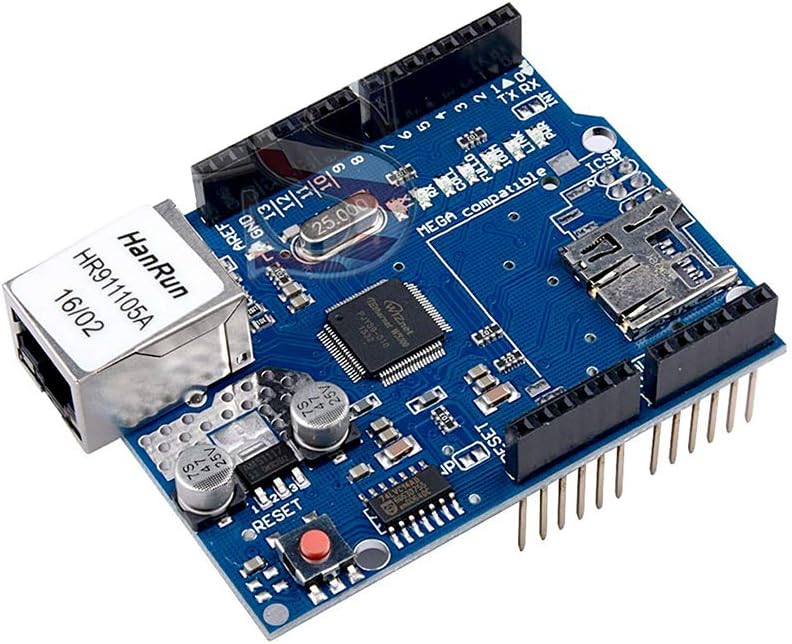


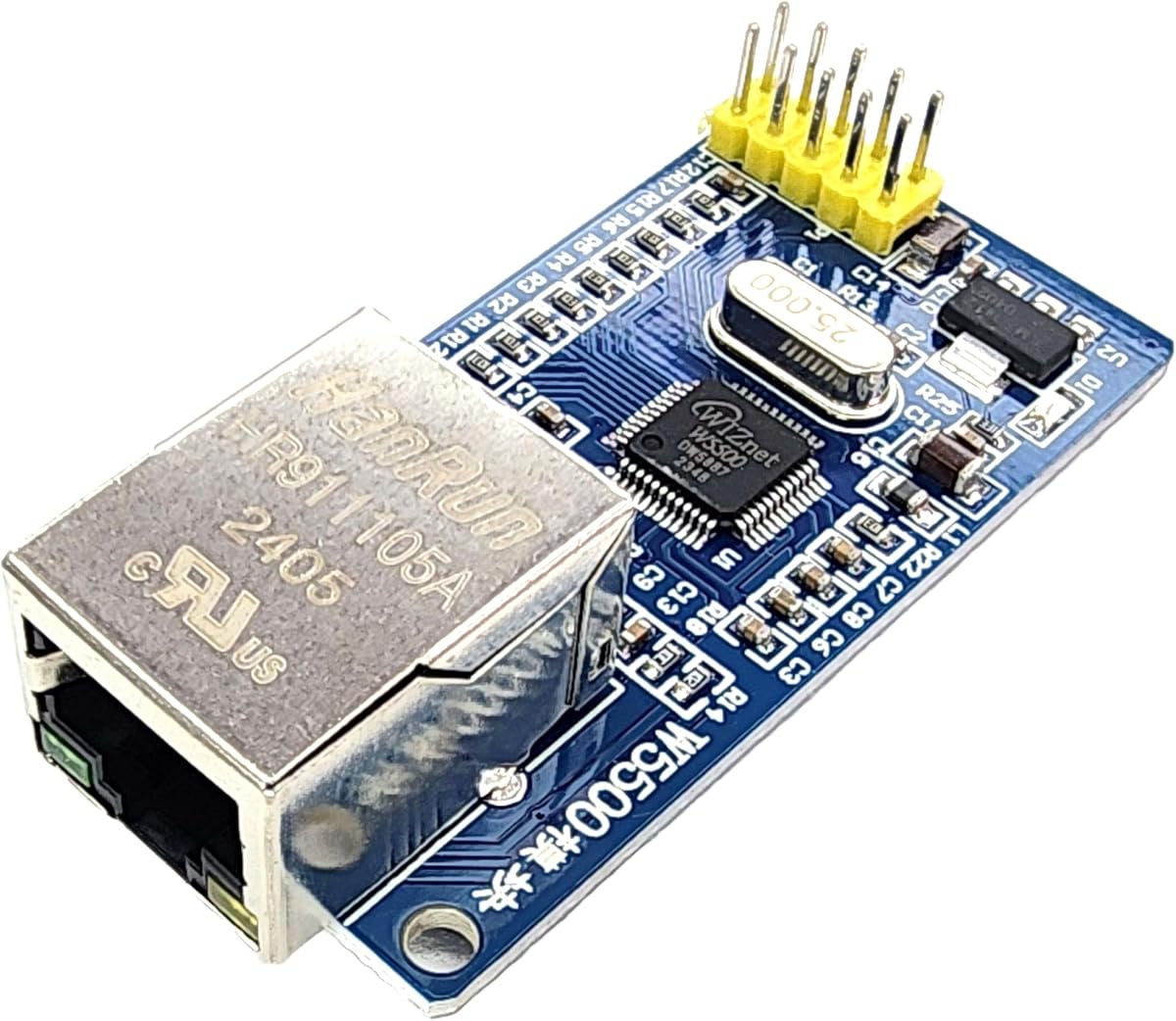
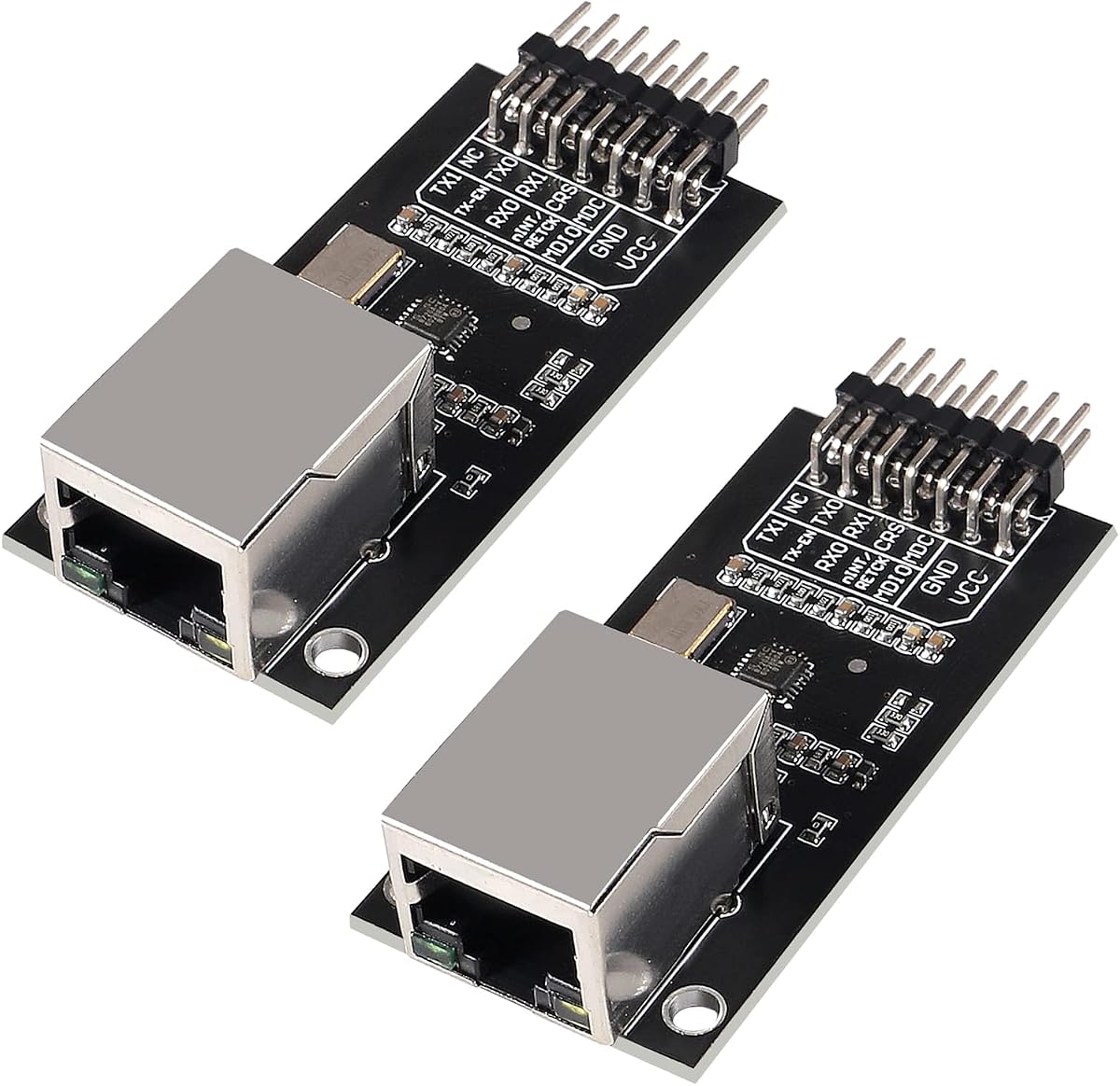

This module uses the W5500 chipset which provides a robust hardware TCP/IP stack for your projects. It supports both 3.3V and 5V logic making it versatile for various microcontrollers. The included 32k bytes of memory helps buffer data efficiently during transfers.
We may earn a commission when you buy through this link, at no additional cost to you.
It supports up to eight independent sockets simultaneously which is excellent for multitasking applications. The Wake on LAN feature via UDP allows remote management of devices efficiently. High speed SPI ensures quick data throughput for real-time control tasks.
While versatile the module requires you to ensure power supply stability for reliable operation. There is no onboard storage so you may need an external SD card module for logging. These trade-offs are acceptable for most networking focused applications.
This is an excellent choice for developers needing reliable Ethernet connectivity with modern microcontrollers. It balances performance and ease of use effectively for IoT projects. We recommend it for users prioritizing hardware stack reliability.
The W5500 chip handles all protocol tasks reducing the load on your main processor significantly.
Support for high speed SPI interfaces ensures your data packets move quickly without lag.
We may earn a commission when you buy through this link, at no additional cost to you.
This module offers a cost effective way to add Ethernet capabilities to your W5500 projects. It uses a standard SPI interface which simplifies wiring to your microcontroller board. The design is compact fitting well into tight enclosure spaces.
We may earn a commission when you buy through this link, at no additional cost to you.
It operates with 3.3V logic but tolerates 5V inputs for broader compatibility. The SPI interface is straightforward allowing for quick integration with existing code libraries. You get a solid TCP/IP stack without complex software configurations.
Ensure your power supply can deliver at least 200mA for stable operation under load. The voltage requirements are specific so double check your board logic levels before connecting. These constraints are minor for experienced builders.
For those on a tight budget this module provides excellent performance per dollar spent. It is ideal for prototyping or small production runs needing Ethernet. We suggest it for cost conscious developers seeking reliability.
The small footprint allows you to fit this module into space constrained projects easily.
Connecting via SPI requires fewer wires than parallel interfaces making assembly faster.
We may earn a commission when you buy through this link, at no additional cost to you.
This pack includes five units of the W5500 Ethernet module providing great value for multiple devices. Each board maintains consistent performance for the standard SPI interface for easy coding. The supply is stable for continuous operation in deployed systems.
We may earn a commission when you buy through this link, at no additional cost to you.
Having multiple modules allows you to build a fleet of connected sensors or controllers quickly. The PCB size is manageable at 23 by 25 millimeters for prototyping boards. You save time sourcing components when buying in bulk.
You must ensure a clean 3.3V supply as fluctuations can affect network stability. The bulk pack is more expensive than single units but cheaper per item. This is a minor consideration for larger deployments.
This set is perfect for businesses needing to deploy multiple Ethernet connected nodes simultaneously. It offers consistency across devices which is crucial for uniform performance. We recommend it for small scale manufacturing or classroom labs.
Buying in a pack ensures you have spare units for testing and production without delays.
The compact board dimensions allow easy integration into standard project layouts.
We may earn a commission when you buy through this link, at no additional cost to you.
This module features an advanced 80MHz SPI mode for high throughput data scenarios. It uses an industrial grade PHY for better resilience in noisy electrical environments. The full TCP UDP stack ensures comprehensive protocol support for complex apps.
We may earn a commission when you buy through this link, at no additional cost to you.
Support for eight simultaneous sockets allows for advanced multitasking within one module. Auto-negotiation handles duplex settings automatically reducing configuration headaches. This level of detail suits professional engineering needs.
The high speed interface requires precise timing and may need logic level checkers. Users should be comfortable with advanced microcontroller configurations to use this fully. These complexities are worth it for performance critical tasks.
Ideal for engineers needing maximum throughput and reliability in demanding industrial settings. This module bridges the gap between hobbyist and professional grade networking. We recommend it for high performance IoT applications.
The 80MHz SPI capability allows you to transfer large amounts of data rapidly.
The embedded PHY is designed to handle electrical noise better than consumer chips.
We may earn a commission when you buy through this link, at no additional cost to you.
This shield combines Ethernet connectivity with an SD card slot for storage in one unit. It stacks directly onto UNO or MEGA boards providing instant network access. The W5100 chip is a classic choice with wide community library support.
We may earn a commission when you buy through this link, at no additional cost to you.
You can store logs locally on the SD card while keeping the device online. The RJ45 jack is standard making it compatible with most network cables. Setup is simple as it works with common Ethernet libraries.
The shield is larger than individual modules which may not fit small enclosures. The W5100 chip is older and slower than newer alternatives like W5500. These factors are acceptable for simple logging tasks.
Perfect for projects needing both internet and storage without external components. It simplifies wiring and setup for beginners using Arduino UNO boards. We recommend it for data logging applications.
The built-in SD slot removes the need for a separate card reader module.
Stacking directly on the board keeps connections secure and tidy for testing.
We may earn a commission when you buy through this link, at no additional cost to you.
The ENC28J60 chip is a reliable option for basic Ethernet connectivity needs. It uses a 25MHz crystal which provides stable timing for network packets. The transformer isolation ensures signal quality on the RJ45 port.
We may earn a commission when you buy through this link, at no additional cost to you.
This module runs on 3.3V making it suitable for low voltage microcontrollers directly. The SPI interface is standard allowing compatibility with most modern boards. It is a proven solution with many available tutorials.
Compared to newer chips it offers lower data rates which may limit high speed apps. Some software drivers require more handling than hardware TCP stack modules. These trade-offs suit low bandwidth projects perfectly.
Best for simple client connections where full hardware stack speed is not critical. It serves well for sending sensor data to a server. We recommend it for low power or legacy system projects.
The onboard crystal ensures your network timings are consistent without external parts.
This chip consumes less power than many alternatives ideal for battery setups.
We may earn a commission when you buy through this link, at no additional cost to you.
This pack includes five ENC28J60 modules offering a great deal for multiple sensors. Each unit is IEEE 802.3 compliant ensuring standard network protocol support. You get consistent quality across all boards in the package.
We may earn a commission when you buy through this link, at no additional cost to you.
The high rating suggests reliable performance for basic network tasks. You can build a network of low power nodes using these modules easily. The SPI interface simplifies wiring to your microcontroller pins.
Keep in mind the speed limitations compared to newer 100Mbps chips. You will need to manage the network stack in software which adds code complexity. These are minor concerns for basic IoT needs.
Ideal for budget conscious builders needing multiple Ethernet endpoints quickly. The bulk price makes it accessible for larger projects. We recommend it for classroom kits or sensor arrays.
IEEE 802.3 compliance ensures these work with standard routers and switches reliably.
Purchasing five units reduces the cost per module significantly for your needs.
We may earn a commission when you buy through this link, at no additional cost to you.
This module is designed to work seamlessly with ESP32 and ESP8266 boards. It uses the W5500 chip for a reliable hardware TCP/IP stack. The full size RJ45 port makes physical cabling straightforward.
We may earn a commission when you buy through this link, at no additional cost to you.
Users report excellent reliability and stability for IoT deployments. The 5V or 3.3V support allows direct connection without level shifters. It is perfect for smart home and industrial sensor applications.
Some users may need to solder header pins for easier breadboard use. Documentation is sometimes community driven requiring some research on libraries. These issues do not hinder general usability.
If you are using ESP boards this is a top choice for wired networking. It balances cost and performance effectively for most hobbyists. We recommend it for smart project builds.
Designed specifically for ESP32 and ESP8266 for easy wired internet access.
The standard port allows any regular Ethernet cable to connect directly.
We may earn a commission when you buy through this link, at no additional cost to you.
This board uses the LAN8720 transceiver for high performance 100Mbps connections. HP Auto-MDIX support means you can use any Ethernet cable straight. It includes a built-in regulator to manage voltage internally.
We may earn a commission when you buy through this link, at no additional cost to you.
It is suitable for embedded web server applications requiring decent throughput. The design allows for a flexible power management architecture. You gain speed advantages over older Ethernet controller chips.
Setup can be complex due to needing specific driver configurations. There are fewer community examples compared to W5500 or ENC28J60 chips. This may require more development time for beginners.
Choose this when you need specific PHY features or higher speed capabilities. It is a solid option for advanced embedded system designs. We recommend it for technical users exploring PHY layers.
Auto MDIX handles cable crossover automatically saving you from swapping cables.
The internal regulator ensures stable voltage for the transceiver logic levels.
We may earn a commission when you buy through this link, at no additional cost to you.
This module offers a reliable ENC28J60 solution with consistent performance ratings. It includes a high quality transformer for signal isolation and noise reduction. The crystal ensures accurate timing for data transmission packets.
We may earn a commission when you buy through this link, at no additional cost to you.
It works with a wide range of microcontrollers including AVR and STM32. The design is compact allowing easy integration into custom PCBs or shields. You get a solid networking interface at a reasonable price point.
As with other ENC28J60 boards you need to manage the protocol stack. Software configuration is needed to set IP addresses and manage data buffers. This is standard for this type of hardware.
A good choice for budget projects needing reliable wired connectivity. It provides a balance of performance and ease of use. We recommend it for standard Arduino network applications.
The transformer ensures clean signals and protects your microcontroller from surges.
Works with many common AVR and LPC devices making it very versatile.
We may earn a commission when you buy through this link, at no additional cost to you.
Selecting the right Ethernet module involves considering several technical and practical factors.
The chipset determines how the module handles network traffic and protocol stacks. W5500 offers hardware TCP/IP offloading which reduces CPU load significantly. ENC28J60 relies on software stacks which is simpler but uses more processor resources. LAN8720 provides high speed PHY options for faster connections.
Modules often support 3.3V or 5V logic levels. Ensure your microcontroller matches these levels to avoid damage. Some boards have level shifters built in while others do not. Check the datasheet for specific voltage tolerance before connecting.
Ethernet modules draw varying amounts of current especially during activity. Most need at least 200mA from a stable 3.3V supply. Ensure your power source can handle peak loads without voltage drops. Stable power is crucial for maintaining network connections.
SPI is the most common interface for these modules. It is fast and requires few pins on your microcontroller. Check the SPI speed support as some modules go up to 80MHz. Ensure your board can handle the required speed for your needs.
Modules range from compact boards to full shields. Shields are easier to stack but take up space. Small modules fit better in tight enclosures. Consider your project space and how you plan to mount the hardware.
Some modules support multiple simultaneous sockets for multitasking. W5500 boards often support up to eight sockets. This is vital if you need to maintain multiple connections at once. Check the socket count if your app requires it.
Popular modules have more libraries and examples available. W5500 and ENC28J60 have strong communities. Less common chips might require custom drivers. Choose a module with good documentation to speed up development.
Advanced PHY features like Auto-MDIX simplify cabling. These handle cable crossing automatically without manual switches. Look for these features to reduce installation hassles. Not all budget boards include these options.
Start by connecting the module via SPI pins ensuring voltage logic matches your microcontroller. Use level shifters if needed between 5V and 3.3V devices. Verify connections with a multimeter before applying power to avoid shorts.
Install the necessary Ethernet library in your Arduino IDE. Configure the IP settings either manually or via DHCP as per your network needs. Upload a simple test sketch to verify connectivity and ping response.
Maintain your hardware by keeping it free from dust and moisture. Check the RJ45 port regularly for physical damage or bent pins. Ensure the power supply remains stable to prolong the life of the component.
W5500 includes a hardware TCP/IP stack reducing CPU load and increasing speed. ENC28J60 uses a software stack which is simpler but less efficient. Both connect via SPI but W5500 supports more sockets and faster speeds.
Many modules are 5V tolerant on SPI lines but check the specific datasheet. If not you must use a logic level converter. Always match the supply voltage to the module requirements to prevent damage.
Most modules come without soldered headers requiring you to add them. Soldering allows easy insertion into breadboards or shields. Some kits include headers but verify the product listing before buying.
Unstable power supply or bad cable connections often cause drops. Check that your 3.3V supply provides enough current. Ensure cables are plugged in firmly and the router is functioning correctly.
Yes most libraries support DHCP to obtain IP addresses automatically. You must include the library and call the DHCP function in setup. This simplifies network setup compared to static IP configuration.
The W5500 Ethernet module is highly compatible with ESP32. It supports the SPI interface and has libraries available. This combination provides reliable connectivity for IoT devices.
Upload a simple sketch to connect to a local web server. Use the Serial monitor to check connection status messages. This confirms the wiring and software setup is correct.
Yes they work on local networks without internet access. You can host a web server on your Arduino for local control. This is useful for home automation or local data logging.
We have reviewed ten top Ethernet modules covering various chips and form factors. The W5500 options offer high performance and are ideal for modern projects. ENC28J60 modules provide a budget friendly alternative for simple tasks.
Prioritize hardware TCP/IP support if your project requires multitasking or speed. Ensure power and voltage compatibility to prevent hardware issues during use. Consider the available libraries to streamline your development workflow.
Prices and availability may change so check current listings before purchasing. We hope this guide helps you select the right module for your needs. Good luck with your next embedded networking project.