
Mcbazel 3 in 1 Handheld Digital Anemometer
4.5Editor score
Measures wind speed and temperature
Beaufort scale included
Backlit LCD display
This guide compares the top ten anemometers for measuring wind speed, featuring detailed reviews and specs to help you choose the right wind meter for your
Finding the right anemometer for measuring wind speed is essential for professionals and enthusiasts alike. Whether you are monitoring HVAC systems, planning a sailing trip, or testing drone conditions, accurate data ensures safety and efficiency. A reliable device should offer precise readings, multiple units, and durability against environmental factors.
We evaluated ten top-rated models based on accuracy, ease of use, display quality, and feature sets. Our analysis considered real-world performance in various scenarios, from indoor airflow checks to outdoor weather monitoring. Each product was assessed for its ability to deliver consistent results under different conditions.
Each pick below highlights specific strengths, including budget-friendly options and advanced multi-function units. We focus on how each device performs in practical applications without focusing on specific pricing details. Keep in mind that availability and specifications may change over time, so verify current details before purchasing.
4.5Editor score

4.5Editor score

4.4Editor score
The following table provides a side-by-side comparison of all ten selected models. It highlights key specifications such as measurement units, display type, and special features to help you quickly identify the device that best fits your specific requirements.



The BTMETER BT-100 stands out as a versatile and reliable tool for measuring wind speed across various applications. With a rating of 4.5 stars, it is trusted by professionals and hobbyists alike for its precision and ease of use. This handheld device provides accurate measurements for HVAC diagnostics, drone flying, and outdoor activities.
We may earn a commission when you buy through this link, at no additional cost to you.
One of its key strengths is the ability to measure wind speed in five different units, including m/s, km/h, ft/min, knots, and mph. This flexibility makes it suitable for users with diverse needs. The device also calculates wind chill and displays wind temperature, offering comprehensive environmental data. The backlit LCD ensures readability even in low-light conditions.
While the device is highly accurate, it relies on AAA batteries which are included but may need replacement over time. It also lacks a humidity sensor, which some users might expect for more detailed weather monitoring. However, these trade-offs are acceptable given its focused performance on wind speed and temperature.
This model is ideal for anyone needing a dependable wind speed meter for professional or recreational use. Its tripod hole allows for stable continuous measurements, and its compact size makes it easy to carry. We recommend this device for those prioritizing accuracy and versatility in a handheld anemometer.
The ability to switch between five different wind speed units ensures compatibility with various regional standards and specific project requirements.
The built-in tripod hole enables hands-free operation for extended periods, which is essential for consistent data collection during outdoor experiments.
We may earn a commission when you buy through this link, at no additional cost to you.
The Mcbazel 3 in 1 offers exceptional value for those seeking a functional anemometer without a high cost. It achieves a 4.5 star rating by combining essential features like wind speed, temperature, and wind level measurement in a compact package. This makes it an excellent choice for casual users and light professional tasks.
We may earn a commission when you buy through this link, at no additional cost to you.
Its ability to display the Beaufort scale alongside standard speed units provides unique context for wind conditions. The backlight ensures visibility in dim environments, and the double-line LCD shows speed and temperature simultaneously. Features like MAX/MIN/AVG and data hold enhance its utility for capturing specific readings.
Users should note that batteries are not included in the package, which is a minor inconvenience. The build feels lightweight and primarily plastic, which may not withstand heavy industrial abuse. However, for most general uses, its durability is sufficient and aligns with its budget-friendly positioning.
We recommend this model for beginners, students, or anyone needing a reliable backup device. It covers all the basics effectively and is perfect for tasks like sailing, fishing, or simple HVAC checks. Its combination of features and low entry barrier makes it a top contender in the budget category.
Including the Beaufort scale allows users to quickly assess wind impact on activities like sailing or flying without needing external reference tables.
MAX/MIN/AVG functions help users track peak and average wind speeds over time, which is crucial for planning outdoor events or safety assessments.
We may earn a commission when you buy through this link, at no additional cost to you.
The VEVOR Split Handheld Anemometer delivers advanced functionality with data logging and PC connectivity. It earns a premium position due to its robust feature set, including wind velocity, temperature, air flow, and wind chill. With a 4.4 star rating, it serves professionals who need more than just instant readings.
We may earn a commission when you buy through this link, at no additional cost to you.
Its standout feature is the ability to connect to a PC for data management, allowing users to analyze wind patterns over time. The 6.6-foot extendable cord enables measurements in hard-to-reach areas, and the IP44 rating ensures protection against light rain. The LED backlight provides clear visibility in any lighting condition.
The premium price may be prohibitive for casual users, and utilizing the data export requires a Windows PC. Additionally, the auto-shutoff after five minutes might interrupt long-term monitoring if not configured. Despite these minor drawbacks, the device offers high utility for technical and industrial applications.
This anemometer is best suited for HVAC technicians, engineers, or serious hobbyists needing detailed data analysis. The included storage bag and lanyard add to its portability and protection. We recommend it for anyone needing to log and review wind speed data systematically.
Connecting to a PC allows for systematic logging and analysis of wind data, which is essential for long-term monitoring or compliance reporting.
The included cord provides flexibility in reaching difficult spots, such as inside ducts or high structures, without compromising measurement accuracy.
We may earn a commission when you buy through this link, at no additional cost to you.
The TopTes TS-301 is designed for clarity and ease of use, featuring a large 2.26-inch LCD screen. It rates highly for its ability to display wind speed in six units and include humidity measurement. This makes it a strong contender for users who need detailed environmental data in a single device.
We may earn a commission when you buy through this link, at no additional cost to you.
The large backlight ensures that readings are visible even in direct sunlight or low-light scenarios. It also measures humidity, which adds value for weather tracking. The device comes with AAA batteries and a carry pouch, making it ready to use right out of the box.
However, the humidity and temperature sensors require up to 30 minutes to adjust to new environments, which can delay initial readings. It also lacks a tripod thread, limiting options for stable continuous monitoring. These are minor inconveniences for a device focused on handheld usability.
We suggest this model for outdoor enthusiasts like golfers, drone flyers, or hikers. Its compact size and clear display make it easy to carry and operate with one hand. For those needing humidity data alongside wind speed, this is a top choice.
The oversized screen minimizes eye strain and ensures quick data capture, which is crucial during fast-moving outdoor activities.
Included batteries and pouch mean users can start measuring immediately without needing to purchase extra accessories first.
We may earn a commission when you buy through this link, at no additional cost to you.
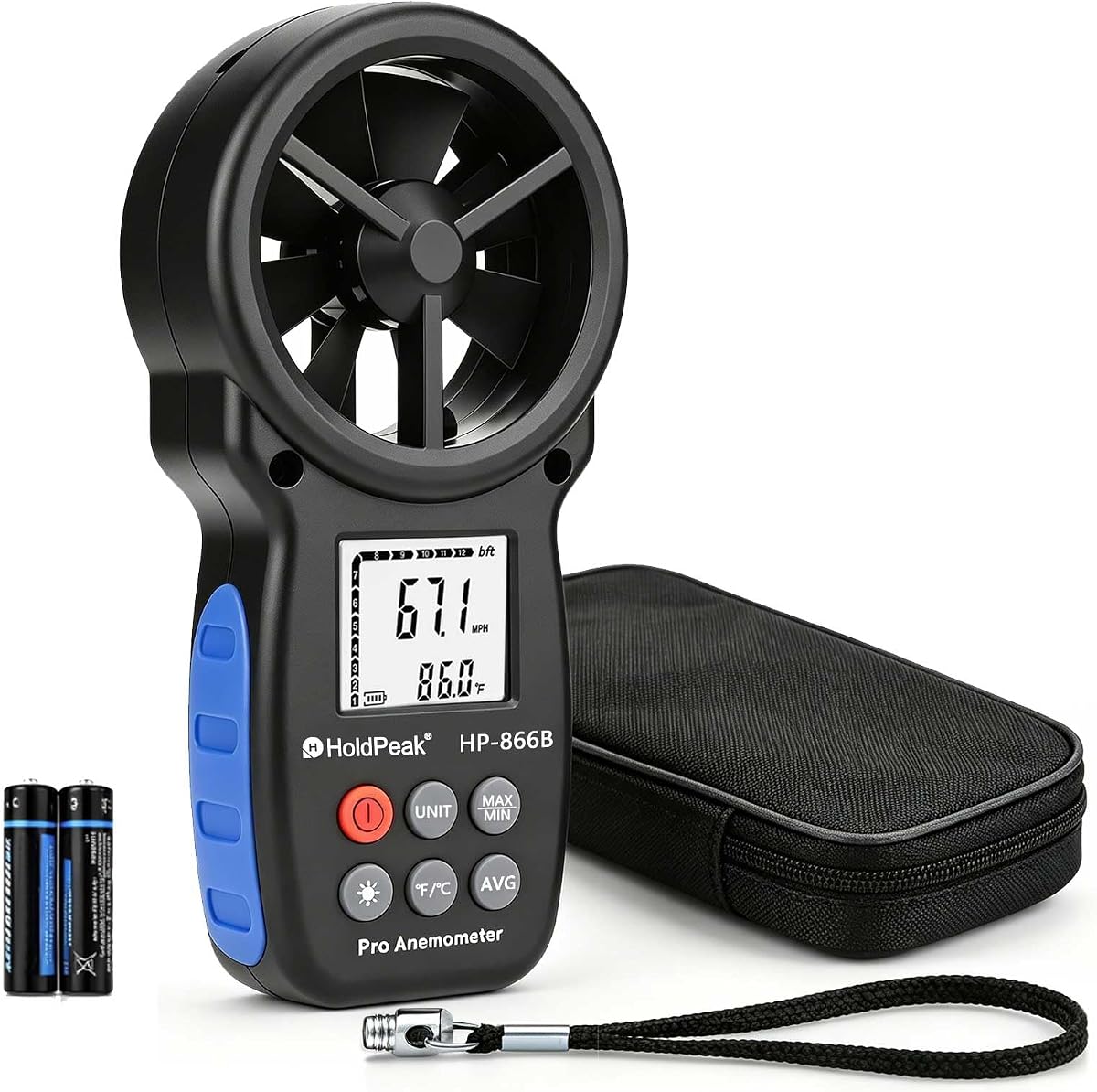
The HoldPeak 866B is a robust tool engineered for professional use with a focus on accuracy. It features eight vanes and dual temperature sensors to ensure precise measurements of wind speed, temperature, and chill. With a 4.5 star rating, it is trusted by HVAC technicians and engineers.
We may earn a commission when you buy through this link, at no additional cost to you.
Its tripod hole allows for secure mounting, and the hand strap prevents drops during operation. The included screwdriver helps with basic maintenance. The device supports CFM calculation directly, which is vital for airflow testing in ducts and ventilation systems.
The display is functional but basic compared to some competitors with larger screens. Battery life is adequate but may require frequent changes depending on usage frequency. These factors are acceptable given the device's strong build quality and specialized functionality.
This model is ideal for professionals who need reliable CFM and wind speed data regularly. Its durability and precision make it a worthwhile investment for technical applications. We recommend it for HVAC and industrial maintenance tasks.
Direct support for CFM calculations simplifies airflow diagnostics, saving time and reducing manual calculation errors for technicians.
The tripod hole and hand strap provide stability and safety, ensuring reliable data collection even in windy or shaky conditions.
We may earn a commission when you buy through this link, at no additional cost to you.
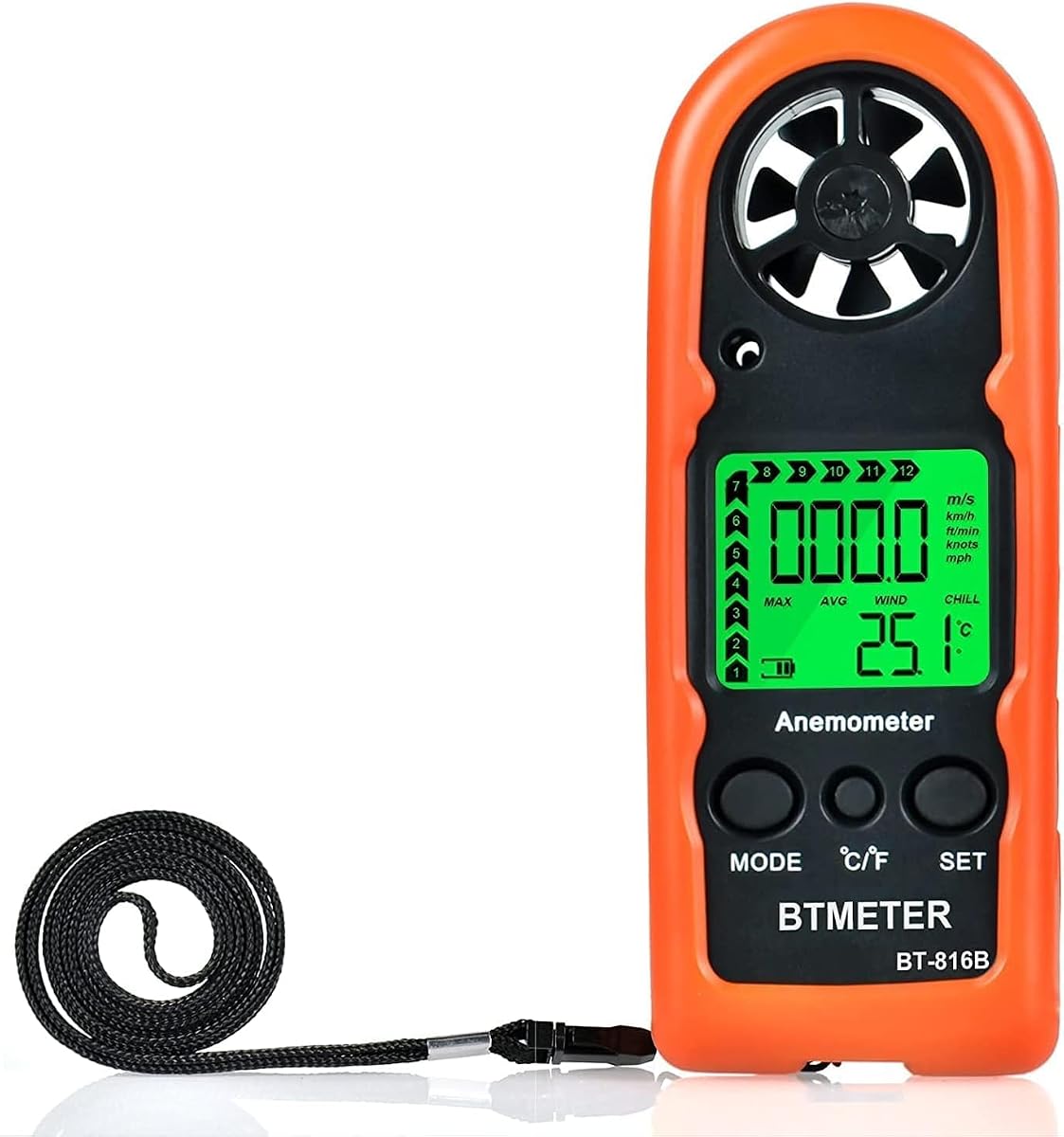
The BTMETER BT-816B is designed for portability, weighing only 53 grams. It measures wind speed from 0.2 to 67 mph and offers real-time wind chill. This model appeals to travelers and outdoor enthusiasts who need a lightweight device for quick checks.
We may earn a commission when you buy through this link, at no additional cost to you.
Its compact size allows it to fit in a pocket easily, and the lanyard ensures it stays safe during movement. The manual and auto power options give users control over battery consumption. The wind chill feature helps assess safety during cold-weather activities.
While it lacks humidity sensors and advanced data features, its simplicity is a strength for quick use. Accuracy is slightly lower than premium models but sufficient for general needs. It serves as a practical backup or primary tool for casual users.
We recommend this for hiking, shooting, or sailing where weight matters. It provides essential data without bulk and supports multiple units. For those prioritizing portability, this is a solid choice.
Weighing only 53 grams makes it easy to carry without adding strain, ideal for long outdoor trips or travel.
Real-time wind chill data helps users make quick safety decisions in cold weather without consulting external tools.
We may earn a commission when you buy through this link, at no additional cost to you.
The Soonkoda 3 in 1 is versatile, measuring wind speed, temperature, and level simultaneously. It features a double-line display that shows data clearly. This device is useful for various industries including aviation, petrochemical, and duct ventilation.
We may earn a commission when you buy through this link, at no additional cost to you.
Its Beaufort scale provides easy interpretation of wind force. The device includes auto power off and low battery indicators for reliability. It is lightweight and portable, making it easy to transport between job sites or outdoor locations.
It lacks a tripod mount, limiting continuous monitoring options. The build quality is functional but basic, suitable for general use rather than heavy industrial environments. However, its multifunctionality makes it a cost-effective solution for many users.
We recommend this for users needing quick wind level and speed checks. Its broad industrial applicability adds value. For general outdoor or light professional work, this model offers good utility.
Showing speed and temperature on two lines at once reduces the need to switch modes, saving time during operations.
Its design supports a wide range of industries, making it a flexible tool for diverse measurement needs.
We may earn a commission when you buy through this link, at no additional cost to you.
The AEM01S POROMETISTO features a unique 3-color alarm system that signals wind levels visually. It measures speeds accurately and samples every 0.5 seconds for reliable data. This focus on safety and precision makes it useful for outdoor activities and industrial settings.
We may earn a commission when you buy through this link, at no additional cost to you.
The backlight color changes from green to red depending on wind level, providing instant safety feedback. It includes a one-year free replacement service, which adds peace of mind for users. The housing protects the blades from light impacts.
The display layout is straightforward, which may lack some advanced visual data found in other models. It does not measure humidity, which is a limitation for weather enthusiasts. However, the safety features and accuracy are strong assets.
We suggest this for environments where wind safety is critical, such as construction or drone flying. The visual warnings help prevent accidents. For users prioritizing safety over advanced data, this is an excellent choice.
The color-changing backlight serves as a quick and intuitive warning system, reducing cognitive load during high-wind situations.
Sampling data every half second ensures rapid updates, which is essential for tracking fast-changing wind conditions.
We may earn a commission when you buy through this link, at no additional cost to you.
The Caldwell Wind Wizard II is designed with shooters and hunters in mind. It holds a 4.6 star rating and offers multiple wind units. Its water-resistant material and non-slip casing provide durability in field conditions.
We may earn a commission when you buy through this link, at no additional cost to you.
The device includes a lanyard for secure handling, and a limited lifetime warranty ensures long-term support. It offers a backlight for readability in varying light conditions. This specialization ensures it meets the needs of its target audience.
It may lack features useful for other industries like HVAC or aviation. The price is higher compared to general-purpose models. However, for shooting enthusiasts, the focused design is a significant advantage.
We recommend this specifically for long-range shooting and hunting applications. Its reliability and warranty make it a strong choice for professionals in this field.
Designed specifically for shooting, it provides features that directly support ballistics calculations and field accuracy.
A limited lifetime warranty offers significant value and reassurance, ensuring users can rely on the device for years.
We may earn a commission when you buy through this link, at no additional cost to you.
The Proster Digital Anemometer supports CFM, CMM, and CMS calculations, making it a powerful tool for airflow professionals. It offers five wind units and a large LCD display with backlight. This versatility ensures it meets diverse measurement requirements.
We may earn a commission when you buy through this link, at no additional cost to you.
Included 9V batteries and hold max/min functions simplify field use. The device is portable and easy to read, which is crucial for quick diagnostics. It supports both handheld and fixed measurement setups.
The use of 9V batteries may be bulkier than AAA alternatives for some users. It also lacks a wind chill feature, which is useful for weather monitoring. However, its focus on airflow calculations is a major strength for HVAC work.
We recommend this for HVAC technicians needing direct airflow calculations. Its support for multiple flow units saves time. For those focused on air velocity, this model is highly effective.
Direct support for CFM and CMS units allows for immediate results without manual conversions, improving efficiency on-site.
The ability to perform handheld or fixed measurements makes it adaptable to various testing scenarios.
We may earn a commission when you buy through this link, at no additional cost to you.
Selecting the right anemometer depends on your specific needs and environment. This guide outlines key factors to consider before purchasing a wind speed meter.
Check if the device supports the units you need such as m/s, km/h, knots, or mph. Different industries use different standards, so compatibility is key. Look for devices that allow easy switching to avoid calculation errors.
Ensure the chosen model offers all the units required for your applications to streamline workflow and accuracy.
Evaluate the measurement range and tolerance. Some devices work better for low-speed HVAC checks while others handle high-speed wind conditions. Accuracy varies by model, so check specifications for error margins.
Choose a device with a range that covers your typical use cases to prevent saturation or inaccurate readings.
A clear display with backlight is essential for reading in low-light or bright outdoor conditions. Larger screens reduce eye strain and make data easier to interpret quickly. Consider the size and contrast of the digits.
Prioritize models with readable displays to ensure you can capture data without squinting or external aids.
Some anemometers include wind chill, humidity, or Beaufort scale features. These extras can provide more context for weather or safety assessments. Determine if these features align with your workflow or are unnecessary.
Additional features add value if they match your use case; otherwise, stick to basic models to save costs.
Professional users need sturdy devices that resist drops and environmental factors. Look for water resistance or protective cases. Build quality affects longevity and reliability in harsh conditions.
Invest in durable models if you work outdoors or in industrial settings to extend the device's usable life.
Check the battery type and life. AAA batteries are common and replaceable, while some models use specialized batteries. Auto power off helps preserve energy during infrequent use.
Select a power source that is convenient for you to manage and ensures the device stays operational when needed.
Tripod holes or hand straps enable stable measurements and prevent drops. Continuous monitoring may require fixed mounting options. Consider how you plan to hold or position the device.
Mounting options improve safety and data consistency, especially for long-term or hands-free measurement tasks.
Compare models based on feature sets and reliability. Budget options may lack advanced data logging, while premium units offer more. Determine your maximum budget and required capabilities.
Balance cost with performance to ensure you get a tool that meets your needs without overspending on unused features.
To start, ensure the anemometer is powered on and set to your desired units. Hold the device steadily at arm's length or mount it on a tripod for stability. Allow a few seconds for the reading to stabilize before noting the value.
Regularly calibrate the device according to the manufacturer's instructions to maintain accuracy. Store the anemometer in a protective case when not in use to prevent damage to the blades or display. Clean the sensor area with a soft brush if debris accumulates.
Replace batteries when the low indicator appears to avoid unexpected shutdowns during use. If the device includes data logging features, connect it to your computer regularly to back up recorded readings. Proper maintenance extends the lifespan and reliability of your wind speed meter.
HVAC systems require anemometers that can measure low air flow accurately and support CFM calculations. Models like the BTMETER BT-100 or Proster Digital Anemometer are well-suited due to their CFM features and sensitive sensors. These devices allow technicians to quickly assess duct performance without manual calculations.
Many modern anemometers include a wind chill function that combines wind speed and temperature to provide a comfort index. This feature is useful for outdoor activities like hiking or shooting. Check the specifications to confirm if the model offers this capability.
Calibration typically involves using a known wind speed reference or comparing the device with a certified standard. Some models allow for manual adjustment via a calibration mode. Refer to the user manual for specific instructions to ensure accurate readings.
Knots are the standard unit for sailing navigation and wind speed. Ensure your anemometer can display and switch between knots and other units like mph or m/s for flexibility. This allows easy comparison with nautical charts and weather forecasts.
Some anemometers have water-resistant or waterproof ratings allowing them to withstand light rain. However, heavy precipitation may affect the rotating blades or electronics. Check the IP rating and manufacturer guidelines before using in wet conditions.
Battery life depends on usage frequency and whether auto power-off is enabled. Most models last several weeks with typical use. Using AAA batteries allows for easy replacement when needed to maintain consistent operation.
This guide reviewed ten top anemometers suitable for various applications including HVAC, sports, and professional monitoring. Each device offers unique strengths, from budget-friendly options like the Mcbazel 3 in 1 to premium models like the VEVOR Split Handheld.
Prioritize accuracy, display quality, and additional features based on your specific use case. Consider durability and battery life to ensure the device performs reliably in your working environment.
Remember to verify current availability and specifications before making a purchase. Prices and features may vary, so checking the latest details helps you secure the best tool for measuring wind speed.